PART 2: THE DAUGHTER WHO FINALLY ASKED THE RIGHT QUESTION
At 11:42 that night, my daughter sat at my kitchen table wearing one of my old Army sweatshirts, staring at the engagement ring on her finger.
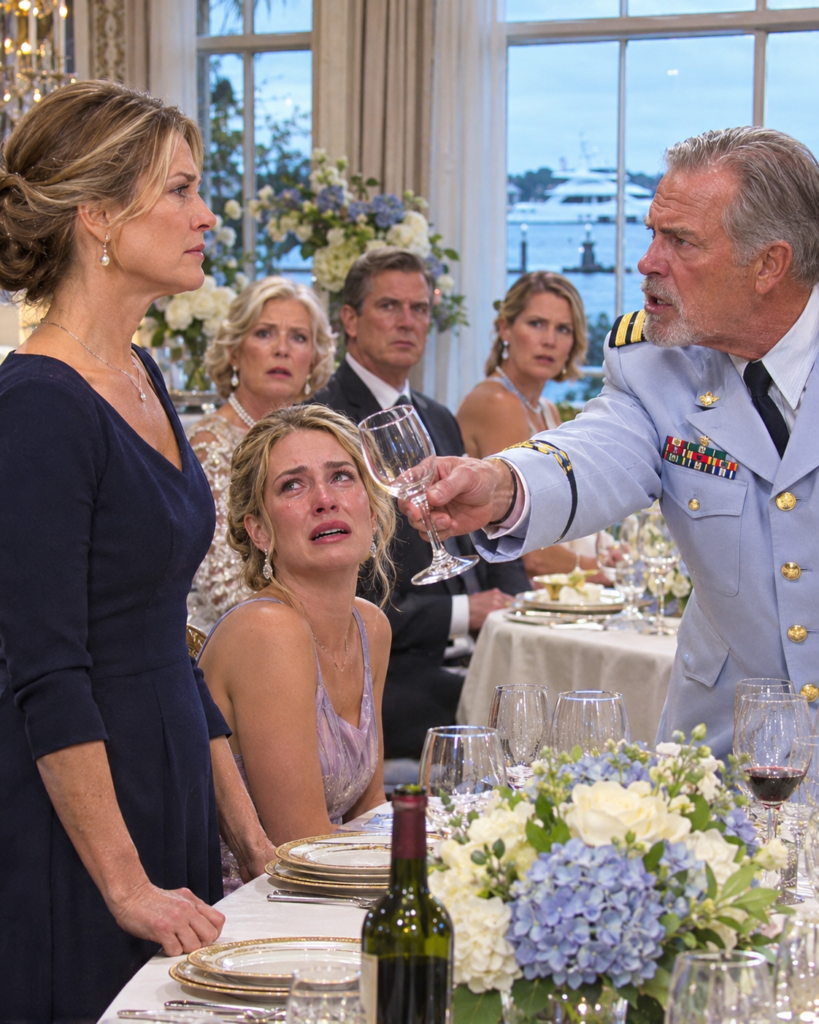
She hadn’t stopped crying completely.
Every few minutes, her breathing would catch, and she’d wipe away another tear.
I set a mug of chamomile tea in front of her.
“Do you want to talk?”
She stared into the cup.
“Did you ever feel embarrassed because you were a single mother?”
The question hit me with unexpected force.
I pulled out the chair opposite her.
“Never because I was your mother.”
“But people judged you.”
“Yes.”
“Did it hurt?”
I thought about the years when strangers had made assumptions about my life.
The daycare worker who once asked whether Olivia’s father was in prison.
The neighbor who suggested I was selfish for remaining in the Army.
The woman at a school event who said children without fathers usually struggled.
“Yes,” I admitted. “Sometimes it hurt terribly.”
Olivia looked up.
“Why didn’t you tell me?”
“Because those opinions were never your burden to carry.”
Her lower lip trembled.
“Mom, I love Ethan.”
“I know.”
“But tonight…”
She stopped.
I waited.
“Tonight, I kept waiting for him to stand up.”
I nodded.
“So did I.”
“He’s never been like that with me.”
“Has he ever disagreed with his father in front of you?”
She looked away.
That told me something.
“Olivia?”
“Not really.”
I reached across the table.
“Sweetheart, love isn’t just how someone treats you when everything is comfortable. It’s also what they do when doing the right thing costs them something.”
She nodded slowly.
“Do you think I should cancel the wedding?”
I shook my head.
“That’s a decision only you can make.”
“What would you do?”
“I would ask whether the man I planned to marry could become the partner I needed.”
She twisted the ring.
“And if he couldn’t?”
“Then I would rather be heartbroken before marriage than lonely inside it.”
She covered her face.
I moved beside her and held her until her breathing steadied.
Around midnight, Ethan called.
She watched the screen light up.
Once.
Twice.
Then a third time.
Finally, she answered.
“Hello?”
I stepped toward the hallway, intending to give her privacy.
But her next words stopped me.
“No, Ethan. My mother wasn’t rude.”
Silence.
“She didn’t cause a scene. Your father insulted her.”
Another pause.
Then Olivia’s voice changed.
“No. I’m not apologizing to him.”
I remained where I was.
“What do you mean he expects us to come back?”
She stood abruptly.
“Ethan, listen to yourself.”
Her voice cracked.
“You sat there while he called my mother inferior.”
She began crying again.
“And now you’re telling me she should apologize because she embarrassed him?”
A long silence followed.
Then Olivia said something that made my heart ache.
“I needed you tonight.”
She ended the call.
For several seconds, she stood perfectly still.
Then she turned toward me.
“He said his father doesn’t respond well to being challenged.”
I said nothing.
“He said we should give him time to cool down.”
I guided her back to the chair.
“And what do you want?”
She looked at the ring again.
“I want to know why Ethan thinks keeping his father comfortable matters more than keeping me safe.”
It was the first time that evening she’d named the problem so clearly.
I kissed her forehead.
“Then that’s the question you need him to answer.”
After Olivia went to bed, I entered my home office.
My military career had taught me that personal feelings must never dictate professional decisions.
That principle had become especially important as I rose through the ranks.
A commander’s authority belongs to the institution, not to the commander’s ego.
I opened the briefing agenda from my secure work system.
The meeting was a scheduled joint review of logistics readiness, interservice coordination, and operational support procedures.
My office was hosting representatives from several military organizations.
The Navy team included Captain Richard Whitmore.
He was listed as the lead presenter for a segment covering coordination between naval support elements and Army units.
I read the entire agenda.
Then I closed the document.
I had known the meeting was coming for weeks.
My staff had prepared the material.
Richard’s name had been buried among dozens of attendees.
Until that night, it had meant nothing to me.
Now it meant something personal.
And that created a responsibility I couldn’t ignore.
I couldn’t punish Richard professionally because he had insulted me privately.
I couldn’t use my rank to avenge my daughter.
And I wasn’t about to turn a legitimate military review into a family confrontation.
But I also wasn’t going to change a properly scheduled assignment merely to protect him from the embarrassment of discovering who I was.
He had made assumptions about me.
He would now discover how wrong those assumptions had been.
The next morning, I called Colonel Marcus Bennett, my chief of staff.
Marcus was forty-seven, organized, thoughtful, and one of the most dependable officers I’d ever worked with.
“Good morning, General.”
“Marcus, I have a question about Monday’s joint briefing.”
“Of course, ma’am.”
“Is Captain Richard Whitmore still presenting?”
“Yes, ma’am. His team confirmed attendance yesterday.”
“Has anything changed in the agenda?”
“No, ma’am.”
I hesitated.
“There’s a personal connection I need to disclose.”
Marcus listened while I explained that my daughter’s fiancé was Richard’s son and that I had attended dinner at the Whitmore residence the previous evening.
I did not describe every insult.
I didn’t need to.
“Do you believe this affects the review?” Marcus asked.
“I believe it presents an appearance issue if I personally evaluate the captain’s performance or make decisions affecting his career.”
“I understand.”
“Make sure another appropriate official handles any individual personnel evaluation or recommendation. The operational review itself should continue as scheduled.”
“Yes, General.”
“And Marcus?”
“Yes, ma’am?”
“Do not alter the normal protocol to make a point.”
There was a brief pause.
“Understood.”
I trusted him to understand exactly what I meant.
For the rest of Saturday, I focused on my daughter.
We went grocery shopping.
We cooked spaghetti.
We watched an old comedy Olivia had loved as a teenager.
For a few hours, I almost forgot Richard Whitmore existed.
Then Olivia’s phone began receiving messages.
First from Ethan.
Then Patricia.
Then Ethan again.
Olivia showed me Patricia’s message.
Your mother’s behavior was extremely disappointing. Richard deserves an apology before the wedding planning continues.
I read it twice.
“Do you want to respond?” I asked.
“No.”
“Then don’t.”
An hour later, Ethan appeared at my front door.
I opened it.
He looked exhausted.
“Victoria, could I speak with Olivia?”
“That’s her decision.”
He nodded.
“Of course.”
I stepped aside.
Olivia came into the living room.
She was wearing jeans and an oversized sweater.
Her engagement ring remained on her finger.
Ethan looked relieved.
“Liv, I love you.”
She didn’t move toward him.
“Then why didn’t you defend me?”
He rubbed his forehead.
“My dad can be difficult.”
“That isn’t an answer.”
“I’ve spent my whole life trying not to provoke him.”
I studied his expression.
For the first time, I saw something beyond weakness.
Fear.
Not fear of physical violence.
Fear of disapproval.
Fear of losing a father’s respect.
Fear of becoming the next person at Richard Whitmore’s table to be humiliated.
Ethan continued.
“You don’t understand how he is.”
Olivia’s eyes filled.
“I understand exactly how he is. I met him last night.”
He lowered his head.
“I know I should’ve said something.”
“But you didn’t.”
“No.”
“Then why are you here?”
He swallowed.
“Because I want you to come with me tomorrow and talk to him.”
Olivia stared.
“You want me to go back?”
“He thinks if we all sit down calmly—”
“Ethan.”
Her voice was quiet.
But he stopped immediately.
“I am not going back to that house to ask permission to be respected.”
He looked stunned.
I felt an unexpected surge of pride.
My daughter had spent years learning to help injured veterans recover their confidence.
Now she was finding her own.
Ethan looked toward me.
“Victoria, could you please explain to her that families sometimes have disagreements?”
I met his eyes.
“This wasn’t a disagreement about dinner arrangements.”
“I know.”
“Your father degraded my daughter and me because he believed our family was less worthy than his.”
Ethan looked uncomfortable.
“He didn’t mean it like that.”
“Then what did he mean?”
He had no answer.
Olivia slowly removed her engagement ring.
She didn’t hand it to him.
Not yet.
She simply placed it on the coffee table.
“I need time,” she said.
Ethan stared at the ring.
“Are you ending this?”
“I’m deciding whether I can marry someone who disappears whenever his father enters the room.”
He looked as if she’d struck him.
Then he nodded.
“I understand.”
But his expression told me he hadn’t expected consequences.
He left without another argument.
Afterward, Olivia sat beside me.
“Mom, do you think he’s a bad person?”
“No.”
“Then why did he hurt me?”
“Because sometimes good people become so accustomed to avoiding conflict that they forget silence can hurt someone too.”
She rested her head on my shoulder.
“I wanted his family to love us.”
I kissed her hair.
“So did I.”
Sunday passed quietly.
By evening, Olivia had decided to postpone all wedding arrangements.
She sent Ethan a short message explaining that she needed space.
He replied that he loved her and would respect her decision.
Then, shortly before nine, my work phone rang.
It was Colonel Bennett.
“General, I apologize for calling on a Sunday.”
“What is it?”
“Captain Whitmore’s office asked for confirmation of the senior attendees at tomorrow’s briefing.”
“That’s normal.”
“Yes, ma’am. The confirmed roster was sent through the usual channel.”
“Good.”
There was a pause.
“Ma’am, the captain’s office also asked whether Lieutenant General Hayes would be chairing the meeting personally.”
I looked toward the hallway where Olivia was sleeping.
“And the answer?”
“We confirmed that you would.”
I closed my eyes briefly.
Richard’s office now had every opportunity to know who would be present.
Whether he had paid attention was another matter.
“Thank you, Marcus. See you tomorrow.”
“Yes, General.”
I ended the call.
Then I returned to my desk and reviewed the operational materials.
The next morning would not be about revenge.
It would be about duty.
Yet as I studied the Navy’s presentation, I couldn’t forget Richard’s voice.
“A single mother should be grateful she’s even sitting at this table.”
I looked down at the official agenda.
At the top, beneath the title of the joint review, appeared a familiar name.
LIEUTENANT GENERAL VICTORIA HAYES.
And directly below it, among the presenting officials, was another.
CAPTAIN RICHARD WHITMORE.
On Monday morning, those two names would finally mean something very different to the man who believed he knew everything about me.
PART 3: “CAPTAIN WHITMORE, PLEASE BEGIN YOUR BRIEFING.”
Monday morning arrived beneath a gray Maryland sky.
At 5:30, my alarm sounded.
I was already awake.
I stood beside my bed for a moment, gathering my thoughts.
Then I dressed in my Army service uniform.
I fastened each button carefully.
Adjusted my ribbons.
Checked my insignia.
And looked at my reflection.
Three silver stars rested on each shoulder.
They represented decades of service, sacrifice, responsibility, and mistakes from which I’d learned.
They did not make me a better mother.
They did not make me more deserving of human dignity.
But they did represent a career Richard Whitmore had dismissed without bothering to ask a single sincere question.
Olivia appeared in my doorway.
She stopped when she saw me.
“Wow, Mom.”
I smiled.
“It’s been a while since you’ve seen me dressed for an official briefing.”
She approached and straightened a small crease near my collar.
“You look beautiful.”
“Thank you, sweetheart.”
She hesitated.
“Are you going to see Ethan’s father today?”
I looked at her.
“Yes.”
Her expression changed.
“Mom…”
“It’s a scheduled professional meeting.”
“Does he know who you are?”
“He has access to the attendee roster.”
“That isn’t what I asked.”
I smiled faintly.
“I don’t know whether he has connected the name with the woman he met Friday.”
Olivia lowered her voice.
“Are you going to embarrass him?”
“No.”
She seemed surprised.
“Really?”
“Olivia, my authority isn’t something I can use to settle family disputes.”
“After what he did?”
“Especially after what he did.”
She looked down.
I lifted her chin gently.
“But I won’t pretend to be someone else to protect him from the truth.”
For several seconds, she studied my face.
Then she hugged me.
“I’m proud of you.”
I held her close.
“I’m proud of you too.”
At 7:15, I arrived at the headquarters building.
Security personnel checked the vehicle and recognized my credentials.
Inside, the familiar sounds of a working military command surrounded me.
Footsteps.
Quiet greetings.
Telephones.
The low murmur of officers preparing for another demanding day.
Colonel Bennett met me outside my office.
“Good morning, General.”
“Morning, Marcus.”
“The Navy delegation is scheduled to arrive at eight-thirty.”
“Any changes?”
“No, ma’am.”
We reviewed the agenda.
Several presentations involved routine coordination issues.
One concerned delays in information sharing between naval support personnel and Army logistics teams.
The Navy delegation was expected to explain its proposed solutions.
Captain Whitmore would lead that section.
Marcus glanced at me.
“Ma’am, if you’d prefer, the deputy commander can chair the session.”
I considered the suggestion.
Then shook my head.
“The review is part of my normal responsibilities. We’ve already addressed the personal conflict in the appropriate way.”
“Yes, General.”
“Let’s do our jobs.”
At 8:37, Richard Whitmore entered the building.
I learned later that he’d arrived with three members of his staff.
He wore his Navy service dress uniform.
His ribbons were carefully aligned.
His shoes polished.
He carried a leather portfolio and spoke confidently as he passed through the security checkpoint.
One of the junior officers accompanying him asked whether he’d reviewed the final attendee roster.
Richard reportedly replied, “I know how these meetings work.”
It was a small detail.
But it explained a great deal.
At 8:55, I entered the conference room through the adjoining corridor.
Several officers stood.
“Good morning, General.”
“Good morning. Please be seated.”
I placed my briefing folder beside the chair at the head of the table.
A small nameplate stood in front of me.
LTG VICTORIA HAYES
UNITED STATES ARMY
I glanced around the room.
Army officers occupied one side.
Navy representatives sat opposite.
Civilian analysts had taken seats near the presentation screens.
Richard Whitmore was standing near the far end of the table, speaking to a commander beside him.
His back was partly turned.
I recognized the same rigid posture.
The same silver hair.
The same confident hand gestures.
Colonel Bennett began the formal introductions.
“Ladies and gentlemen, Lieutenant General Victoria Hayes will chair today’s joint readiness review.”
Richard turned.
Our eyes met.
I will never forget his expression.
At first, there was confusion.
Then recognition.
Then something very close to disbelief.
His eyes moved from my face to my uniform.
From my uniform to my shoulder insignia.
Then to the nameplate in front of me.
His mouth opened slightly.
The commander beside him noticed.
“Captain?”
Richard didn’t answer.
I gave him the same composed expression I’d worn at his dinner table.
“Good morning, Captain Whitmore.”
He straightened immediately.
“Good morning, ma’am.”
His voice sounded different.
Gone was the mocking amusement.
Gone was the assumption that I needed his approval.
His words came out carefully, almost mechanically.
I nodded toward his chair.
“Please, be seated.”
He sat.
Slowly.
The room returned to normal.
At least, it did for everyone except Richard.
I began the meeting.
We reviewed objectives, discussed coordination requirements, and moved through the agenda.
I asked questions.
Officers answered.
Notes were taken.
Recommendations were recorded.
Everything proceeded exactly as it should.
After the first presentation, Colonel Bennett announced the next segment.
“Captain Whitmore will brief the Navy’s proposed improvements to joint logistics coordination.”
Richard stood.
For a moment, he seemed unable to move.
Then he collected his papers and approached the screen.
I looked toward him.
“Captain Whitmore, please begin your briefing.”
He cleared his throat.
“Yes, General.”
His first slide appeared.
He began explaining the coordination process.
But his voice lacked the confidence I’d heard Friday evening.
He glanced toward me repeatedly.
He seemed to be searching my expression for signs of hostility.
He found none.
I listened carefully.
About fifteen minutes into the presentation, Richard described a recurring communication problem affecting the transfer of critical maintenance information.
I raised my hand slightly.
“Captain, could you explain how your proposal ensures that Army personnel receive updates before scheduled equipment movements?”
He stopped.
“Yes, ma’am.”
He consulted his notes.
Then began answering.
I listened.
His response was incomplete.
“Does the procedure include a clear escalation point when the initial contact fails?”
He looked at his slide.
“Not explicitly in the current version, General.”
“Would that create a risk of delayed decision-making?”
“Yes, ma’am. It could.”
“Then I recommend your team address that gap before the final coordination package is submitted.”
He nodded quickly.
“Absolutely, General.”
I turned to the staff secretary.
“Please record that as an action item for the responsible teams.”
The discussion moved on.
No raised voice.
No humiliation.
No personal accusation.
Just professional scrutiny of work that mattered to the people depending on it.
And somehow, that seemed to unsettle Richard more than anger would have.
During the next presentation, his pen slipped from his hand.
It struck the table with a sharp sound.
Several people glanced toward him.
He retrieved it immediately.
By the time we reached the final agenda item, his face looked pale.
At 11:20, I closed my folder.
“Thank you, everyone. The coordination issues discussed today need timely resolution. Please ensure the action items are assigned and tracked through the normal channels.”
I looked around the room.
“Our service members deserve effective support. The success of this work depends on cooperation, honesty, and respect across organizational boundaries.”
Richard stared straight ahead.
I continued.
“Rank determines responsibility. It does not excuse poor judgment, and it does not replace professional competence.”
That was a principle I regularly emphasized in my command.
It wasn’t directed solely at him.
But I saw him swallow.
“The meeting is adjourned.”
Chairs moved.
Officers gathered their documents.
Quiet conversations began.
I stood and spoke briefly with two analysts near the screen.
When I turned back, Richard was still beside his chair.
His staff had gathered near the door.
He approached me cautiously.
“General Hayes?”
“Yes, Captain?”
He struggled to find words.
“May I speak with you privately?”
I looked toward Colonel Bennett.
Then back at Richard.
“If this concerns the operational review, Colonel Bennett can arrange the appropriate follow-up.”
Richard swallowed.
“It’s personal, ma’am.”
I studied him.
There was something almost desperate in his expression.
I could have refused.
I had every reason to.
But I wanted to understand whether the man standing before me had learned anything beyond the fact that he’d insulted someone senior to him.
“Colonel Bennett,” I said, “would you remain nearby, please?”
“Of course, General.”
I gestured toward a small adjoining meeting room.
Richard followed me inside.
I left the door partly open.
Then I turned to face him.
For several seconds, he said nothing.
Finally, he spoke.
“General, I had no idea.”
I kept my voice even.
“No idea about what, Captain?”
His face tightened.
“About your rank.”
I waited.
He continued.
“If I had known who you were, Friday evening would have been very different.”
There it was.
The answer I had been afraid of.
I looked at him steadily.
“Captain Whitmore, that is precisely the problem.”
He blinked.
“Ma’am?”
“You’re telling me you would have treated me with dignity if you’d known I outranked you.”
His expression changed.
“I didn’t mean—”
“But you believed I was a government clerk. A single mother with no powerful connections. Someone whose opinion didn’t matter.”
He lowered his eyes.
I stepped closer.
“Tell me something, Captain.”
“Yes, ma’am.”
“Would you have spoken to a three-star general the way you spoke to me?”
“No, General.”
“Would you have pushed an empty glass toward your commanding officer and ordered that person to serve you?”
“No, ma’am.”
“Then why did you believe it was acceptable to do that to Olivia’s mother?”
His mouth opened.
Nothing came out.
I let the silence remain.
Then I said the words I had wanted him to understand since Friday night.
“**The woman sitting at your dinner table deserved respect before you learned what was on her shoulders.**”
Richard looked down.
For the first time since meeting him, I saw genuine uncertainty beneath his arrogance.
But what happened next surprised me.
He asked a question.
“General, is my career in jeopardy?”
I studied his face.
And suddenly, I understood that he still hadn’t grasped the most important part.
He wasn’t thinking about the woman he’d humiliated.
He wasn’t thinking about Olivia crying in my car.
He was thinking about himself.
I took a slow breath.
“Captain Whitmore, your career will be evaluated through the appropriate professional processes, not through my feelings about Friday evening.”
Relief flickered across his face.
Then I continued.
“But you should be asking a different question.”
He looked up.
“What question, General?”
I met his eyes.
“Whether your son has learned from you that a person’s worth depends on how much power they hold.”
Richard went completely still.
Because for the first time, I wasn’t speaking to him as a general.
I was speaking to him as a mother.
And that conversation was far from over.
PART 4: THE CAPTAIN’S SON FINALLY FOUND HIS VOICE
Richard Whitmore stood before me in the adjoining meeting room, his hands clasped so tightly that his knuckles had turned white.
I could see him struggling to recover his composure.
“General,” he finally said, “I believe there has been a misunderstanding.”
I shook my head.
“No. I understood you perfectly.”
He looked toward the open doorway.
“I was trying to maintain certain family standards.”
“By insulting a guest?”
He swallowed.
“Friday evening became more heated than I intended.”
“Captain, I didn’t raise my voice. I didn’t insult your family. I asked my daughter to leave because she was being hurt.”
He looked uncomfortable.
“My wife and I have always believed in traditional values.”
“So do I.”
That surprised him.
“I believe in honesty. Responsibility. Loyalty. Keeping promises. Protecting people who trust you.”
I paused.
“And I believe those values apply whether someone has a husband, a wife, a military title, or none of those things.”
Richard looked at the floor.
I continued.
“You’ve spent your career serving an institution that depends on people from every imaginable background. Some grew up with two parents. Some with one. Some were raised by grandparents or people who weren’t related to them at all.”
He said nothing.
“They all deserve competent leadership and basic human respect.”
I watched his expression.
“I hope you understand that.”
Finally, he nodded.
“Yes, General.”
I picked up my folder.
“Then there is nothing further for us to discuss here.”
He seemed startled.
“That’s all?”
“What else did you expect?”
He hesitated.
“I thought perhaps you might want to discuss Friday in more detail.”
“If you wish to apologize, Captain, you should do so because you recognize the harm you caused, not because you’re afraid of my rank.”
His face flushed.
“I understand.”
“Do you?”
He lowered his head.
“I would like to think so.”
I moved toward the door.
Then stopped.
“There’s one more thing.”
He straightened.
“Yes, ma’am?”
“My daughter is not part of your chain of command. Neither is your son. Whatever happens between them belongs to them.”
“Of course.”
“I expect you to respect that.”
He nodded.
I walked out.
Colonel Bennett was waiting nearby.
He followed me toward my office.
Once we were alone, he closed the door gently.
“Are you all right, General?”
I set my folder on the desk.
“Yes.”
He studied me.
“Forgive me for saying this, but you handled that remarkably well.”
I smiled without humor.
“Marcus, I spent twenty-six years raising my daughter to believe she deserves respect. I wasn’t about to abandon that principle because someone finally noticed my uniform.”
He nodded.
Then returned to his duties.
I sat at my desk and stared at a framed photograph of Olivia.
She was nine in the picture.
Her hair was braided unevenly.
She was wearing a bright yellow dress and holding a handmade sign that read WELCOME HOME, MOM.
I remembered the day she’d made it.
I’d returned from an overseas assignment.
She’d run toward me at the airport with both arms spread wide.
For weeks afterward, she refused to let me leave the house without giving her a detailed explanation of when I’d return.
That little girl had grown into a woman who helped wounded soldiers learn to walk again.
And I was terrified that the family she wanted to join would convince her she had to become smaller to be loved.
My phone rang.
It was Olivia.
“Mom?”
“Hello, sweetheart.”
“How did it go?”
“The meeting was productive.”
She made a sound of frustration.
“Mom.”
I smiled.
“What?”
“You know what I’m asking.”
“Yes. I saw Captain Whitmore.”
A long silence.
“Did he recognize you?”
“He did.”
“What happened?”
“He was surprised.”
“Surprised?”
“Very.”
For the first time in three days, Olivia laughed.
I closed my eyes.
It was a beautiful sound.
“Did you say anything to him?”
“We had a conversation afterward.”
“About Friday?”
“Yes.”
“And?”
“I told him what I believed he needed to hear.”
Olivia became quiet.
Then she asked, “Did he apologize?”
I thought about Richard’s words.
His excuses.
His concern about his career.
“Not in a way that convinced me he understood the harm.”
She sighed.
“I figured.”
“Sweetheart, how are you feeling?”
“I don’t know.”
I could hear traffic behind her.
She was on her lunch break outside the rehabilitation clinic.
“Ethan called again.”
“What did he say?”
“He asked whether we could meet tonight.”
“Do you want to?”
“I think I need to.”
I leaned back in my chair.
“Then listen carefully to what he says. Not just what you hope he means.”
She was quiet.
Then she whispered, “Okay, Mom.”
That evening, Ethan arrived at my house just after seven.
I had already returned home.
Olivia had asked me to stay nearby but let them speak privately.
So I went into the kitchen while they sat in the living room.
Through the open doorway, I heard Ethan begin.
“Olivia, my father told me what happened today.”
She didn’t answer immediately.
Then she asked, “What did he tell you?”
“He said your mother is a lieutenant general.”
“Yes.”
“He said she chaired his briefing.”
“Yes.”
Ethan let out a nervous breath.
“I had no idea.”
Olivia’s voice was calm.
“Would knowing have changed anything?”
He hesitated.
“What do you mean?”
“If you knew my mother was a general, would you have defended her Friday night?”
There was a long silence.
Then Ethan said, “I probably would have told Dad to stop.”
My heart sank.
I heard Olivia take a breath.
“So you would have defended her because of her rank?”
“No, that’s not—”
“Ethan, listen to what you’re saying.”
He stopped.
“My mother has spent her whole life serving other people. She raised me alone while building a career that demanded more sacrifice than most people will ever understand.”
Olivia’s voice trembled.
“But none of that matters.”
“What do you mean?”
“She shouldn’t need three stars on her shoulders for your family to treat her like a human being.”
Silence.
Then Ethan said something I didn’t expect.
“You’re right.”
Olivia didn’t respond.
He continued.
“I’ve spent my whole life being afraid of my father.”
His voice sounded strained.
“When I was younger, he criticized everything. My grades. My clothes. My friends. The way I spoke.”
I stopped washing a plate.
Ethan continued.
“If I disagreed with him, he’d tell me I was embarrassing the family. If I defended someone he didn’t like, he’d say I was weak.”
Olivia’s voice softened.
“Why didn’t you ever tell me?”
“Because I thought I’d outgrown it.”
A pause.
“Then Friday happened, and I was twelve years old again, sitting at that table, hoping he’d stop before he got angry.”
I closed my eyes.
There it was.
The fear I’d noticed Saturday.
But understanding his fear didn’t erase the damage it had caused.
Olivia seemed to understand that too.
“Ethan, I’m sorry he treated you that way.”
“Thank you.”
“But you still left me alone.”
“I know.”
“You watched him insult my mother.”
“I know.”
“And afterward, you asked us to apologize.”
His voice broke.
“I know.”
For several seconds, neither spoke.
Then Olivia asked, “What are you going to do differently?”
I held my breath.
It was the most important question of the evening.
Ethan didn’t answer immediately.
Finally, he said, “I’m going to tell him he was wrong.”
Olivia waited.
“Not because your mother is a general.”
He inhaled.
“Because he was wrong.”
I heard movement.
Perhaps Ethan had stood.
“I love you, Olivia. But I’ve been asking you to accept things I don’t even accept myself.”
His voice grew steadier.
“I don’t want to become my father.”
Olivia began crying.
I gripped the edge of the sink.
Ethan continued.
“I don’t expect you to forgive me tonight. I know I have to earn your trust again.”
Another silence.
Then Olivia whispered, “I need to see that you mean it.”
“You will.”
When he left, I found my daughter sitting on the sofa, the engagement ring still on the coffee table.
She looked exhausted.
“How was it?” I asked.
She wiped her eyes.
“Different.”
“Different good or different bad?”
“I don’t know yet.”
I sat beside her.
She picked up the ring.
Then placed it back down.
“He told me something about his childhood.”
I nodded.
“He’s been afraid of his father for years.”
“That’s a painful way to grow up.”
“Yeah.”
She leaned against me.
“Mom, can people really change?”
I thought carefully.
“Yes.”
“Even people like Richard?”
“Sometimes. But change begins when people stop making excuses for the harm they’ve done.”
She nodded.
The following afternoon, Ethan called his parents and told them he wanted to speak with them.
Olivia wasn’t present.
Neither was I.
Later, Ethan told us what happened.
He’d gone to the waterfront mansion alone.
Richard was in his study.
Patricia was arranging flowers in the living room.
Ethan walked in and said, “Dad, we need to talk about Friday.”
Richard reportedly sighed.
“Please don’t tell me you’re still entertaining that nonsense.”
Ethan stood his ground.
“You humiliated Olivia’s mother.”
Richard’s face tightened.
“Do you have any idea who that woman is?”
“Yes,” Ethan replied. “But that’s not why I’m here.”
His father stared at him.
Ethan continued.
“You treated her badly because you thought she was beneath you.”
Richard raised his voice.
“Watch your tone.”
And for the first time in his adult life, Ethan didn’t retreat.
“No, Dad. You need to hear this.”
Patricia came into the room.
“Ethan, don’t upset your father.”
But Ethan kept speaking.
“I’m twenty-eight years old. I love Olivia. And I won’t spend the rest of my life asking her to tolerate disrespect just because you’re uncomfortable being challenged.”
Richard rose from his chair.
“After everything I’ve done for you?”
Ethan looked directly at him.
“Providing for your family doesn’t give you permission to humiliate them.”
The room fell silent.
Then Richard delivered an ultimatum.
“If you marry that girl against our wishes, don’t expect our support.”
Ethan took a slow breath.
“Then I’ll have to build a marriage without it.”
He turned toward the door.
Patricia called after him.
“Ethan, think about what you’re doing!”
He stopped.
“I am.”
Then he left.
When Ethan told Olivia what had happened, she cried.
But this time, her tears were different.
They weren’t tears of humiliation.
They were tears of relief.
For the first time, Ethan had stood up when it mattered.
Yet the story wasn’t finished.
Because that Wednesday afternoon, a handwritten envelope arrived at my house.
There was no return address.
Only my name.
VICTORIA HAYES.
Inside was a letter written in careful blue ink.
It began with five words I never expected to read.
“I owe your daughter an apology.”
And at the bottom was the signature of the man who had insulted me.
Richard Whitmore.
PART 5: THE CAPTAIN WHO FINALLY LEARNED WHAT RESPECT MEANT
I read Richard Whitmore’s letter three times before I understood why it troubled me.
The words were polite.
The handwriting was careful.
The apology appeared sincere.
But there was one sentence that stayed with me.
“I have spent much of my life believing that authority and respect are the same thing.”
I sat at my kitchen table, the paper spread before me.
Outside, rain tapped gently against the window.
I had expected anger.
Defensiveness.
Perhaps another request that Olivia apologize.
I hadn’t expected Richard to admit that the belief guiding so much of his behavior might be wrong.
The letter continued.
“I was taught that the person at the head of the table deserves obedience. I carried that belief into my home, where it did not belong in the form I practiced it.”
I stopped reading.
For a moment, I could almost see the man I’d met Friday.
The rigid posture.
The mocking smile.
The empty wineglass sliding across the table.
I continued.
“I believed my son’s silence meant he respected me. I now understand that he was afraid of me.”
My throat tightened.
“I have learned that my son would rather risk losing my approval than ask the woman he loves to accept humiliation. I am ashamed that it took his willingness to walk away for me to hear him.”
I leaned back.
The next sentence was the one that mattered most.
“General Hayes, I am not asking you to forgive me because of my career, my position, or our family connection. I am asking you to understand that I recognize my behavior was wrong before I knew your rank, and it remains wrong regardless of your rank.”
I read those words again.
Then I turned to the final paragraph.
“I would like to apologize to Olivia personally, if she is willing. If she is not, I will respect that decision.”
It was signed simply.
Richard Whitmore.
Not Captain Richard Whitmore.
Not United States Navy.
Just Richard.
I folded the letter and placed it beside my coffee.
For years, I’d taught soldiers that accountability required more than identifying mistakes.
It required accepting responsibility and changing behavior.
Richard had taken a first step.
But whether he followed through remained to be seen.
That evening, I showed the letter to Olivia.
She sat beside me and read it slowly.
When she reached the end, she remained silent.
“What do you think?” I asked.
She traced the edge of the paper.
“I don’t know if I believe him.”
“That’s understandable.”
“He made me feel like I was something Ethan should be ashamed of.”
I nodded.
“I know.”
She looked at me.
“Did you ever feel ashamed of our family?”
“Not for one second.”
Her eyes filled.
“Even when things were hard?”
“Especially then.”
She lowered the letter.
“I used to watch other girls at school with their dads. Sometimes I wondered what I was missing.”
I felt a familiar ache in my chest.
“I remember.”
“You do?”
“You used to get quiet after father-daughter events.”
Olivia nodded.
“I thought you didn’t notice.”
“Sweetheart, I noticed everything I could.”
She smiled through her tears.
“I never wanted you to feel bad.”
I took her hand.
“I did feel bad sometimes. Not because I’d failed you, but because I couldn’t give you every experience you deserved.”
“Mom.”
She squeezed my fingers.
“You gave me everything that mattered.”
I swallowed hard.
She rested her head against my shoulder.
“And one day, when I was about thirteen, I realized something.”
“What?”
“All those girls talked about how proud they were of their dads.”
She smiled.
“And I had a mom I was proud of enough for both parents.”
I laughed through unexpected tears.
She continued.
“I didn’t know you were going to become a general. I didn’t care about any of that.”
She looked up.
“I was proud because you always came back for me.”
I held her tightly.
In that moment, every difficult deployment, every lonely night, every holiday we’d spent apart seemed to gather into one simple truth.
Our family had never been incomplete because it contained only two people.
It had been built on love that stayed.
Two days later, Olivia agreed to meet Richard and Patricia.
But she set conditions.
The meeting would take place in a quiet restaurant.
Ethan would attend.
And if anyone insulted her or tried to pressure her, she would leave.
She asked me to come.
“Are you sure?” I said.
“Yes.”
“Olivia, this is about your relationship.”
“I know.”
She smiled faintly.
“But you’re part of my life. And they need to understand that isn’t going to change.”
I agreed.
We met on Saturday afternoon.
The restaurant was small and elegant, with large windows overlooking a garden.
Richard arrived wearing a dark civilian jacket.
Patricia wore a simple blue blouse.
Neither seemed particularly comfortable.
Ethan sat beside Olivia.
I took the chair across from Richard.
For several seconds, nobody spoke.
Then Richard cleared his throat.
“Victoria.”
I looked at him.
“Richard.”
He glanced at Olivia.
“Thank you for agreeing to meet us.”
She nodded.
Richard folded his hands on the table.
“I owe you an apology.”
Olivia watched him carefully.
He continued.
“What I said about your family was cruel.”
His voice was strained.
“I made assumptions about your upbringing because your mother raised you alone. I treated that as a failing.”
He looked toward me.
“It wasn’t.”
I remained silent.
He turned back to Olivia.
“Your mother gave you a loving home. I had no right to suggest otherwise.”
Olivia swallowed.
“Why did you say those things?”
Richard stared at his hands.
“Because I was arrogant.”
Patricia shifted uncomfortably.
But he continued.
“I believed that my family represented a certain standard, and I judged people who lived differently.”
He looked up.
“I was wrong.”
Olivia’s eyes glistened.
Richard inhaled slowly.
“I also owe my son an apology.”
Ethan looked startled.
His father turned toward him.
“I spent years demanding respect while failing to give you the kind of respect a father owes his son.”
Ethan’s jaw tightened.
“I thought I was teaching you strength.”
Richard shook his head.
“But I was teaching you fear.”
Nobody spoke.
I watched Ethan struggle to maintain his composure.
Then he asked, “Why was it always so hard for you to say you were proud of me?”
Richard’s expression changed.
The question seemed to hurt him more than any accusation.
He stared at Ethan.
Then answered quietly.
“Because I thought praise would make you stop trying.”
Ethan gave a small, bitter laugh.
“I spent my whole childhood trying.”
Richard’s eyes filled.
“I know that now.”
Ethan shook his head.
“No, Dad. I don’t think you do.”
Richard lowered his gaze.
“Then I need to learn.”
I sat quietly.
There was nothing I could add that would improve the moment.
These were wounds between a father and son.
Only they could decide what healing might look like.
Patricia finally spoke.
Her voice was softer than I remembered.
“Olivia, I owe you an apology too.”
Olivia turned toward her.
Patricia looked embarrassed.
“Friday evening, I watched Richard insult your mother. I told myself I was keeping the peace by staying out of it.”
She swallowed.
“But I wasn’t keeping the peace. I was allowing someone to be hurt because challenging my husband made me uncomfortable.”
Olivia nodded slowly.
“That hurt too.”
“I know.”
Patricia looked toward me.
“And I’m sorry for the way I spoke to you, Victoria.”
I acknowledged her apology.
“Thank you.”
The conversation lasted nearly two hours.
Not everything was resolved.
There were awkward silences.
Difficult questions.
Moments when Richard became defensive and had to stop himself.
But something important had changed.
For the first time, he was listening without demanding control.
At the end of the meal, he looked at me.
“Victoria, may I ask you something?”
“Of course.”
“Why didn’t you tell us you were a general?”
The table became quiet.
I considered the question carefully.
“Because I wanted you to meet Olivia’s mother.”
He looked confused.
I continued.
“My military career is a major part of my life. But it isn’t the measure of my value as a person.”
Richard looked down.
“When you invited us to dinner, I hoped we’d begin building a relationship as two families.”
I paused.
“I wanted to know whether you could respect the woman who raised your future daughter-in-law without knowing whether she had money, influence, or rank.”
He nodded slowly.
“And I failed.”
“Yes,” I said.
I didn’t soften the truth.
Then I added, “But failure doesn’t have to be the end of the story.”
Richard looked up.
“It can be the beginning of a different one, if you choose to make it so.”
He stared at me for several seconds.
Then he said quietly, “Thank you.”
In the weeks that followed, Richard began making changes.
Not dramatic ones.
Not changes designed to impress me.
Small things.
He stopped interrupting Ethan during conversations.
He asked Olivia about her work and listened to the answers.
He thanked servers when they brought food.
He began apologizing when he spoke harshly rather than pretending nothing had happened.
Ethan told Olivia that his father had also started attending counseling to address the rigid expectations and anger that had shaped his relationships.
I didn’t ask for details.
Those belonged to Richard.
But I was glad he was taking responsibility.
The Navy review continued through the ordinary professional process, with the action items assigned to the appropriate teams.
Richard’s work received the same scrutiny as everyone else’s.
No special punishment.
No special protection.
That mattered to me.
Because justice isn’t the same as revenge.
And rank isn’t a weapon to be used whenever someone wounds our pride.
Three months later, Ethan came to my house.
Olivia was at work.
He stood on my porch holding a small velvet box.
I opened the door.
“Ethan?”
He looked nervous.
“Victoria, could I talk to you?”
I invited him inside.
We sat in the living room.
He placed the box on the coffee table.
“I know I already proposed to Olivia once.”
I smiled slightly.
“I remember.”
“And I know I failed her when she needed me.”
I waited.
He continued.
“I can’t undo that night. But I’ve spent the last three months trying to become someone she can trust when things get difficult.”
I nodded.
“She told me you’ve been working hard.”
He looked relieved.
“I love her. And I want to ask her to marry me again.”
He pushed the box toward me.
“Not because I need your permission.”
I raised an eyebrow.
He smiled nervously.
“Because I want you to know that I understand something now.”
“What is that?”
He looked me directly in the eyes.
“Marrying Olivia doesn’t mean taking her away from her family.”
I felt emotion rise in my chest.
“It means becoming part of it.”
I smiled.
“That,” I said, “is a much better beginning.”
He laughed.
Then his expression became serious.
“Victoria, I’m sorry I didn’t defend you.”
I studied him.
There was no excuse in his voice.
No appeal to circumstances.
Just responsibility.
“Thank you, Ethan.”
He took a breath.
“Do you think she’ll say yes?”
I laughed.
“You’ll have to ask her.”
Two weeks later, Ethan proposed again.
Not at a luxury restaurant.
Not beneath chandeliers.
Not in front of an audience.
He took Olivia to the park where they’d gone on their first date.
He brought a picnic blanket, her favorite sandwiches, and a small bouquet of white daisies.
When she arrived, he was standing beside the bench where they’d shared their first kiss.
He took her hand.
And instead of immediately kneeling, he spoke.
“Olivia, I used to believe love meant avoiding anything that might upset the people around me.”
He swallowed.
“But I’ve learned that love also means courage.”
She began crying.
“I can’t promise I’ll never make another mistake.”
He smiled through his own tears.
“But I promise that when life gets difficult, you won’t have to wonder whether I’ll stand beside you.”
Then he knelt.
“Olivia Hayes, will you marry me?”
She said yes.
And this time, she didn’t have to wonder whether he understood what that promise meant.
Their wedding took place six months later in a small chapel near Annapolis.
There were no extravagant chandeliers.
No elaborate displays of wealth.
Just flowers, music, family, and friends.
Olivia wore a beautiful ivory gown with delicate lace sleeves.
I helped fasten the final buttons.
As she stood before the mirror, she looked at me.
“Mom?”
“Yes, sweetheart?”
“Would you walk me down the aisle?”
For a moment, I couldn’t speak.
“You don’t want to walk alone?”
She smiled.
“I’ve never walked through anything important alone.”
My eyes filled.
“You’ve always been there.”
I reached for her hand.
“Then I’d be honored.”
When the music began, I walked beside my daughter.
Not as a lieutenant general.
Not as a decorated Army officer.
Not as someone who had spent decades earning the respect of soldiers.
I walked as the woman who had carried her through sleepless nights.
The woman who had kissed scraped knees.
The woman who had cried alone after missed birthdays.
The woman who had taught her to stand tall even when the world told her she wasn’t enough.
Halfway down the aisle, Olivia squeezed my hand.
I squeezed back.
At the front of the chapel, Ethan waited.
He looked at my daughter as though she were the most precious person in the world.
And when we reached him, he stepped forward.
He didn’t ask who was giving the bride away.
Instead, he took Olivia’s hand and said something quietly enough that only the three of us could hear.
“Thank you for raising the woman I love.”
I felt tears spill down my cheeks.
I nodded.
Then I stepped aside.
In the second row, Richard Whitmore stood beside Patricia.
He was wearing a dark suit.
No uniform.
No medals.
No visible symbols of authority.
When our eyes met, he gave me a small, respectful nod.
I returned it.
We had not become best friends.
We didn’t pretend the past had never happened.
But we’d reached an understanding built on something far more meaningful than military seniority.
Mutual respect.
After the ceremony, we gathered for dinner.
The reception hall was warm with laughter.
Olivia danced with Ethan beneath strings of soft golden lights.
Patricia spoke with old friends.
Richard sat beside me for a few minutes while the guests enjoyed dessert.
He looked toward the dance floor.
“You raised a remarkable daughter, Victoria.”
I smiled.
“I did my best.”
He shook his head.
“You did more than that.”
For a moment, he was silent.
Then he said, “I keep thinking about that first dinner.”
I turned toward him.
“So do I.”
He winced slightly.
“I deserved to be put in my place.”
I considered his words.
Then shook my head.
“No, Richard.”
He looked surprised.
“What?”
“You deserved to be held accountable for how you treated people. That’s different from being humiliated.”
He stared at me.
I continued.
“There’s already enough cruelty in the world. We don’t need to answer every insult with another insult.”
Richard looked down.
After a moment, he nodded.
“I wish I’d understood that sooner.”
“What’s important is what you do with the understanding now.”
He smiled faintly.
Across the room, Ethan pulled Olivia into another dance.
She threw back her head and laughed.
I watched them together.
For years, I’d worried that my military career had taken too much time away from my daughter.
I’d wondered whether all those nights apart had left something missing.
But seeing her that evening, confident and loved, I finally understood something.
I hadn’t raised Olivia to need someone powerful enough to protect her from every difficult person.
I’d raised her to recognize when she deserved better.
And to have the courage to choose it.
Later that night, after the reception ended, Olivia came to me wearing her wedding gown and a pair of comfortable sneakers.
Her hair had escaped its perfect arrangement.
Her makeup was slightly smudged.
She looked happier than I’d ever seen her.
“Mom,” she whispered.
I turned.
“Yes?”
She wrapped her arms around me.
“Thank you for leaving that dinner.”
I held her close.
“Of course, sweetheart.”
“No. I mean it.”
She pulled back.
“That night, I was so scared that if I walked out with you, I’d lose Ethan.”
I gently brushed a strand of hair from her face.
“But you didn’t lose him.”
She smiled.
“No. I found out whether he was willing to grow.”
I nodded.
“And he was.”
She looked toward the reception hall.
“Mom, do you know what I learned from all of this?”
“What?”
“That love isn’t supposed to make you smaller.”
My throat tightened.
She continued.
“And that family isn’t about how many people live under one roof.”
I smiled through tears.
“What’s it about?”
She took my hand.
“It’s about who stands beside you when standing beside you isn’t easy.”
I looked at my daughter.
Then at the ring on her finger.
Then toward the man waiting patiently near the chapel doors.
And I knew she understood something I’d spent my whole life trying to teach her.
Three days after the wedding, I returned to headquarters.
My office looked exactly as it always had.
The same desk.
The same flags.
The same framed photographs.
The same heavy responsibility waiting in the folders stacked beside my computer.
Colonel Bennett brought in the morning brief.
“Good morning, General.”
“Good morning, Marcus.”
He handed me the documents.
Then he smiled.
“How was the wedding?”
I looked at the photograph Olivia had sent me the night before.
In it, she stood between Ethan and me, laughing beneath a shower of flower petals.
“It was wonderful.”
Marcus glanced at the picture.
“You must be proud.”
I smiled.
“More than I can tell you.”
He nodded and left me to my work.
I sat for a moment, looking at the photograph.
Then I remembered Richard’s empty wineglass.
The insult.
The silence.
The tears in my daughter’s eyes.
I’d walked into that mansion wanting nothing more than to be accepted as Olivia’s mother.
I’d walked out believing that perhaps her engagement was over.
And on Monday morning, I’d watched the man who humiliated us discover my rank.
But that hadn’t been the true victory.
The real victory wasn’t the look on Richard Whitmore’s face when he saw three stars on my shoulders.
It wasn’t his nervous voice during the briefing.
It wasn’t even the apology he eventually offered.
The real victory was watching my daughter learn that she never had to beg anyone for dignity.
It was watching Ethan discover the courage to stand against someone he loved when that person was wrong.
And it was seeing Richard begin to understand that genuine respect cannot be demanded through fear.
I looked down at my uniform.
Three silver stars rested on my shoulders.
I’d earned them through decades of service.
But the most important thing I had ever accomplished required no stars at all.
I had raised a daughter who knew her worth.
And I had done it without ever teaching her to look down on anyone else.
That Friday night, Richard Whitmore had pushed his empty glass toward me and ordered me to make myself useful.
He believed a woman without a husband must be someone without standing.
He believed wealth, tradition, and military rank determined the value of a family.
He was wrong.
And when he discovered the truth on Monday morning, the lesson wasn’t that he had accidentally insulted a powerful general.
The lesson was that he had deliberately insulted a woman he believed had no power.
That distinction mattered more than anything.
Because respect isn’t something we owe people only after learning their titles.
It is something we owe them because they are human.
And a real family isn’t defined by a perfect appearance, an impressive house, or a father sitting at the head of an expensive table.
A real family is built by people who love without humiliating, protect without controlling, apologize without excuses, and stand together when life becomes difficult.
I had spent more than twenty years raising Olivia alone.
And I would never again allow anyone to describe the life we’d built as something less than a family.
Because it had never been less.
It had always been enough.
THE END.
←
Previous