Derek stared at his mother as though she had asked him to confess to a crime.
Around the dinner table, nobody moved.
Finally, he exhaled.
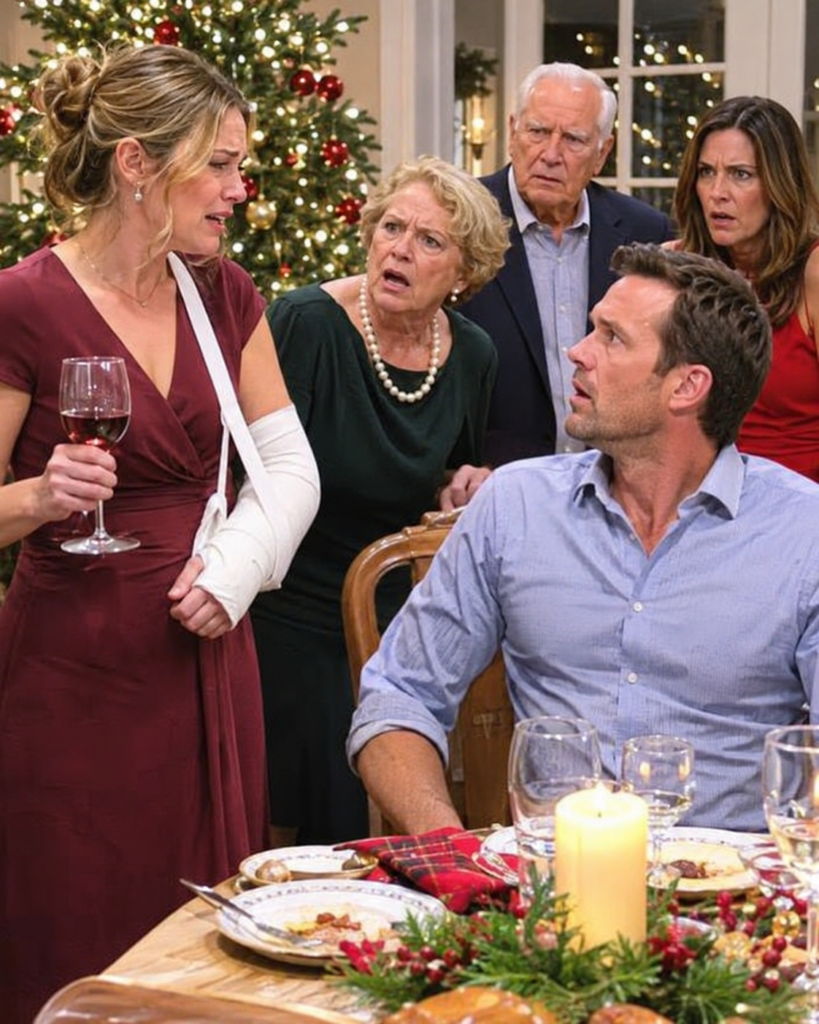
“Yes,” he said. “I said it. But everybody’s making it sound worse than it was.”
Carol leaned back in her chair.
“Then explain how it was.”
Derek glanced at me.
I recognized that look.
It was the look he gave me whenever I mentioned something inconvenient in front of other people. A warning disguised as embarrassment.
“Hope has been overwhelmed since the twins were born,” he said. “She gets emotional. I’ve been working constantly, and sometimes she expects me to come home and immediately take over everything.”
Priya set down her glass.
“Everything?”
“That’s not what I meant.”
“Then what did you mean?”
Derek rubbed his forehead.
“I mean, I’m doing my part. I pay the mortgage. I cover the insurance. I make sure we have everything we need.”
I looked at the untouched potatoes on my plate.
For five months, I had heard versions of that speech.
Derek earned more than I did, so he believed his paycheck purchased exemption from the ordinary responsibilities of fatherhood.
Never mind that I worked full-time too.
Never mind that I was still answering claims emails during nap time.
Never mind that I had returned to work after maternity leave while continuing to handle nearly every feeding, diaper, appointment, and sleepless night.
Carol folded her napkin.
“Derek, when you were little, your father worked twelve-hour shifts at the plant.”
Derek nodded, relieved.
“Exactly.”
“And every evening,” she continued, “he came home, washed his hands, and took you from me so I could sit down.”
Derek’s expression changed.
His father, Frank, lowered his glass.
“Your mother had three children under six,” Frank said. “You think I came home and told her I was too tired to be their father?”
“That was different.”
“How?”
Derek had no answer.
Frank leaned forward.
“I’ll tell you what was different. We didn’t have a dishwasher. We didn’t have grocery delivery. Your mother washed cloth diapers by hand for your first year.”
Carol looked at her son.
“And your father still knew how to change one.”
For the first time that evening, I saw something other than anger on Derek’s face.
I saw confusion.
Not because he suddenly understood.
Because the family history he had been using to justify himself had turned against him.
Then Priya asked a question.
“Hope, how are you managing the babies with your arm?”
I swallowed.
“I’ve been doing most things sitting down. I prepare bottles one-handed. I keep supplies within reach. Sometimes I wait until someone can help me move the boys.”
“Someone?” Carol repeated.
I looked at Derek.
He looked away.
“Sometimes my neighbor, Mrs. Alvarez, comes over,” I admitted.
Priya’s eyebrows rose.
“Your seventy-year-old neighbor?”
“She’s sixty-eight.”
“That doesn’t make this better.”
Derek pushed his chair back.
“Okay. Enough. This is ridiculous. We’re having a family dinner, not a trial.”
I reached into my purse.
My notebook was small, blue, and bent at the corners.
I hadn’t planned to bring it out.
But when Derek called the truth ridiculous, I realized that speaking without evidence would only give him another opportunity to dismiss me.
I placed the notebook beside my plate.
“I wrote things down because I kept wondering whether I was exaggerating.”
Derek stared at it.
“What is that?”
“A record.”
“Of what?”
“Of the times I asked for help. The times you refused. The nights I couldn’t safely care for the boys because I couldn’t lift them.”
His face hardened.
“You’ve been keeping a diary about me?”
“No,” I said. “I’ve been keeping a record of what happened to me.”
I opened to the first marked page.
“Wednesday. Seven a.m. Asked Derek to feed Miles before work. He said he didn’t have time. Left at seven twenty after spending fifteen minutes watching videos.”
Derek shook his head.
“You’re seriously doing this?”
“Friday. Ten thirty p.m. Asked Derek to carry Luke from the changing table to his crib. He said I needed to stop interrupting him.”
“Hope.”
“Tuesday. Eleven fifty-two p.m. Lost my balance reaching into Luke’s bassinet. Caught myself with my injured arm.”
Carol’s face went pale.
“What?”
I looked at her.
“I almost fell into the crib.”
Priya covered her mouth.
“Was Luke hurt?”
“No. He was safe.”
“And you?” Frank asked.
“My arm hurt badly afterward. The tingling got worse.”
Carol stood so abruptly that her chair scraped the floor.
“Derek, were you home?”
He nodded reluctantly.
“Were you asleep?”
“No.”
“Then where were you?”
“In the bedroom.”
“Doing what?”
He stared at the table.
“On my phone.”
Carol pressed a hand against the back of her chair.
I had never seen her look at her son that way.
It wasn’t fury.
It was disappointment so complete that it seemed to have emptied her.
“You knew your wife couldn’t lift your children,” she said.
Derek’s voice rose.
“I didn’t know she was about to fall!”
“You knew she needed help!”
He stood.
“I’m not sitting here while everybody gangs up on me.”
He grabbed his keys.
I watched him walk toward the front door.
A familiar part of me wanted to follow him.
To apologize for embarrassing him.
To explain that I hadn’t meant to hurt him.
To restore peace, even if restoring peace meant swallowing everything that had happened.
But I stayed seated.
Derek stopped in the doorway.
“Hope. We’re leaving.”
I looked at my cast.
Then at my untouched dinner.
“No,” I said.
He blinked.
“What?”
“I’m staying.”
“The boys are at home with the sitter.”
“Yes. Until nine.”
“Then we need to go.”
“You can go home and take care of them.”
His mouth opened.
Closed.
“By myself?”
The room went completely silent.
I looked straight at him.
“Yes, Derek. By yourself.”
He stared at me as though I had suggested something impossible.
Then he laughed once.
A short, humorless sound.
“You’re unbelievable.”
He walked out.
The front door slammed hard enough to rattle the picture frames.
For several seconds, nobody spoke.
Then Carol sat beside me.
She took my uninjured hand.
“Hope, sweetheart, why didn’t you tell us how bad it was?”
I looked at her.
“Because I thought if I couldn’t handle motherhood, it meant I was failing.”
Carol’s eyes filled.
“Oh, honey.”
She squeezed my hand.
“You weren’t failing motherhood. You were trying to do two people’s jobs with one working arm.”
Something inside me cracked.
I had spent weeks forcing myself not to cry because crying took time I didn’t have.
But sitting at that table, surrounded by people who finally believed me, I couldn’t hold it back.
I cried until my throat hurt.
Priya brought tissues.
Frank cleared the dishes.
Carol stayed beside me.
Nobody told me I was overreacting.
Nobody asked me to consider how tired Derek might be.
For the first time since my accident, I didn’t have to defend my exhaustion.
Then my phone rang.
Derek.
I answered.
“What?”
“Where are the bottles?”
I closed my eyes.
“In the refrigerator.”
“Which shelf?”
“The middle one.”
“Why are there six different bottles?”
“Because the boys use different nipples.”
He sighed loudly.
“Which one is Luke’s?”
“The ones with the blue rings.”
There was a pause.
Then Miles started crying in the background.
Derek cursed under his breath.
“Hope, you need to come home.”
I looked at Carol.
She was watching me carefully.
“Why?”
“Because they’re both crying.”
“And?”
“And I can’t do everything at once!”
I stared at the phone.
For five months, I had been doing everything at once.
Feeding one baby while soothing the other.
Answering work emails while sterilizing bottles.
Changing diapers while calculating how many hours of sleep I might get before the next feeding.
Doing it all with a broken arm had nearly put one of my children in danger.
Yet Derek had lasted less than twenty minutes before declaring the situation impossible.
“Put the phone on speaker,” Carol whispered.
I did.
Derek’s voice filled the dining room.
“Hope, I’m serious. I don’t know what you expect me to do.”
I took a slow breath.
“I expect you to feed your sons.”
“Both of them?”
“Yes.”
“At the same time?”
“If you can manage it safely. Otherwise, one at a time.”
He was silent.
Then he said something that made every person at that table go still.
“That’s not fair.”
Frank reached for the phone.
“Son?”
Derek froze.
“Dad?”
“Your wife has been doing this for five months. You’re telling me you can’t handle one evening?”
“Dad, you don’t understand—”
“No. I understand perfectly.”
Frank’s voice was quiet.
“You thought the work was easy because you never bothered to do it.”
Derek said nothing.
Frank continued.
“Put one boy somewhere safe. Feed the other. Then switch. If you need help, ask the sitter to stay longer. But don’t call your injured wife and demand she rescue you from being a father.”
The line went dead.
I stared at the screen.
Carol gently took the phone from my hand and placed it facedown.
“You’re sleeping here tonight,” she said.
I shook my head immediately.
“I can’t leave the boys.”
“I’m not asking you to abandon them. I’m asking you to let their father care for them while we make sure they’re safe.”
Priya pulled out her phone.
“I’ll call the sitter and ask her to stay until we know everything’s settled.”
Within minutes, the sitter confirmed she could stay another two hours.
She also sent a message that made my stomach twist.
Derek seems very stressed. He keeps asking me where everything is.
I stared at those words.
Five months.
He had lived in the same house as his children for five months.
And he didn’t know where we kept the clean bottles.
I thought that would be the worst revelation of the night.
I was wrong.
At eight forty-seven, the sitter called Priya.
Derek had left the house.
He told her he needed to clear his head.
He had driven away without saying when he’d return.
I felt the blood drain from my face.
“Are the boys okay?” I asked.
“They’re fine,” the sitter assured us. “Both asleep. But I thought someone should know.”
Carol was already reaching for her coat.
Frank picked up his keys.
I stood too quickly and felt pain shoot through my arm.
“I’m coming.”
Carol turned.
“No, Hope. You’re going to sit down.”
“They’re my babies.”
“And they’re my grandsons,” she replied. “We are going to make sure they’re safe.”
Priya stepped beside me.
“I’ll drive you. Dad and Mom can meet us there.”
The drive took fifteen minutes.
I spent every one of them staring at my phone.
No message from Derek.
No explanation.
Nothing.
When we arrived, the sitter opened the door looking relieved.
Miles and Luke were asleep in their cribs.
I went straight to the nursery.
I stood between them, listening to their breathing.
Both safe.
Both warm.
Both completely unaware that the adults responsible for them were standing at the edge of something enormous.
Behind me, Carol entered quietly.
She looked at the boys.
Then at my cast.
And finally at the empty doorway where her son should have been.
“I raised him better than this,” she whispered.
I didn’t know what to say.
Because I had spent years believing the same thing.
At nine thirty, Derek finally came home.
He stopped when he saw his parents sitting in our living room.
Priya stood near the nursery door.
I sat on the couch with my injured arm supported by a pillow.
Derek looked around.
“What is this?”
Frank stood.
“Where were you?”
“Driving.”
“Why?”
“Because everybody was attacking me, and I needed some space.”
Carol’s voice was icy.
“You left your children.”
“With the babysitter!”
“Without telling your wife when you’d be back.”
Derek threw up his hands.
“I can’t believe this. I make one mistake and suddenly I’m the worst father in the world.”
I looked at him.
“One mistake?”
He turned toward me.
I reached for the notebook.
But then I stopped.
Because I realized I didn’t need it anymore.
The people in that room had seen enough.
I set the notebook down.
“Derek, I have something to tell you.”
He crossed his arms.
“Of course you do.”
I looked at his parents.
Then back at him.
“Tomorrow morning, I’m taking the boys to your mother’s house. I’m staying there while my arm heals.”
His expression shifted.
“You can’t just take my kids.”
“They’re our kids. And I’m not keeping them from you. You can come see them and care for them. But I’m not continuing this arrangement.”
He stared at me.
“You’re leaving me?”
“I’m leaving a situation where I can’t safely recover.”
For the first time that night, he looked frightened.
Not angry.
Not inconvenienced.
Frightened.
“Hope,” he said quietly, “you can’t be serious.”
I met his eyes.
“I’ve never been more serious.”
He stepped closer.
“Then what am I supposed to do?”
I looked at the two baby monitors glowing on the coffee table.
Then at the man who had spent months insisting that caring for our children was my responsibility alone.
And I gave him the same answer he’d given me.
“Figure it out.”
Derek’s face went completely still.
But before he could respond, Frank spoke from behind him.
“Actually, son, there’s something else you need to know.”
Derek turned.
Frank reached into his jacket pocket and took out a folded envelope.
“I’ve been meaning to give you this for months,” he said. “But after tonight, I think you need to read it before you decide what kind of man you’re going to be.”
Derek stared at the envelope.
On the front, in Carol’s handwriting, were four words.
FOR WHEN YOU BECOME A FATHER.
And when Derek opened it, his hands began to shake.
To read further, click the “NEXT” button 👇
PART 3 — THE LETTER HIS FATHER NEVER MEANT TO USE
Derek unfolded the letter with the same hands that had refused to hold our sons.
For a moment, he simply stared at the paper.
Then his eyes moved across the first line.
His expression changed.
“Dad,” he whispered. “What is this?”
Frank remained standing beside the fireplace.
“Something I wrote when your mother was pregnant with you.”
Derek looked up.
“You wrote me a letter before I was born?”
“I wrote it because I was afraid of becoming the kind of father I had grown up with.”
Carol lowered herself onto the couch beside me.
I glanced at her.
She was crying silently.
Derek looked back at the letter.
Then he began reading aloud.
— Son, if you’re holding this, it means you’ve become a father. I hope you’re proud. I hope you’re frightened, too. Because being responsible for a child should frighten any man who understands what that responsibility means.
His voice faltered.
He swallowed and continued.
— Your grandfather believed providing money was enough. He worked, came home, and expected the world to make room for his exhaustion. Your grandmother raised four children almost entirely alone. By the time I was twelve, I understood that a woman could be married and still have no partner.
Derek stopped reading.
Frank’s jaw tightened.
— Keep going, son.
Derek looked down.
— I promised myself I would never become him. But promises are easy before you’re tired. They’re easy before a baby screams at three in the morning and your patience disappears. The real test is what you do when nobody is praising you.
The living room was silent.
Even the baby monitors seemed quieter.
Derek continued.
— If your wife is exhausted, don’t ask why the house is messy. Ask what you can take off her shoulders. If she’s sick, don’t make her prove she’s sick enough to deserve rest. And if your child needs you, remember that you’re not helping your wife. You’re being a father.
His voice broke on the last sentence.
He lowered the page.
Frank watched him.
— I wrote that thirty-four years ago. Your mother kept it because she thought you’d appreciate it someday.
Derek stared at the floor.
— Why didn’t you give it to me when the twins were born?
Frank’s expression hardened.
— Because I thought I’d already taught you everything in that letter.
Those words landed harder than any shouting could have.
Derek sank into the armchair.
For several seconds, he said nothing.
Then he looked at me.
— Hope, I didn’t realize you felt this alone.
I felt something cold settle in my chest.
Not because he sounded insincere.
Because he was still describing my reality as a feeling.
— Derek, I didn’t feel alone. I was alone.
He opened his mouth.
I continued before he could interrupt.
— I asked you for help when I was pregnant. I asked you after the boys were born. I asked you when I went back to work. And I asked you when the doctor told me I couldn’t lift our children.
I held up my cast.
— How much clearer did I need to be?
He looked away.
— I thought you had everything under control.
— Because I kept everything under control.
He didn’t answer.
— Do you know why the boys have never run out of formula? Because I track it. Do you know why their pediatrician remembers their names? Because I’m the one who takes them. Do you know why we have clean clothes, paid bills, and groceries in the refrigerator?
I leaned forward.
— Because I make sure those things happen before you even realize they need to happen.
Derek rubbed his face.
— I know you do a lot.
— No. You know the results. You’ve never bothered to learn the work.
Priya, standing near the doorway, nodded slowly.
Then Carol spoke.
— Derek, tomorrow morning, Hope and the babies are coming home with us.
He looked up sharply.
— Mom, this is between me and my wife.
— It became our concern when your wife couldn’t safely care for two infants and you refused to help.
— I said I was sorry!
I stared at him.
— You haven’t actually said that yet.
His face reddened.
He looked around the room.
Then, finally, he turned toward me.
— I’m sorry.
Two words.
Words I had wanted for weeks.
But they didn’t make my arm stop hurting.
They didn’t erase the nights on the nursery floor.
They didn’t change the fact that I had nearly fallen into Luke’s crib while Derek scrolled through his phone.
— Thank you, I said. But I’m still leaving tomorrow.
He stared at me.
— Even after I apologized?
— An apology isn’t a childcare plan.
Frank looked down, hiding something that might have been approval.
Derek’s expression hardened again.
— So what? You’re going to punish me until I do everything your way?
I shook my head.
— I’m going somewhere I can heal without putting our children at risk. That’s not punishment.
He stood abruptly.
— Fine. Go.
Carol stiffened.
Derek pointed toward the hallway.
— Take the babies. Take whatever you want. But don’t expect me to come crawling after you.
I looked at him for a long moment.
Then I said something that surprised even me.
— Derek, I don’t want you crawling after me.
My voice was steady.
— I want you to stand up.
He had no answer.
That night, Carol stayed with me while Frank and Priya helped prepare the nursery supplies for the move.
Derek shut himself in our bedroom.
He didn’t come out when Miles woke at midnight.
He didn’t come out when Luke needed a bottle at two.
And he didn’t come out when I sat at the kitchen table, signing the temporary leave paperwork my doctor had recommended.
By morning, I understood something important.
A dramatic conversation could expose a problem.
It couldn’t solve it.
At nine, Carol arrived with a minivan full of empty storage bins.
Priya came carrying coffee.
Frank brought two properly installed infant car seats.
And Derek stood in the hallway watching us pack.
— You’re really doing this, he said.
I zipped the diaper bag.
— Yes.
He looked at the bins.
— How long?
— Until my doctor says I can safely lift the boys and we’ve worked out a reliable parenting arrangement.
— That’s six weeks.
— Possibly longer.
He stared at me.
— You can’t expect me to live here alone for six weeks.
I looked around our kitchen.
The counters were cluttered with yesterday’s dishes.
The trash was overflowing.
There were three empty formula containers beside the sink.
I had been gone from my normal routine for less than twelve hours.
Already, the house looked different.
— You’ll manage, I said.
He laughed bitterly.
— Easy for you to say.
I almost answered.
Then I remembered all the times he’d told me to figure it out.
Instead, I picked up my purse.
Carol carried Miles.
Priya carried Luke.
And I walked out of the house without carrying anything heavier than my own decision.
The first night at Carol’s, I slept for seven uninterrupted hours.
Seven.
When I woke, sunlight was streaming through the curtains.
For one terrifying second, I thought something terrible had happened.
The boys hadn’t cried.
I hadn’t heard bottles warming.
Nobody had called my name.
I hurried toward the guest room door.
Carol was in the nursery, rocking Luke.
Frank sat beside the window feeding Miles.
Both babies were perfectly content.
Carol smiled.
— Good morning, sweetheart.
I stared at her.
— Why didn’t you wake me?
She looked genuinely puzzled.
— Because you were sleeping.
I felt tears rise unexpectedly.
— But the boys—
— Have two grandparents who know how to hold a bottle.
Frank glanced up.
— And one grandfather who is learning that Miles prefers his milk slightly warmer.
I laughed.
It came out half sob.
Carol stood and kissed my forehead.
— Go take a shower. A long one.
I hadn’t taken a shower without rushing in five months.
That morning, I stood beneath the warm water until the bathroom mirror disappeared behind steam.
And for the first time since becoming a mother, I realized how much of myself I had been sacrificing just to keep everyone else comfortable.
Meanwhile, Derek began discovering the household he believed ran itself.
On Wednesday, he called.
— Where do you keep the laundry detergent?
I told him.
On Thursday, he texted.
What’s the password for the electricity account?
I sent him the information.
On Friday, he asked whether I had paid the water bill.
I replied that it was scheduled for automatic payment.
Then I added:
You can find all the household account information in the shared folder I created last year.
He didn’t respond.
Saturday morning, he called again.
— Hope, the refrigerator smells weird.
I closed my eyes.
— Did you throw away the chicken from Tuesday?
Silence.
— What chicken?
I almost laughed.
Then I stopped myself.
For years, I had automatically solved every problem Derek brought me.
Even problems he could solve by opening a refrigerator door.
— Derek, you’re an adult. Check the dates and throw away spoiled food.
He sighed.
— You don’t have to talk to me like I’m stupid.
— Then stop acting like ordinary household tasks require my supervision.
He hung up.
I expected him to call back angry.
Instead, Sunday brought something unexpected.
At four in the afternoon, Carol’s doorbell rang.
Derek stood on the porch holding two packages of diapers, a bag of groceries, and a small notebook.
He looked exhausted.
His shirt was wrinkled.
There were dark circles beneath his eyes.
But for once, he wasn’t looking at his phone.
— Can I see the boys? he asked.
Carol stepped aside.
— Of course.
He entered the living room.
Miles was lying on his play mat, batting at a stuffed elephant.
Luke was asleep in his bassinet.
Derek knelt beside Miles.
— Hey, buddy.
Miles smiled.
Derek’s face softened.
He reached down and carefully lifted him.
Then he looked at me.
— Is this okay?
I nodded.
— He’s your son.
Derek held Miles against his chest.
For a while, he said nothing.
Then he reached into his jacket and handed me the notebook.
I recognized the format immediately.
Dates.
Times.
Tasks.
But this wasn’t my notebook.
It was his.
I opened the first page.
Monday: Cleaned kitchen. Took out trash. Paid internet bill.
Tuesday: Laundry. Grocery shopping. Called pediatrician to confirm upcoming appointment.
Wednesday: Read infant sleep safety guidelines. Practiced preparing bottles.
Thursday: Scheduled parenting class.
Friday: Contacted family counselor.
I looked up.
— What is this?
Derek swallowed.
— I thought if I wrote down what I was doing, maybe you’d believe I was trying.
I closed the notebook gently.
— Derek, I don’t need you to prove you can clean a kitchen.
His shoulders dropped.
— Then what do you need?
I looked toward Miles.
— I need to know that when something goes wrong, I won’t be the only adult who responds.
He stared at me.
I continued.
— I need you to know our sons as people, not as chores. I need you to notice when we’re low on diapers without waiting for me to tell you. I need you to understand that parenting doesn’t begin when you get home from work and end when you’re tired.
He nodded slowly.
— I know.
— Do you?
He looked down at Miles.
Then he said something I hadn’t expected.
— I called my boss.
I blinked.
— Why?
— I asked whether I could change my schedule temporarily. Work from home two days a week. Leave earlier on Fridays.
— And?
— He said yes.
I stared at him.
For months, Derek had told me his job made helping impossible.
He had presented his schedule as an immovable law of nature.
And now, after one phone call, he’d discovered flexibility.
I felt anger rise again.
— You could have done that when I broke my arm.
He nodded.
— Yes.
No excuse.
No explanation.
Just yes.
Somehow, that hurt more.
— Why didn’t you?
He looked at me.
His eyes were wet.
— Because I didn’t want to.
The room went still.
He swallowed hard.
— I liked coming home and having everything done. I liked being the guy who worked hard and didn’t have to think about anything else. I told myself you were better with the babies because it made my life easier.
I couldn’t speak.
Derek continued.
— And when you broke your arm, I was angry because suddenly I couldn’t pretend anymore.
He looked down at our son.
— I didn’t want to admit how much I was asking you to carry.
For the first time, I believed he was telling the complete truth.
But believing him didn’t mean I was ready to trust him.
— I’m glad you understand that, I said. But understanding isn’t the same as changing.
He nodded.
— I know.
Then he asked:
— Could I start taking the boys on Saturday afternoons? Maybe four hours? You can rest, and I’ll handle everything.
I studied him.
— Not alone yet.
His face fell.
— Hope—
— You’ve never cared for both boys independently for that long. We need to build up to it safely. You can start here, with your parents nearby, and learn their routines.
He looked toward Carol.
She nodded.
— I’ll be here if you need me. But I’m not doing the work for you.
Derek took a breath.
— Okay.
That afternoon, he changed four diapers.
He prepared two bottles.
He rocked Luke through a crying spell that lasted nearly half an hour.
At one point, I heard him whisper:
— Come on, buddy. Tell Dad what you need.
I stood outside the nursery.
For once, I didn’t go inside to rescue him.
I listened as he tried different ways to soothe Luke.
Eventually, the crying stopped.
When Derek emerged, his hair was a mess and there was spit-up on his shoulder.
He looked at me.
— I think he’s asleep.
I smiled faintly.
— Good.
He glanced down at his shirt.
— Is it always this hard?
I looked at him.
— Sometimes it’s harder.
He nodded.
And this time, he didn’t argue.
Over the next two weeks, Derek kept coming.
Not perfectly.
He forgot wipes once.
He mixed up the boys’ spare clothes.
He called me from the grocery store because he couldn’t remember which formula we used.
But something was different.
When I told him to check the label in the shared folder, he did.
When Luke cried, he picked him up.
When Miles needed changing, Derek didn’t wait for someone to notice.
He was learning.
And I was learning something too.
I could allow him to struggle without immediately making his struggle my responsibility.
Then, one Thursday evening, Derek arrived at Carol’s house looking unusually serious.
He asked whether we could speak privately.
We sat at the kitchen table.
He placed a folded document in front of me.
I looked at the heading.
FAMILY MEDICAL LEAVE REQUEST — APPROVED.
I stared at it.
— Derek?
He sat across from me.
— I talked to human resources. I qualified for two weeks of protected leave under our company’s policy. Some of it will be unpaid, but we can manage.
I looked at the dates.
The leave would begin the following Monday.
— Why?
He met my eyes.
— Because I want to take care of our sons while you recover.
My throat tightened.
— You don’t have to do this to impress your parents.
— I’m not doing it for them.
He reached into his pocket.
Then he placed a second piece of paper on the table.
It was a letter.
Not from Frank.
Not from Carol.
From Derek.
— I wrote something, he said. I was going to read it to you, but I don’t think I can get through it without crying.
I unfolded the page.
The first sentence made my chest ache.
Hope, I thought I was a good husband because I never left you. I didn’t understand that you could abandon someone while still living in the same house.
I read the rest slowly.
He apologized for the night I fell.
For the bottles he refused to prepare.
For every time he had used work as an excuse to avoid responsibility.
And then I reached the final paragraph.
I don’t expect you to come home because I’ve finally started doing what I should have done all along. I want to become someone you can trust again, even if that takes longer than your arm needs to heal.
I looked up.
Derek was crying.
Not loudly.
Not dramatically.
Just sitting across from me with tears running down his face.
I wanted to believe him.
A part of me desperately wanted to go home.
But another part remembered sitting on the nursery floor with my injured arm throbbing while my husband slept twenty feet away.
— Derek, I said quietly, I need to ask you something.
He nodded.
— Anything.
I placed the letter between us.
— If I hadn’t told your family what was happening, would you have changed?
He looked at me.
And for a long time, he said nothing.
Then he whispered:
— No.
I felt my heart sink.
He wiped his face.
— I don’t think I would have.
I looked away.
Because there it was.
The truth I had been afraid to hear.
He hadn’t changed because my pain mattered enough.
He had changed because other people finally made him confront it.
Derek leaned forward.
— But that’s not the whole answer.
I looked back.
— What do you mean?
He swallowed.
— I started changing because I was ashamed. But I’m still changing because I finally understand what I almost lost.
Before I could respond, my phone rang.
It was Dr. Okafor’s office.
I answered.
The nurse’s voice was calm, but serious.
— Hope, we’ve reviewed the imaging from your latest appointment. The doctor would like you to come in tomorrow morning.
My stomach tightened.
— Is something wrong?
There was a brief pause.
— The fracture isn’t healing as well as we’d hoped. Dr. Okafor wants to discuss the possibility of surgery.
I stared at the wall.
Surgery.
More recovery.
More weeks without being able to lift my children.
Derek saw my face change.
— Hope? What’s wrong?
I lowered the phone.
For a moment, I couldn’t speak.
Then I told him.
His eyes widened.
And suddenly, everything we had been discussing became more than promises.
More than apologies.
More than a two-week leave request.
Because tomorrow, I might learn that my recovery would take months instead of weeks.
And this time, Derek would have to decide whether he was truly ready to become the father our children needed.
He reached across the table.
Not for my injured hand.
For my left one.
— Hope, he said, whatever happens tomorrow, I’m coming with you.
I looked at him.
— And if the doctor says I need surgery?
He tightened his grip gently.
— Then we’ll make a plan.
I searched his face.
— And if I can’t lift the boys for another three months?
His eyes filled again.
— Then I’ll lift them.
I wanted those words to be enough.
But the next morning, sitting in Dr. Okafor’s examination room, I discovered that the hardest test of our marriage hadn’t happened yet.
Because after reviewing my scans, the doctor looked at Derek and asked one simple question.
— Mr. Bennett, if your wife needs surgery, can you guarantee she won’t have to lift either child during her recovery?
Derek opened his mouth.
But before he could answer, Dr. Okafor added:
— I need you to understand something. If she reinjures this arm, we may be looking at permanent limitations.
I felt Derek’s hand tighten around mine.
And then, for the first time in our marriage, he answered a question about our family without looking to me for help.
— Yes, Doctor. I can guarantee it.
Dr. Okafor studied him.
— Good. Because I’m going to hold you to that.
To read further, click the “NEXT” button 👇
PART 4 — THE DAY HE FINALLY BECAME A FATHER
Dr. Okafor looked at Derek for a long moment.
Then she turned back to my X-rays.
— Mr. Bennett, I appreciate your confidence. But I need you to understand that your wife cannot afford another setback.
Derek nodded.
— I understand.
— No, she said gently. I need to know that you understand what that means in practical terms.
She pointed toward the image on her monitor.
— This fracture has shifted slightly. We may be able to correct it surgically, but afterward, Hope will need significant assistance. She won’t be lifting your sons, carrying laundry baskets, or pushing herself through pain because nobody else is available.
I watched Derek’s face.
Three weeks earlier, he would have looked irritated.
He would have checked the time.
He might have asked whether I could simply be more careful.
Instead, he took out his notebook.
— How long will she need help?
Dr. Okafor blinked.
— At least eight more weeks of strict lifting restrictions, potentially longer depending on healing.
Derek wrote it down.
— What about bathing the babies?
— She shouldn’t be doing that independently.
He nodded.
— Diaper changes?
— She may be able to manage some tasks at a safe height with her uninjured arm, but she must avoid putting weight through the injured arm.
He kept writing.
— What about nighttime feedings?
Dr. Okafor looked at me.
— Hope needs sleep and recovery. You’ll need a plan that doesn’t require her to get up and lift either child.
Derek nodded again.
— Okay.
I stared at him.
This was the same man who had refused to follow a feeding schedule because he didn’t want to do shifts in his own house.
Now he was asking questions I hadn’t even thought to ask.
But I reminded myself that one good appointment didn’t erase five months of neglect.
Dr. Okafor scheduled surgery for the following Tuesday.
On the drive back to Carol’s house, Derek was quiet.
I watched the trees pass outside the passenger window.
Finally, he spoke.
— I’ve been thinking about something.
I turned toward him.
— What?
— When the twins were born, everyone congratulated me.
I waited.
— At work, people kept saying I must be exhausted. They told me I was a great dad just for showing pictures of the boys.
He swallowed.
— Nobody asked whether I knew how to take care of them.
I looked at him.
— And you didn’t ask yourself?
He shook his head.
— No.
We stopped at a red light.
Derek stared through the windshield.
— I thought being a good father meant being proud of my children. I didn’t realize pride was the easy part.
For once, I didn’t soften the truth.
— Loving them is easy when someone else is doing all the work.
He nodded.
— I know.
Then he said something that stayed with me.
— I don’t want Miles and Luke to grow up thinking their mother exists to make their lives comfortable while their father gets to rest.
I looked down at my cast.
— Neither do I.
That afternoon, Derek asked Carol and Frank to join us at the kitchen table.
He brought his laptop, a calendar, and the notebook he’d been carrying everywhere.
Then he opened a spreadsheet.
I almost laughed.
My husband, who had once rejected a printed feeding schedule, had created a parenting schedule of his own.
— I talked to my manager, he began. My two weeks of leave are approved. After that, I’ll work from home three days a week for the next two months.
Frank raised an eyebrow.
— And the other two days?
— Mom and Dad offered to help during work hours. Priya said she could cover Friday afternoons if needed. I’m also looking into a part-time caregiver.
Carol nodded.
— That’s a start.
Derek turned toward me.
— I’ve put every feeding, appointment, medication reminder, and household task into a shared calendar. But I don’t want you to have to manage it.
I studied the screen.
He had divided the responsibilities into categories.
Morning care.
Evening care.
Nighttime feedings.
Medical appointments.
Groceries.
Laundry.
Cleaning.
Bills.
And beneath each category, he had assigned himself specific tasks.
I noticed something immediately.
My name wasn’t beside every difficult job.
For the first time, I wasn’t the default parent.
— I know this doesn’t fix everything, Derek said. But I want you to see that I’m serious.
I looked at the calendar.
Then at him.
— What happens when you’re tired?
He didn’t hesitate.
— I do it tired.
— What happens when both boys are crying?
— I make sure they’re safe, then handle one need at a time. If I need help, I ask.
— And what happens when I’m asleep?
His eyes softened.
— You stay asleep.
Carol looked away.
I knew she was trying not to cry.
I was too.
But I had one more question.
— What happens when nobody is watching you?
Derek sat very still.
Then he closed his laptop.
— That’s the part I have to prove.
I nodded.
— Yes. It is.
The surgery took place four days later.
I remember the cold operating room.
The bright lights.
The anesthesiologist telling me to count backward.
And then waking in recovery with my arm wrapped and supported.
Derek was sitting beside the bed.
He had a paper cup of coffee in one hand and my discharge instructions in the other.
When he saw my eyes open, he stood.
— Hey.
My throat felt dry.
— The boys?
— With Mom and Dad. They’re fine.
— Did Luke take his bottle?
Derek smiled.
— Four ounces at eleven thirty. Miles took five. Luke had a little trouble settling, but Dad walked him around the living room.
I stared at him.
He knew.
He knew without checking with me.
I felt something inside my chest loosen.
Not completely.
But enough to breathe.
The surgeon explained that the procedure had gone well, though healing would require patience and follow-up appointments.
Derek listened carefully.
He asked about pain medication.
He asked about swelling.
He asked which symptoms required an urgent call.
And when the nurse handed him the paperwork, he didn’t pass it to me.
He read it.
All of it.
That evening, we returned to Carol’s house.
Derek stayed in the guest room across the hall from me.
The boys slept in the nursery.
At two seventeen in the morning, Luke began crying.
I woke instantly.
My body moved before my mind did.
I started to sit up.
Pain shot through my arm.
Then I heard footsteps.
Derek.
He entered the nursery.
Through the baby monitor, I watched him approach Luke’s crib.
— Hey, little man, he whispered. Dad’s here.
He checked Luke’s diaper.
Changed him.
Warmed a bottle.
Then sat in the rocking chair and fed him.
A few minutes later, Miles began fussing.
I reached toward the edge of the bed.
Old habits.
Old fear.
The certainty that if I didn’t respond, nobody would.
But Derek’s voice came through the monitor.
— I hear you, Miles. Give me a minute, buddy. You’re safe.
He finished feeding Luke, settled him in his crib, and picked up Miles.
No frustration.
No dramatic sigh.
No demand that I come help.
Just a tired father taking care of his children.
I lay back against the pillows.
And cried quietly.
Not because Derek had done something extraordinary.
Because he had finally done something ordinary.
Something I had needed from him all along.
Over the next several weeks, life settled into a rhythm I barely recognized.
Derek woke for nighttime feedings.
He learned which baby preferred the blue pacifier.
He discovered that Miles hated having his socks pulled off too quickly.
He learned that Luke settled faster when someone hummed softly while walking.
He knew how much formula we had.
He knew when the next pediatrician appointment was scheduled.
He even noticed when the diaper cream was running low.
One afternoon, I found him standing in Carol’s kitchen making a grocery list.
He looked up.
— We’re almost out of wipes. I added them to the order.
I smiled.
— Thanks.
Then I stopped.
For years, I had thanked him every time he did something that belonged equally to both of us.
Derek seemed to notice.
He shook his head.
— You don’t have to thank me for buying wipes.
I looked at him.
— I know.
He smiled faintly.
— I’m learning that too.
But the real test came on a Thursday afternoon.
I had a follow-up appointment with Dr. Okafor.
Carol was taking me.
Derek had the boys at home for the afternoon.
By then, he’d handled both babies independently several times, and we’d agreed he was ready for longer stretches.
At two forty, my phone rang.
Derek.
My stomach tightened.
For one second, I was back in that Sunday dinner conversation, hearing him demand that I come home because both boys were crying.
I answered.
— Everything okay?
There was noise in the background.
Miles crying.
Luke fussing.
And something else.
A loud electronic beeping.
— Hope, Derek said, I need to tell you something.
My heart raced.
— What happened?
— The washing machine overflowed. There’s water all over the laundry room floor.
I closed my eyes.
Of course.
Of course something had gone wrong.
— Are the boys safe?
— Yes. They’re both in their cribs. I checked them before calling.
— Okay. What do you need me to do?
There was a pause.
Then Derek said:
— Nothing.
I blinked.
— What?
— I just wanted to let you know in case you see a charge for the plumber. I turned off the water supply, called someone, and moved the boys away from the laundry room.
I sat completely still.
— You already called a plumber?
— Yeah. He’s coming at four. I’m cleaning up what I can safely handle until then.
Miles cried louder.
Derek sighed.
But it wasn’t the old sigh.
It wasn’t resentment.
It was simple exhaustion.
— I should go, he said. Miles needs me.
I waited.
He added:
— Don’t worry about us. Focus on your appointment.
Then he hung up.
I stared at my phone.
Carol glanced at me from the driver’s seat.
— Everything all right?
I looked at her.
And started laughing.
She looked alarmed.
— Hope?
— The washing machine flooded.
Her eyes widened.
— Oh, goodness. Are the boys okay?
— Yes.
— Does Derek need us?
I shook my head.
— No.
The word felt strange.
Wonderful.
Almost unbelievable.
— He handled it.
Carol smiled slowly.
— Well, would you look at that.
I turned toward the window.
For the first time in months, an emergency had happened at home, and I hadn’t become the emergency response system.
My husband had.
Not because I begged.
Not because his parents were watching.
Not because he wanted praise.
Because he was the adult who was there.
And he knew what to do.
Two months after surgery, Dr. Okafor finally gave me encouraging news.
The bone was healing well.
I could begin more intensive physical therapy.
I still needed to be cautious, but the worst of the restrictions were gradually coming to an end.
Derek attended the appointment with me.
He held my coat while I spoke with the doctor.
He asked whether certain household tasks were safe for me to resume.
Then, on the drive home, he said something unexpected.
— I don’t want you to go back to doing everything.
I looked at him.
— What do you mean?
— When your arm heals, I don’t want us to slip back into the old routine.
I watched him carefully.
— Neither do I.
He nodded.
— I’ve been thinking about how easy it would be. You’d start doing a little more. I’d start doing a little less. And eventually we’d be right back where we started.
I felt a strange mixture of pride and sadness.
Pride because he understood.
Sadness because it had taken so much pain to get here.
— That’s exactly what I’m afraid of, I admitted.
He reached for my left hand.
— Then we don’t let it happen.
I looked at him.
— We?
He smiled.
— We.
That weekend, Derek asked me to come home for dinner.
Not to move back permanently.
Just dinner.
Carol and Frank agreed to watch the boys for a few hours.
When I walked through our front door, I barely recognized the place.
The kitchen counters were clear.
The laundry was folded.
The refrigerator had fresh groceries.
The nursery was organized.
And on the kitchen wall hung a framed photograph of Miles and Luke.
Beneath it was a small wooden sign.
TWO PARENTS. ONE TEAM.
I stared at it.
Derek appeared from the kitchen wearing an apron.
— I know it’s a little cheesy.
I laughed.
— A little.
He smiled nervously.
— I made dinner.
The table was set.
There were candles.
And in the center sat a small vase of yellow flowers.
My favorite.
We ate slowly.
For once, nobody interrupted us.
After dinner, Derek brought out two envelopes.
My stomach tightened.
The last time he’d handed me an envelope, it had contained a confession.
This time, the first held a printed household plan.
Not a temporary schedule.
A permanent division of responsibilities.
The second held a letter.
Derek sat across from me.
— I’ve been working on this with our counselor.
I opened it.
The first line read:
Hope, I used to think marriage meant having someone who would take care of me. I understand now that marriage means becoming someone who can be counted on.
I kept reading.
He wrote about the nights he had slept while I cried.
About the way he’d mistaken my competence for endless capacity.
About the shame he’d felt when his family discovered the truth.
And about the deeper shame of realizing that he had needed witnesses before he would listen to his own wife.
Then I reached the final paragraph.
I can’t ask you to forget what I did. I can’t promise I’ll never make another mistake. But I can promise that I will never again treat your exhaustion as less important than mine, or our children as your responsibility alone. I want to earn a place beside you, not above you, and never again at your expense.
I folded the letter.
Derek watched me.
— I love you, Hope.
My eyes filled.
— I love you too.
He swallowed.
— Does that mean you’ll come home?
I looked around the kitchen.
The house was beautiful.
The dinner was thoughtful.
The letter was everything I had once wanted to hear.
But I had learned something during those weeks at Carol’s.
Love wasn’t enough without safety.
And forgiveness wasn’t the same as forgetting.
— I want to, I said. But not because of tonight.
Derek nodded.
— I understand.
— I need to know this is our life now. Not a performance while I’m injured.
He leaned forward.
— Then let’s keep proving it.
We agreed to continue counseling.
We agreed to review our responsibilities together every Sunday.
And we agreed that neither of us would ever again use the phrase “helping with the kids.”
Because they were our children.
Not my job.
Not his favor.
Our responsibility.
Three weeks later, I moved home.
Not because Derek begged.
Not because Carol insisted.
Not because my arm had healed enough for me to resume carrying everything.
I moved home because Derek had spent months showing me that he was finally willing to carry his share.
And the difference was visible in a hundred small ways.
He packed the diaper bag without asking.
He made pediatrician appointments.
He handled bedtime while I finished work.
He knew when I needed rest without requiring me to explain why.
And sometimes, when both boys were crying and dinner was burning, he looked at me and laughed.
— Well, this is chaos.
I’d laugh too.
— Welcome to parenthood.
But the moment I remember most happened on an ordinary Saturday morning.
The twins were almost nine months old.
My cast was gone.
Physical therapy was helping me regain strength.
And for the first time since my accident, I woke without pain.
Sunlight filled the bedroom.
The clock read eight thirty.
I sat up, startled.
Eight thirty?
The boys usually woke before six.
I hurried toward the nursery.
But halfway down the hallway, I heard laughter.
Not crying.
Laughter.
I stopped at the doorway.
Derek was sitting on the floor between Miles and Luke.
There were blocks everywhere.
A basket of clean laundry sat nearby.
Both boys were wearing fresh clothes.
And Derek had a burp cloth draped over his shoulder.
Miles crawled toward him.
Luke squealed.
Derek lifted Miles, kissed his forehead, and set him back down beside his brother.
Then he looked up and saw me.
— Morning, sleepyhead.
I stared.
— What time did they wake up?
— Five forty-five.
— And you didn’t wake me?
He looked genuinely confused.
— Why would I?
I leaned against the doorway.
— Because you were tired.
He smiled.
— So were you.
Four simple words.
So were you.
For months, my exhaustion had been invisible.
Now it mattered.
Derek stood and walked toward me.
— Coffee’s ready. Breakfast is in the kitchen.
I looked past him at our sons.
Miles was chewing on a teething toy.
Luke was trying to pull himself upright against a cushion.
They were happy.
Safe.
Loved.
And their father was standing beside me, not waiting for instructions.
I felt tears rise.
Derek noticed.
— Hey. What’s wrong?
I shook my head.
— Nothing.
He studied my face.
— Hope?
I smiled through the tears.
— I think this is the first time I’ve ever woken up and felt like I wasn’t already behind.
His expression softened.
He wrapped his arms around me carefully.
— You shouldn’t have had to wait this long.
I rested my forehead against his chest.
— No, I shouldn’t have.
We stood there for a moment.
Then Luke let out an indignant squeal.
Derek laughed.
— Apparently, our youngest disagrees with the timing of this emotional moment.
I laughed too.
He kissed my forehead and went back to the boys.
I watched him sit on the floor.
Watched him scoop Luke into his lap.
Watched Miles crawl toward his knee.
And I realized something.
The decision that had changed our marriage wasn’t exposing Derek at Sunday dinner.
It wasn’t moving to Carol’s house.
It wasn’t even refusing to accept his first apology.
It was the decision to stop protecting him from the consequences of his own choices.
For years, I had made his life easier by making mine harder.
I had covered his mistakes.
Explained away his absence.
Carried responsibilities that belonged to both of us.
And called it love.
But love shouldn’t require one person to disappear so the other can remain comfortable.
Derek hadn’t become a better husband because I found the perfect words to explain my pain.
He became better because I finally stopped pretending that my pain was acceptable.
That evening, we went to Carol and Frank’s house for Sunday dinner.
The same dining room.
The same long wooden table.
The same family gathered around it.
But everything felt different.
Derek arrived carrying both diaper bags.
He settled the boys into their high chairs.
He checked their bottles.
Then he sat beside me.
Frank lifted his glass.
— To family.
Everyone smiled.
But before anyone could drink, Derek stood.
He looked at his parents.
At Priya.
Then at me.
— I want to say something.
The table grew quiet.
My stomach fluttered.
Derek took a breath.
— A few months ago, we sat at this table, and I was angry because Hope told everyone the truth about how I was treating her.
He paused.
— I thought she embarrassed me.
He looked directly at me.
— But she didn’t embarrass me. My behavior did.
Carol’s eyes filled.
Derek continued.
— I used to tell myself that providing financially made me a good father. But I was using that excuse to avoid the work that mattered most.
He looked toward our sons.
— I missed five months of learning who my boys were because I thought caring for them was somebody else’s responsibility.
His voice cracked.
— And I nearly lost my marriage because I expected my wife to carry everything alone.
He turned toward me.
— Hope, I’m sorry I made you feel like asking for help was asking too much.
I shook my head gently.
— It wasn’t help, Derek.
He nodded.
— You’re right.
Then he smiled through his tears.
— I’m sorry I forgot that we were supposed to be partners.
Frank raised his glass.
— To learning before it’s too late.
Carol smiled.
— And to the women who refuse to let us stay foolish.
Everyone laughed.
Even Derek.
Especially Derek.
Later that night, after the boys were asleep, I found my old blue notebook in the back of my dresser.
The pages were still filled with dates.
Times.
Refusals.
Nights I had cried.
Moments I had doubted myself.
I sat on the edge of the bed and read the first entry.
Figure it out.
I remembered how small those words had made me feel.
How helpless.
How alone.
Then I turned to the final blank page.
I picked up a pen.
And wrote:
Today, Derek woke with the boys at 5:45 a.m. He fed them, changed them, played with them, and let me sleep.
I paused.
Then added:
I didn’t have to ask.
I closed the notebook.
Derek appeared in the doorway.
— Everything okay?
I looked up.
— Yeah.
He smiled.
— Come to bed. You’ve got physical therapy in the morning.
I placed the notebook in the drawer.
For a moment, I considered throwing it away.
But I didn’t.
Not because I wanted to hold on to the hurt.
Because I never wanted to forget what it had taken to stop accepting it.
I turned off the lamp.
Derek reached for my hand.
And together, we walked down the hallway.
Past the nursery.
Past the laundry room.
Past the kitchen where our marriage had nearly broken.
Toward a bedroom where, for the first time in a very long time, I knew I could sleep without worrying that everything would fall apart if I closed my eyes.
I had once believed that being a good mother meant carrying everything.
Now I knew better.
Being a good mother also meant showing my sons what partnership should look like.
It meant teaching them that love wasn’t measured by how much one person could endure.
It was measured by how willingly two people showed up for each other.
And Derek?
He never said that mothers didn’t get sick days again.
Because he’d finally learned the truth.
Mothers don’t need permission to rest.
Fathers don’t deserve applause for parenting.
And a marriage isn’t a partnership until both people are willing to carry the weight.
That was the family I had wanted all along.
And at last, it was the family we were becoming.
THE END