The Reservation I Didn’t Make
The first time I said no to the Benton family Christmas trip, nobody believed me.
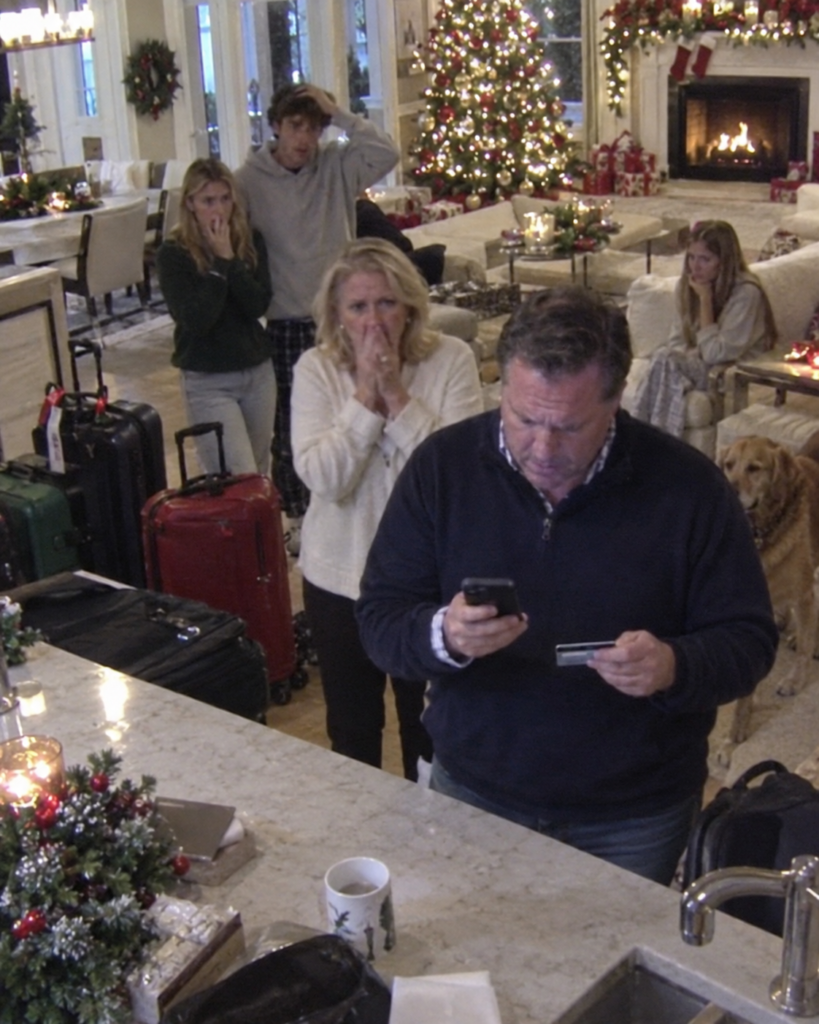
We were on a Sunday-night video call in early November, all fourteen little squares arranged across my laptop screen. Neil’s mother, Colleen, was wrapped in a red cardigan from her couch in Ohio. His brother Ryan and Ryan’s wife, Beth, were talking over each other from their kitchen. Neil’s sister Marcy had three teenagers moving in and out behind her.
I was sitting at our dining table with a yellow legal pad because, for sixteen years, that was how these calls worked.
Everyone talked.
I wrote things down.
Then Neil said, “Leah found us a great place outside Boone. Eight bedrooms, game room, big kitchen. She’ll handle the booking tomorrow.”
I turned my head toward him.
He was smiling at the screen.
I had never seen the house he was talking about.
I had not agreed to book anything.
“Actually,” I said, “I’m not handling the booking this year.”
The conversation stopped in pieces.
Ryan stopped laughing.
Beth looked toward her screen.
Marcy’s youngest son walked past holding a cereal bowl, realized something had changed, and backed out of view.
Colleen leaned closer to her camera.
“What do you mean?”
Neil looked at me.
I could feel the warning in his expression.
Not anger yet.
Confusion.
The kind a person feels when a machine they have used for years suddenly does not start.
“I mean I’m not booking the house,” I said.
Colleen smiled uncertainly.
“Oh, honey, if you’re overwhelmed, we can help with the planning.”
“That’s not the issue.”
Neil cleared his throat.
“Leah and I can talk about this after the call.”
I looked at him.
“We already did.”
That was true.
We just had not reached the same conclusion.
Three nights earlier, I had told my husband that I was done financing the Benton family Christmas.
Not done with Christmas.
Not done with his family.
Done being the person everyone quietly expected to pay for the beautiful version of it.
Neil had apparently decided I did not mean it.
Colleen asked, “So are we not going?”
“I didn’t say that.”
“Well, somebody has to reserve the house.”
“Yes.”
Another pause.
I looked at the fourteen faces on the screen.
“For the first time, I think we should decide what everyone can actually afford before anyone reserves anything.”
Ryan gave a short laugh.
Not cruel.
More surprised.
“Are we doing a budget meeting now?”
“Yes,” I said.
That ended the laughter.
My name is Leah Benton. I was fifty-one that Christmas, and I had been married to Neil for sixteen years.
I worked as a procurement manager for a public university, which meant people assumed my job involved shopping.
It did not.
My days were contracts, vendor negotiations, bid requirements, delivery schedules, equipment purchases, and the strange human belief that a deadline became more flexible if you sounded stressed enough on the phone.
I was good at it.
I liked knowing where things stood.
Neil worked in regional sales for a company that supplied commercial flooring. He was warm, funny, good with strangers, and capable of making a hardware-store cashier feel like an old friend within four minutes.
That quality had drawn me to him.
It was also, I eventually learned, part of the problem.
Neil liked people to feel good around him.
He disliked saying no.
I disliked disappointing people.
For a long time, those two traits fit together so neatly that neither of us noticed the cost.
The Benton family Christmas tradition started during our second year of marriage.
Neil’s father had died that spring.
Colleen was having a terrible year. She kept saying she could not face Christmas morning in the house where she and Frank had spent thirty-eight of them together.
So I suggested we rent a cabin.
Nothing fancy.
A five-bedroom place in West Virginia with old furniture, a wood stove, and a kitchen barely large enough for six people, never mind eleven.
I paid for the rental.
I wanted to.
That distinction matters.
I had recently received a promotion, Neil was helping Colleen with funeral expenses, and I thought one week away might give the family something gentle to look forward to.
It worked.
We cooked together.
The nieces built a snowman with a crooked carrot nose.
Ryan burned a pan of dinner rolls.
Colleen cried when we gave her a framed photograph of Frank fishing with all the grandchildren.
On the last night, we sat around the fireplace and told stories until after midnight.
It was one of the best holidays I had ever had.
Driving home, Neil squeezed my hand and said, “You gave Mom Christmas back.”
I carried that sentence for years.
The next December, Colleen asked whether we were “doing the cabin thing again.”
I booked another one.
By year four, Ryan had opinions about locations.
By year six, Marcy’s children wanted a hot tub.
By year eight, Colleen said stairs were hard on her knees, so we needed a main-floor bedroom.
By year ten, Ryan wanted a game room because his boys were “too old to sit around talking all night.”
By year twelve, everyone agreed it made more sense to stay somewhere with enough bathrooms that nobody had to share.
The cabins became houses.
The houses became large vacation rentals.
The grocery list became a document.
The family grew.
So did the expectations.
And every year, somehow, I paid more.
At first, no one explicitly asked me to.
That was part of why it happened so easily.
I would put the rental on my card because I was the one who found it.
Then I would order groceries because the nearest supermarket was forty minutes away.
Then Colleen would ask if I could pick up wine because “you know what everybody likes.”
Then Marcy would ask if I had room on my card for ski passes and she would “get me later.”
Later became vague.
Sometimes people reimbursed me.
Sometimes they forgot.
Sometimes they sent half.
I rarely asked twice.
I told myself I was fortunate.
I made more than some of them.
Not dramatically more, but enough.
Neil and I had no children. Ryan and Marcy did.
I knew what sports fees, college applications, braces, car insurance, and grocery bills did to family budgets.
So when somebody said, “Can I get you after New Year’s?” I usually said yes.
Then January came.
Then February.
Then it felt embarrassing to ask.
I became good at not asking.
Over the years, the Christmas trip settled into roles.
Ryan drove.
Marcy organized games.
Beth made two desserts.
Colleen sat near the fire and judged whether the house felt “Christmassy enough.”
Neil floated from room to room keeping everyone entertained.
And I did everything else.
I made the master grocery list.
I checked dietary restrictions.
I coordinated arrival times.
I assigned bedrooms carefully enough that nobody accused me of favoring anyone.
I remembered extra pillows for Colleen’s knees.
I knew which niece had become vegetarian.
I brought aluminum foil, trash bags, coffee filters, storage containers, batteries, medicine, dish soap, laundry detergent, cinnamon sticks, and the particular tea Colleen liked before bed.
Nobody told me to do all of that.
That matters too.
I did it because I was good at it.
Then I kept doing it because everybody expected me to be good at it.
Eventually, the difference disappeared.
The Christmas before I finally said no, the rental cost $7,800 for five nights.
Food, wine, decorations, gifts I was asked to pick up “while I was already shopping,” and several last-minute expenses pushed my total close to twelve thousand dollars.
I was also in the kitchen so much that when someone posted the family photographs online, I appeared in three out of forty-six.
In one, I was carrying a trash bag.
Neil saw that picture and laughed.
“There’s our glamorous hostess.”
I laughed too.
That is how resentment often survives.
It gets disguised as a joke before you have to admit it hurts.
The breaking point came the following October.
Not at Christmas.
Not over a bill.
At Ryan’s house after a college football game.
We had eaten chili and watched Ohio State win. Colleen had gone home early. Beth and I were cleaning the kitchen while Neil and Ryan went into the garage to look at a used motorcycle Ryan was thinking about buying.
I carried empty beer bottles toward the recycling bin near the garage door.
The door was not closed all the way.
I heard Ryan say, “You really think Leah’s going to go for that house?”
Neil laughed.
“She’ll complain about the price for two days, then book it.”
I stopped.
Ryan said, “Twelve grand for the week is ridiculous.”
“Not for her.”
There was nothing vicious in Neil’s voice.
That somehow made it worse.
He sounded relaxed.
Certain.
Ryan laughed.
“You married well.”
Neil said, “Leah needs the whole production more than anybody. Give her a spreadsheet and a family tradition and she’s happy.”
Then Ryan said, “She pays because she wants everybody to show up.”
Neil did not disagree.
There are cruel things people say because they are angry.
And then there are ordinary sentences that hurt because the person saying them has stopped questioning whether they are true.
I stood there holding two empty beer bottles and realized my husband understood something about me that I had barely admitted to myself.
I was afraid that if I stopped making Christmas easy, people would stop coming.
Not because the Bentons were monsters.
Because convenience is powerful.
I had no children of my own.
My parents were gone.
My only sister lived in Arizona and had built a life far from me.
The Bentons were the family table I had.
Somewhere along the way, I had started paying to make sure my chair remained beside it.
I put the bottles in the recycling bin quietly and went back to the kitchen.
Beth handed me a wet plate.
“You okay?”
“Fine.”
That night, I barely spoke on the drive home.
Neil noticed.
“You tired?”
“Yes.”
He put his hand on my knee.
“We should start looking at houses soon. Mom wants North Carolina this year.”
I turned toward the window.
“I’m not paying for Christmas this year.”
Neil chuckled.
Not because he was mocking me.
Because he genuinely thought I was joking.
“Sure.”
“I’m serious.”
He glanced at me.
“Okay.”
“I mean it.”
“You’re tired.”
“I heard you and Ryan.”
His hands tightened slightly on the steering wheel.
“What?”
“In the garage.”
Silence.
I continued.
“You said I’d complain for two days and then book the house.”
“That was a joke.”
“You said I need the production more than anybody.”
“Leah.”
“Do you believe that?”
He sighed.
“You’re making this heavier than it was.”
“That is not an answer.”
“We were talking.”
“I know.”
“Guys say stupid things.”
“You’re fifty-four.”
He looked at me sharply.
“What does that mean?”
“It means you don’t get to blame this on being one of the guys.”
We drove another mile before he spoke.
“You do like hosting.”
“Yes.”
“You like planning.”
“Yes.”
“You’ve always said Christmas matters to you.”
“Yes.”
“So where exactly was the lie?”
I looked at him.
“The part where you treated my wanting to be included like a financial weakness you could count on.”
His face hardened.
“That isn’t what I meant.”
“It’s what I heard.”
“You heard ten seconds of a conversation.”
“I heard enough.”
He shook his head.
“What do you want me to say?”
I answered honestly.
“I don’t know yet.”
For the next week, nothing dramatic happened.
That was useful.
I went to work.
Neil went to work.
We ate dinner.
We discussed a plumbing leak under the upstairs sink.
We watched a documentary on Wednesday night.
But something in me had shifted.
I began noticing the language around Christmas.
Colleen texted me a link to an eight-bedroom house and wrote, This porch would be perfect for family photos.
Marcy sent me a message asking whether I could “work my magic” and find discounted lift tickets.
Ryan sent a group text about bringing two extra friends for one night because “the house is huge anyway.”
Neil forwarded me a caterer he thought might be useful for Christmas Eve.
Nobody asked whether there was a trip.
They behaved as if my participation was a utility.
Like heat.
Like electricity.
Like something that existed until it failed.
I opened a spreadsheet one Saturday morning.
Not to build a case.
To answer a question for myself.
How much had I spent?
I went back eleven years because that was as far as my records were clean enough to trust.
Rentals.
Groceries.
Deposits.
Restaurant checks.
Equipment rentals.
Ski passes I was never fully reimbursed for.
Gifts purchased on behalf of other people.
The number at the bottom surprised me.
Not because it was catastrophic.
It wasn’t.
I had not destroyed my retirement.
We were financially stable.
The number upset me because of what it represented.
More than seventy thousand dollars.
And that did not include the time.
The lists.
The calls.
The cooking.
The mornings I woke before everyone else.
The nights I loaded dishwashers while everybody played cards.
I stared at the total and thought about the photograph of me carrying the trash bag.
Neil walked in.
He saw the spreadsheet.
“What are you doing?”
“Adding.”
His shoulders dropped.
“Oh, come on.”
I looked at him.
“What?”
“You’re totaling Christmas?”
“Yes.”
“Why?”
“Because I wanted to know.”
“And now what? You send everyone an invoice?”
“No.”
“Then why do this?”
I closed the laptop.
“Because I needed to see whether I was imagining the pattern.”
He leaned against the counter.
“You’re not the only person who contributes.”
“I know.”
“Ryan drives.”
“I know.”
“Marcy buys gifts.”
“I know.”
“Mom has paid for dinners.”
“Yes.”
His voice softened.
“Then don’t turn this into everyone using you.”
“I’m not.”
“That’s what it sounds like.”
“I think everyone got comfortable.”
“With what?”
“Me making Christmas possible.”
He frowned.
“You make it sound transactional.”
“It became transactional the moment people expected the transaction.”
He stared at me.
I continued.
“I’m willing to go this year.”
His face relaxed slightly.
“I’m willing to pay my share.”
The relaxation disappeared.
“My share,” I repeated. “Not the house. Not everyone’s groceries. Not ski passes. Not wine for fourteen people.”
Neil sat down.
“You know Mom can’t afford a fifth of a twelve-thousand-dollar rental.”
“Then we should not rent a twelve-thousand-dollar house.”
“You know Ryan has two kids in college.”
“Yes.”
“Marcy has three teenagers.”
“Yes.”
“So what do you suggest?”
“A cheaper Christmas.”
He laughed once.
Not kindly.
“You want to punish everyone because you overheard one conversation.”
“No. I want us to plan a holiday the people attending can afford.”
“That isn’t how families work.”
“How do they work?”
“You help people when you can.”
“I agree.”
“Then what is this?”
“Me deciding when I can.”
We did not resolve it.
Which is how we arrived at the family video call.
Neil announced the eight-bedroom Boone house as if my answer had never existed.
So I corrected him.
After my comment about paying what people could afford, the call became awkward fast.
Marcy spoke first.
“So what does that mean exactly?”
“It means we choose a place after we know what each household can contribute.”
Ryan said, “We’ve never done it that way.”
“I know.”
Colleen frowned.
“Leah, Christmas isn’t a business meeting.”
“No.”
“Then why are you making it one?”
I had expected that question.
The answer still hurt to say.
“Because for a long time the cost has mostly landed with me, and I don’t want to do that anymore.”
Nobody spoke.
Then Marcy said, “Mostly?”
“Yes.”
She looked at Neil.
I noticed it.
So did he.
Ryan shifted in his chair.
“What do you mean mostly?”
Neil said, “We don’t need to go through old numbers.”
I looked at him.
Marcy said, “I thought you guys split the house.”
Neil answered too quickly.
“We do.”
I could have corrected him publicly.
I didn’t.
Not because I was protecting him.
Because the call was no longer the place for it.
I said, “This year, I’ll pay the same percentage as everyone else.”
Ryan rubbed his jaw.
“What percentage?”
“That depends on who is coming.”
Colleen looked wounded.
“Frank would hate this.”
That landed exactly where she meant it to.
Frank, Neil’s father.
The man whose death had started the tradition.
I took a breath.
“Frank wanted the family together.”
“Yes.”
“He did not say it had to happen in an eight-bedroom luxury rental.”
Colleen looked away.
The call ended twenty minutes later without a house.
Neil closed my laptop harder than necessary.
“You embarrassed me.”
I stared at him.
“How?”
“You made it sound like I’ve been freeloading off you for sixteen years.”
“I didn’t mention you.”
“You didn’t have to.”
“Marcy thought we split the rental.”
He turned away.
I watched his shoulders.
“Neil.”
“What?”
“Why did she think that?”
“I don’t know.”
“Did you ever tell them you paid for the houses?”
“No.”
“Did you ever correct them when they assumed you did?”
Silence.
I stood.
“Neil.”
He turned.
His face had changed.
Not angry now.
Ashamed.
“Sometimes Mom thanked me,” he said.
I waited.
“And?”
“I didn’t correct her every time.”
Every time.
Not once.
Not a misunderstanding.
A pattern.
“Why?”
His answer came quietly.
“Because I liked it.”
I sat back down.
Neil remained standing.
“I liked being the guy who took care of Christmas.”
“You didn’t.”
“I know.”
“Then why let them think you did?”
He looked at the floor.
“My dad was that guy.”
I understood immediately.
Frank had paid restaurant checks before anyone saw them.
Frank had bought surprise plane tickets.
Frank had lent Ryan money and never mentioned it again.
Frank’s generosity was family legend.
Neil had spent his whole adult life being compared to a father who made providing look effortless.
“You wanted them to see you like him,” I said.
“Yes.”
“And I made that possible.”
His face tightened.
“Yes.”
The honesty hurt.
But unlike the garage conversation, it gave us somewhere to go.
The next family call happened four days later.
This time Neil led it.
He told them the truth.
Not every detail.
He said I had paid for most of the rentals over the years.
He said he had let people believe the cost was more evenly shared than it was.
He said that was on him.
Colleen interrupted twice.
The second time, Neil said, “Mom, let me finish.”
I had never heard him say that to her.
When he was done, the silence felt different.
Less accusatory.
More embarrassed.
Then Ryan said, “Okay. So what can we actually afford?”
That question saved Christmas.
Not the old Christmas.
A new one.
We found a smaller place in western Virginia.
Not ski-in.
No theater room.
No heated pool.
Five bedrooms.
Two pullout sofas.
Ryan and Beth took one sofa.
Marcy’s boys took the other.
Colleen had a main-floor bedroom.
Each household paid a share.
Neil covered more than I did because he wanted to make up part of what I had carried before.
I paid exactly the amount we agreed on.
No more.
Then something happened that nobody had planned.
Neil handled the rest.
The groceries.
The arrival times.
The questions.
The room assignments.
The texts about whether the house had enough wine glasses.
The request from Colleen for a particular bakery pie available only thirty miles away.
The panic when Ryan realized nobody had bought coffee.
The argument over who was sleeping where.
The question from Marcy about whether there would be enough towels.
On Christmas Eve morning, I found Neil standing in the kitchen staring at three grocery bags.
“What’s wrong?”
“I forgot butter.”
“There’s some in the refrigerator.”
“Not enough.”
“For what?”
“Potatoes. Rolls. The sauce.”
I poured coffee.
He looked at me.
“Aren’t you going to say anything?”
“About butter?”
“About me forgetting it.”
“No.”
He laughed.
“You would never forget butter.”
“I have forgotten butter.”
“When?”
“2009.”
He stared at me.
“You remember that?”
“I remember everything.”
He shook his head.
Then he smiled.
“I believe you.”
I drove with him to the store.
Not because he needed rescuing.
Because I wanted to.
That difference felt enormous.
The house was noisy when we returned.
Someone had moved the board games.
One of Marcy’s boys was asleep on the couch.
Ryan was trying to repair the fireplace remote.
Colleen was telling Beth the dining table looked bare.
Neil carried the butter inside.
His mother pointed toward the table.
“Leah always did a centerpiece.”
Neil stopped.
For one second, I watched sixteen years line up behind his eyes.
Then he said, “Leah did a lot of things we never thanked her for.”
Colleen blinked.
“I thanked her.”
“Not enough.”
The room became quiet.
I wanted to disappear.
Old habits.
Neil continued.
“She paid for most of these trips. She planned them. She cooked. She cleaned. Then we complained when something wasn’t perfect.”
Ryan looked down.
Marcy folded a napkin between her fingers.
Colleen’s face tightened.
“Are we doing this on Christmas Eve?”
Neil said, “No. We should’ve done it years ago.”
Nobody applauded.
Nobody cried.
That was better.
Ryan got up and started setting the table.
Marcy told her kids to clear the living room.
Beth asked what still needed cooking.
Colleen sat quietly for several minutes.
Then she asked me, “Do you want me to peel potatoes?”
I almost said no.
Automatically.
Because it was easier to do them myself.
Instead, I handed her the peeler.
“Yes.”
That Christmas dinner was late.
The rolls were slightly overbaked.
The gravy needed salt.
One of the folding chairs squeaked every time Ryan moved.
It was the least polished Benton Christmas in years.
It was also the first one I sat through from beginning to end.
No running to the kitchen every four minutes.
No standing while everyone else ate.
No mental calculation of what was still unpaid.
After dessert, Neil started clearing plates.
Colleen touched my arm.
“I didn’t know.”
I looked at her.
“What part?”
Her eyes lowered.
“How much you were paying.”
I believed her.
Then she added, “I suppose I didn’t ask.”
That was closer to the truth.
“No.”
She nodded.
“I’m sorry.”
It was not a dramatic apology.
It did not repair sixteen years.
It was enough for that night.
Back home, Neil and I started marriage counseling in January.
Not because Christmas had been a disaster.
Because it had shown us how long the problem had existed before the garage conversation.
Neil had used my competence as cover.
I had used my competence as protection.
He avoided disappointing people by volunteering me.
I avoided rejection by making myself useful.
Neither pattern had been malicious at the beginning.
Both had become damaging.
During one session, our counselor asked me what I thought would happen if I stopped doing so much for Neil’s family.
“I thought they’d stop inviting me,” I said.
Neil looked at me.
“You really believed that?”
“Yes.”
He looked hurt.
That irritated me.
“Don’t make my fear an insult to you.”
“I’m not.”
“You look insulted.”
“I’m sad.”
“Why?”
“Because I knew you worried about belonging.”
I waited.
“And I used it.”
He had never said that plainly before.
I looked down.
“Yes.”
“I’m sorry.”
I nodded.
Then our counselor asked him what he thought would happen if his family knew how much I had been contributing.
Neil took longer.
“They’d think I couldn’t provide.”
“Couldn’t provide what?”
“The life Dad provided.”
I looked at him.
“Your father worked himself into two heart attacks.”
Neil gave a startled laugh.
“That’s not funny.”
“I’m not joking.”
Frank had died at sixty-eight.
He had been generous.
He had also believed rest was laziness.
Maybe family traditions carry more than recipes.
Neil rubbed his forehead.
“I spent years trying to look like him.”
“And I spent years helping you do it.”
“Yes.”
“Neither of us asked whether that was healthy.”
“No.”
That was the shape of our recovery.
Not one apology.
Not one breakthrough.
A hundred smaller corrections.
Neil began telling his family no himself.
When Ryan asked if we could front money for a spring golf weekend, Neil said it was not in our budget.
When Colleen asked me to book a summer beach house for twelve people, Neil answered before I could.
“If everyone wants it, everyone can pay.”
Colleen complained.
He let her.
That was new.
I stopped solving every problem before someone experienced it.
That was harder than I expected.
When Marcy forgot to reserve airport parking for a trip, I knew exactly how to fix it.
I said nothing.
She fixed it herself.
The world continued.
By the following December, the family wanted another gathering.
This time, Ryan suggested a lodge near Columbus so nobody had to drive more than three hours.
Marcy made a shared budget.
Beth volunteered for groceries.
Neil handled the rental.
Colleen said she would make breakfast Christmas morning.
Everyone paid before anything was booked.
I was given one job.
Dessert.
I brought two pies.
That was all.
When Neil and I arrived, nobody asked where the wine was.
Nobody handed me a grocery list.
Nobody said the house needed more decorations.
My suitcase contained clothes.
Not extension cords.
Not aluminum pans.
Not extra dish towels.
Just clothes.
Christmas Eve afternoon, I sat by the window reading while three people argued cheerfully in the kitchen about stuffing.
At one point, Colleen walked past me carrying a bowl.
She stopped.
“You’re sitting down.”
“I am.”
She looked toward the kitchen.
Then back at me.
“It looks strange.”
I laughed.
“Thank you.”
She laughed too.
Later, we took a family photograph.
All of us.
I was in the middle.
Not because anyone arranged me there.
Because that was where I happened to be standing.
When the picture was taken, I realized I had not paid for the camera, the house, the dinner, or anyone’s gift.
And yet there I was.
Still included.
Still family.
That should have been obvious.
For me, it wasn’t.
Sometimes the hardest thing to learn is that people who truly want you do not need to be bribed by your usefulness.
That night, after everyone went to bed, Neil and I stayed by the fireplace.
He handed me a mug of tea.
“You happy?”
“Yes.”
“Really?”
I looked around the room.
Wrapping paper under the tree.
Half-finished puzzle on the coffee table.
Someone’s socks near the fireplace.
Nothing perfect.
“I think so.”
Neil sat beside me.
“I found a house for next year.”
I turned slowly.
He held up both hands.
“Kidding.”
I threw a couch pillow at him.
He laughed so hard he nearly spilled his drink.
For sixteen years, I thought I was the person holding the Benton family Christmas together.
The money.
The lists.
The food.
The work.
I was wrong.
All I had been holding together was one version of it.
A version that required me to be exhausted so everyone else could relax.
A version that made Neil look generous while I quietly absorbed the cost.
A version that turned love into labor before I noticed the difference.
The family did not collapse when I stopped paying.
The tradition did not die.
It simply became honest.
The following morning, I woke late.
That alone felt revolutionary.
I smelled coffee downstairs.
Voices.
Someone laughing.
I dressed and walked into the kitchen.
Breakfast was already on the table.
Colleen pointed toward an empty chair.
“We saved you a seat.”
I sat down.
No one handed me a list.
No one asked for my card.
My son took me to court over the house he had been living in for years. He looked at me and said, “Dad, you’ll never win against your own son.” I let him say it. Then the judge turned to him and asked one question. The confidence on my son’s face disappeared, and I realized the case was about to come down to something he hadn’t expected.
After retiring, I went to the bank to change my mailing address before moving in with my son. The clerk was typing when he suddenly stopped. “Sir… I think you need to see this.” He turned the screen toward me. One glance was enough to make it hard to