My phone vibrated on the counter.
Mara: The west entrance is clear. Security has your updated photograph. Are you certain you want to arrive alone?
I read the message twice.
Mara Ellison had been my chief legal counsel for six years and my friend for nearly twice that long. She was one of only five people who knew the full structure of Fairchild Capital.
To the public, Fairchild was an investment firm guided by an elusive chairwoman who avoided photographs, interviews, and industry conferences. Reporters had spent years speculating that the chairwoman was elderly, reclusive, ill, or perhaps not one person at all.
The truth was less dramatic.
I had stayed hidden because privacy had once seemed like freedom.
Then it had become habit.
Eventually, it had become fear.
I typed back.
I’m certain. Give me forty minutes.
A response appeared almost immediately.
And Blake?
My thumb hovered over the screen.
I could have written that he no longer mattered. It would have sounded decisive and clean.
It also would have been a lie.
Eight years of marriage did not disappear because a limousine passed through a gate. Hurt did not become simple merely because betrayal had finally become visible.
He doesn’t know yet, I wrote.
Mara answered with a single sentence.
Then tonight, make sure you decide what you want him to know—and why.
I set the phone down.
That was the problem with having a lawyer as a friend. Mara never allowed me to confuse an emotional impulse with a decision.
Upstairs, the bedroom looked like a room staged for strangers.
Blake’s jacket from the previous evening hung over a chair. His running shoes sat beside the dresser. On the nightstand was a framed photograph taken during our honeymoon in Savannah. We were standing beneath an oak tree, laughing at something I could no longer remember.
I turned the frame facedown.
Then I walked into the dressing room.
At the very back, behind dresses chosen for company dinners and family brunches, hung a garment bag that had arrived three weeks earlier.
Blake had seen it once.
When he asked what it was, I told him it contained a dress for a charity event.
He had nodded absently and returned to an email.
Now I unzipped the bag.
The gown inside was midnight blue, simple from a distance and intricate up close. Tiny silver threads had been sewn into the fabric so subtly that they appeared only when the light moved. It had been designed for me by Celeste Navarro, whose studio Fairchild had quietly financed when every major bank refused her.
Celeste had insisted I wear it tonight.
“Not because you’re the richest person in the room,” she had said during the final fitting. “Because you’ve spent too many years trying to become invisible.”
I had laughed then.
Standing alone in the dressing room, I understood she had not been joking.
I showered, pinned my hair into a low twist, and applied the little makeup I knew how to use. From a velvet box in the safe, I removed my grandmother’s pearl earrings.
Beside them lay another item.
A slim gold key.
It opened a safe-deposit box in Tallahassee containing the original Fairchild trust documents, my father’s letters, and the ownership records Blake had never known existed.
I closed my fingers around the key.
Fairchild Capital had begun with my grandfather, though not under that name. He had invested in small shipping companies, agricultural land, and neglected commercial properties along the Gulf Coast. My father expanded the holdings carefully and anonymously. By the time I inherited control at twenty-five, the family office was worth more money than I could emotionally comprehend.
My father had warned me that wealth changed the way people listened.
He had also warned me that secrecy changed the way a person lived.
“Hide long enough,” he once told me, “and even people who love you may begin loving the version of you that asks the least from them.”
At the time, I had thought he was speaking about business.
Now I wondered whether he had been speaking about marriage.
I placed the gold key into my clutch.
Before leaving, I returned to the kitchen.
Dinner still waited on the table. The salmon had cooled. The lilies stood perfectly arranged in their vase.
For eight years, I had made meals for people who treated my effort as proof that I had nothing better to contribute.
I covered the food, placed it in the refrigerator, and wrote a brief note for the housekeeper so it would not be wasted.
Then I turned off the lights and walked out.
The mansion looked different from the driveway.
Blake had chosen the stone facade, the iron balconies, and the elaborate front fountain. He believed the house had been purchased through a favorable financing arrangement negotiated by his company.
In reality, the property belonged to an asset trust managed by Fairchild.
The mortgage company, the insurance underwriter, and the limited-liability corporation listed on every closing document were subsidiaries of mine.
I had not designed the arrangement to deceive him.
When Blake’s first development nearly failed seven years earlier, I had used the trust to purchase his debt and prevent foreclosure. He had believed an anonymous investor saw potential in him.
I had told myself I was protecting his confidence.
Then his second project stalled, followed by his third.
Each time, Fairchild stepped in through intermediaries. Each time, Blake emerged convinced that his instincts had saved him.
Perhaps my silence had not protected his confidence.
Perhaps it had fed his certainty that he could not fail.
A dark sedan waited beyond the gates. The driver, a quiet man named Tomas, stepped out and opened the rear door.
“Good evening, Ms. Fairchild.”
The name sent a small tremor through me.
In public, I was Avery Winslow.
In legal documents few people had seen, I was Avery Fairchild Winslow.
Tonight, I would decide which name belonged to my future.
“Good evening, Tomas.”
As we pulled away, I looked back once.
The lilies were visible through the dining-room windows.
Then the gates closed.
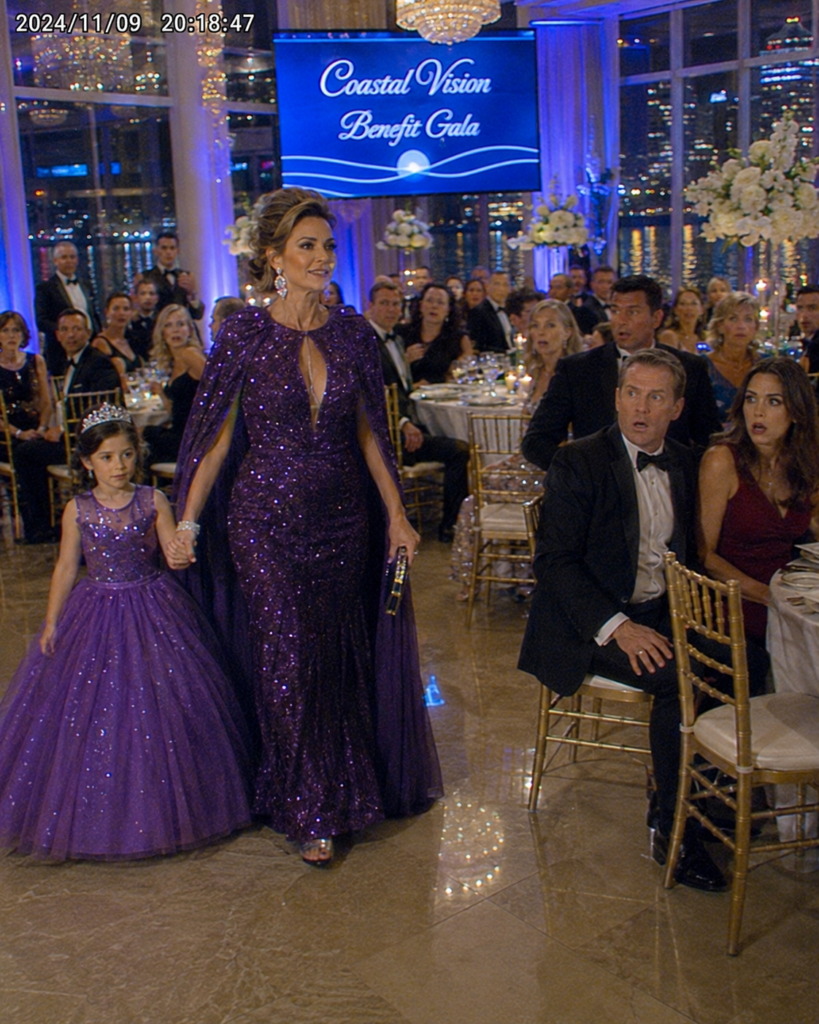
The Coastal Vision Benefit was held at the Caldridge Museum of Art, a white-stone building overlooking the bay. Light poured through its glass atrium. Valets guided a steady stream of luxury cars beneath strings of lanterns while photographers gathered behind velvet ropes.
The museum had once been an abandoned customs warehouse.
Fairchild had financed its restoration.
That fact appeared on a brass plaque near the entrance, although my name did not.
Tomas drove past the main arrival line and continued toward the west side of the building. Mara waited beneath a covered walkway, dressed in a black suit with a silk emerald blouse.
She opened my door before Tomas could reach it.
For several seconds, she simply looked at me.
Then her expression softened.
“You came.”
“I said I would.”
“You have said many things over the years.”
“That sounds judgmental.”
“It’s the relief talking.”
She offered her hand, and I stepped out.
Beyond the wall, I could hear music from the atrium and the low murmur of hundreds of conversations.
Mara glanced toward the entrance.
“Blake arrived twenty-three minutes ago.”
“With Sloane?”
“And Lenette and Corinne.”
I had expected the words. They still hurt.
“Has he spoken to anyone from the board?”
“He approached Daniel Cho near the sculpture gallery. Daniel avoided discussing the pending loan review.”
“Good.”
“And he has asked three people whether they know when the chairwoman is arriving.”
Despite everything, a tired smile touched my mouth.
“That sounds like Blake.”
Mara studied me.
“You don’t have to announce anything tonight.”
“This is my event.”
“It is.”
“I’ve missed seven years of it.”
“You attended two years ago.”
“I watched from an office upstairs.”
“That is not attending.”
I looked through the glass doors. Guests moved beneath chandeliers shaped like waves. Waiters carried trays of sparkling water and champagne. A quartet played near the central staircase.
Somewhere inside, my husband was introducing another woman as his companion.
“Tonight I’m going downstairs,” I said.
Mara nodded.
“What do you want done about the company?”
The question tightened something in my chest.
Winslow Coastal Development employed one hundred and forty-three people. Project managers, architects, accountants, maintenance teams, receptionists, site supervisors. Many of them had mortgages and children and parents who depended on them.
Blake behaved as if the company were an extension of his ambition.
To me, it was a network of lives.
“Nothing impulsive,” I said. “The review continues as planned.”
“And Blake’s position?”
“We evaluate him the way we would evaluate any chief executive.”
Mara’s eyebrows rose slightly.
“That may be more frightening to him than revenge.”
“It isn’t revenge.”
“I know.”
She adjusted the edge of my sleeve with the familiarity of a sister.
“Are you ready?”
“No.”
“Good. People who feel completely ready usually have not understood the stakes.”
We entered through a private corridor.
The gallery beyond was lined with coastal landscapes painted by local artists. Donors had gathered around the canvases, discussing acquisitions, foundation grants, and waterfront conservation. Several recognized Mara and greeted her warmly.
No one recognized me.
At first.
I had taken only a few steps when an elderly man near the first painting turned toward us.
Dr. Samuel Bennett had served on Fairchild’s advisory council since my father’s time. He had known me when I still wore braces and spent school holidays stacking books in my father’s shop.
His eyes widened.
“Avery.”
The warmth in his voice nearly undid me.
“Hello, Samuel.”
He embraced me carefully, then held me at arm’s length.
“You look like your mother.”
“That is still the best compliment anyone can give me.”
“It remains true.”
His gaze shifted toward the atrium, where Blake’s laughter rose above the surrounding voices.
Samuel’s expression changed, not into pity but concern.
“Mara told me there might be complications tonight.”
“Mara uses the word complications when she means catastrophe.”
“I use accurate legal language,” Mara replied.
Samuel smiled, but his eyes remained on me.
“Your father always believed you would take the public role when you were ready.”
“I thought staying private was the responsible choice.”
“Perhaps it was, for a time.”
“And now?”
“Now I think you should ask whether privacy is still protecting you or merely protecting everyone else from knowing you.”
Before I could answer, applause began in the atrium.
A master of ceremonies had taken the stage.
Mara checked the time.
“The opening remarks are starting.”
We moved toward the main gallery.
I saw Blake before he saw me.
He stood near the front of the crowd, one hand resting lightly against Sloane’s back. She looked elegant in her burgundy gown, her posture poised and practiced. Lenette stood on his other side, smiling at a county commissioner. Corinne was busy recording the room on her phone.
Blake appeared completely at ease.
For a moment, I watched him as though he were a stranger.
I noticed the way he leaned forward when influential people spoke, the subtle nod he used to signal agreement, the smile that appeared whenever someone mentioned investment. I remembered helping him rehearse his first presentation at our little kitchen table, long before the mansion and magazine profiles.
He had been nervous then.
Hopeful.
Grateful.
I had loved that version of him.
Perhaps some part of me still did.
The master of ceremonies welcomed the guests and spoke about the benefit’s work funding marine research, storm-resilient housing, and community clinics. Then he introduced several major donors.
Blake glanced around repeatedly.
Searching for the chairwoman.
Corinne noticed me first.
Her phone lowered.
The color drained slowly from her face.
She touched Lenette’s arm.
Lenette followed her gaze and stared at me with open disbelief. Her eyes moved over my gown, the pearls, and Mara standing beside me.
Blake turned last.
For one suspended instant, confusion replaced every other expression.
Then his mouth tightened.
He leaned toward Sloane, said something I could not hear, and began making his way through the crowd.
Mara murmured, “You have approximately twelve seconds.”
“I’ve had eight years.”
He reached us before the next donor was announced.
“What are you doing here?” he asked quietly.
“Attending the benefit.”
“How did you get in?”
Mara answered before I could.
“Mrs. Winslow is an invited guest.”
Blake looked at her, trying to place her.
“And you are?”
“Mara Ellison.”
Recognition flickered across his face. Anyone seeking serious investment on the Gulf Coast knew Mara’s name. She negotiated Fairchild’s largest acquisitions and rarely appeared at social functions.
Blake immediately changed his tone.
“Of course. Ms. Ellison. We’ve exchanged emails.”
“Your office has exchanged emails with mine.”
“Yes. Regarding the Harbor Point financing.”
“That is one of the matters under review.”
Blake’s smile faltered.
He glanced at me again.
“How do you know my wife?”
Mara’s expression remained polite.
“Avery and I have known each other for many years.”
“You never mentioned that,” he said to me.
“You never asked who my friends were.”
“That’s not true.”
“Name one.”
The answer did not come.
Around us, guests continued listening to the speeches, but a few nearby conversations had quieted.
I did not want a scene.
Neither, apparently, did Blake.
He took my arm gently and guided me several feet away, toward the shadow of a marble column.
“You need to go home,” he said under his breath.
“No.”
His eyes narrowed.
“Is this about Sloane?”
“What else would it be about?”
“She is here because she understands these events.”
“She is here because you chose to bring her.”
“You would have been uncomfortable.”
“You didn’t give me the opportunity to decide that.”
He exhaled sharply.
“Avery, this is not the place.”
“I agree.”
“Then stop.”
I looked at the man I had married.
“You kissed her.”
The irritation left his face.
Not entirely, but enough.
His gaze dropped for half a second.
“It was a mistake.”
“No. Forgetting an appointment is a mistake. Taking another woman to a gala after telling your wife she lacks the proper image requires planning.”
His jaw tightened.
“I can explain.”
“I’m sure you can.”
“You’ve been distant for years.”
The words surprised me, not because they were wholly untrue, but because I had never heard him acknowledge the distance between us.
“I became quiet,” I said. “There is a difference.”
“Is there?”
“Yes. Quiet people still feel everything happening around them.”
The applause rose again.
Blake glanced toward the stage, anxious to return to the people he believed could determine his future.
He lowered his voice.
“Please go home. We’ll talk afterward.”
“Will we?”
“I promise.”
“You promised to attend my father’s memorial service.”
His face changed.
“That was eight years ago.”
“Yes.”
“I had a closing.”
“You arrived after everyone had gone.”
“Avery—”
“You promised we would visit the bookstore when it reopened. You promised your mother would stop treating me like an employee. You promised Sloane was only advising the company.”
His gaze moved toward the crowd.
Sloane was watching us.
“I said we’ll talk later.”
“And I said no.”
The master of ceremonies returned to the microphone.
“And now,” he announced, “it is my great privilege to introduce the vice chair of Fairchild Capital’s advisory council, Dr. Samuel Bennett.”
Blake straightened.
“This is important.”
“I know.”
Samuel took the stage. After thanking the museum and outlining the evening’s fundraising goals, he paused.
“Fairchild Capital has always valued quiet work over public recognition,” he said. “But institutions change, and leadership must sometimes step forward—not for applause, but for accountability.”
A ripple moved through the audience.
Blake’s attention fixed on the stage.
Samuel continued.
“For several years, our chairwoman has chosen to serve privately. Tonight, she has agreed to join us in the room.”
Cameras lifted.
People turned toward the grand staircase and the main entrance.
Blake looked past me, scanning the crowd.
My heartbeat became painfully slow.
Mara stepped to my side.
Samuel smiled directly at me.
“Please welcome the chairwoman of Fairchild Capital, Avery Fairchild Winslow.”
The room seemed to inhale.
Blake did not move.
I walked toward the stage.
The first steps were the hardest.
Then I heard Samuel’s applause, followed by Mara’s, followed by hundreds of others. The sound filled the atrium, but it reached me as if through deep water.
I kept my eyes on Samuel.
Not on the cameras.
Not on Lenette, whose hand had risen to her throat.
Not on Corinne, whose phone hung forgotten at her side.
Not on Sloane, whose expression had become unreadable.
And not on Blake.
When I reached the stage, Samuel offered his hand.
“Welcome,” he whispered.
I stepped to the microphone.
The lights were brighter than I expected.
For a moment, every prepared sentence vanished.
Then I saw a familiar face near the back of the room.
Mrs. Alvarez, who ran the community clinic in Port James, stood beside two nurses. Fairchild had funded the clinic after Hurricane Marian. She smiled at me with the same calm encouragement she had shown when I visited anonymously during construction.
I knew what I wanted to say.
“Good evening,” I began. “Many of you know Fairchild Capital through its investments. Some know us through the projects and organizations we support. Very few know me.”
A soft murmur passed through the room.
“That has been my choice. I once believed the best kind of leadership was invisible—that good work should speak for itself and that privacy kept motives pure.”
I glanced toward Samuel.
“I no longer believe invisibility and humility are the same thing.”
The room grew still.
“Leadership requires being willing to answer for decisions, especially when those decisions affect homes, jobs, shorelines, and families. Beginning tonight, I will take a more active public role in Fairchild’s work.”
Cameras flashed.
I continued, focusing on the clinic staff.
“This evening is not about my identity. It is about the people rebuilding neighborhoods after storms, protecting our coast, and making healthcare available in communities that have too often been overlooked. Fairchild will match every donation made tonight, up to five million dollars.”
The applause began before I finished.
Relief moved through me.
Not triumph.
Not satisfaction at Blake’s shock.
Relief that when given the room, I had spoken about something larger than my pain.
I stepped back from the microphone.
Samuel leaned close.
“Your father would have been proud.”
The words landed more deeply than the applause.
When I descended from the stage, guests approached from every direction. Some offered congratulations. Others introduced themselves as though we had never corresponded through lawyers and intermediaries for years.
Questions came quickly.
Why had I remained private?
Would Fairchild expand its coastal housing program?
Was I planning to change the firm’s investment strategy?
I answered carefully.
Mara stayed nearby, redirecting reporters and protecting the narrow space around me without making it obvious.
Through it all, I remained aware of Blake.
He stood near the marble column, pale and rigid, as if the room had shifted beneath him.
Lenette whispered furiously in his ear.
Corinne stared at her phone, likely watching her earlier video circulate among followers who had already begun identifying me.
Sloane was the only one who did not appear stunned.
She looked worried.
That troubled me more than surprise would have.
After twenty minutes, Mara guided me into a smaller sculpture gallery.
“You need water,” she said.
“I need a new nervous system.”
“That will require a specialist.”
She handed me a glass.
Before I could drink, Blake entered.
Mara stepped between us.
“It’s all right,” I told her.
“It may not be.”
“It won’t be,” Blake said. “But I need to speak with my wife.”
Mara looked to me.
I nodded.
She left reluctantly, remaining visible through the open doorway.
Blake stood several feet away.
For the first time since I had known him, he seemed unsure how to begin.
“How long?” he finally asked.
“My whole life.”
“You’re a Fairchild.”
“Yes.”
“And the firm?”
“I became controlling chair after my father died.”
His eyes searched my face.
“The money?”
“Also mine.”
He gave a short, disbelieving laugh.
“This is impossible.”
“It isn’t.”
“We’ve been married eight years.”
“I know.”
“You let me believe you had nothing.”
“I told you I inherited family investments.”
“You said they were modest.”
“I said they were private.”
“You lived over a bookstore.”
“Because I loved living there.”
“You drove a car that was fifteen years old.”
“It belonged to my father.”
His expression hardened.
“So this was some kind of test?”
“No.”
“It feels like one.”
“I never asked you to prove anything.”
“You hid your identity.”
“I protected it.”
“From me.”
“At first, from everyone.”
“And later?”
The question hung between us.
I looked down at the water in my glass.
“Later, I didn’t know how to tell you.”
“That your wife was a billionaire?”
“That I had been helping you.”
He became very still.
“What does that mean?”
I could have softened the answer.
I chose not to.
“Fairchild purchased the debt on your first development after Crescent Bank withdrew financing.”
His face emptied.
“No.”
“The investment group that rescued Marina South was ours.”
“No.”
“The Harbor Point land is held by a Fairchild subsidiary.”
His voice dropped.
“You own Harbor Point?”
“Fairchild does.”
“And Winslow Coastal?”
I took a breath.
“Through layered holdings and debt conversion rights, Fairchild controls fifty-two percent.”
He stared at me.
The quartet began playing in the atrium again, the music faint through the gallery walls.
“You own my company.”
“I control the majority interest.”
“You let me call it mine.”
“You founded it. You built the team.”
“With your money.”
“With financing you were expected to repay.”
“Financing I never knew came from my wife.”
“Would you have accepted it if you had known?”
His silence answered for him.
He walked to the nearest sculpture, a curved piece of driftwood encased in glass.
“This is unbelievable.”
“I understand.”
“No, you don’t.”
He turned sharply.
“You watched me struggle. You watched me negotiate with people who answered to you. You watched me come home and talk about investors as if you knew nothing.”
“I listened because I wanted you to tell me about your life.”
“You were observing me.”
“I was supporting you.”
“Secretly.”
“Yes.”
The word cost me something.
Blake looked away.
When he spoke again, his anger had weakened into something more complicated.
“Did anyone in my company know?”
“Your chief financial officer knew Fairchild held the debt. He did not know I was the chairwoman.”
“And the house?”
“It belongs to a trust.”
“Your trust.”
“Yes.”
He closed his eyes.
I expected another accusation.
Instead, he asked, “Was any of it real?”
The quiet pain in his voice took me by surprise.
“Our marriage was real to me.”
“That isn’t what I asked.”
“It is the only answer I have.”
He turned back toward me.
“You knew you could leave at any time.”
“Anyone can leave.”
“Not like you.”
“No,” I admitted. “Not like me.”
“And you never thought that mattered?”
“Of course it mattered. That was why I wanted you to love me before you knew.”
He laughed once, without humor.
“And after you decided I did?”
“I kept waiting for the right time.”
“For eight years?”
“The longer I waited, the harder it became.”
“That is not an explanation.”
“No. It is the truth.”
He studied me as though trying to match the woman standing before him with the woman he had left cleaning broken glass.
“What happens now?”
“I don’t know.”
“To the company.”
“I knew what you meant.”
His mouth tightened.
There he was again—the man whose first concern, even now, was the company.
Yet I could no longer pretend my secrecy had played no role in what he had become.
“Fairchild began a governance review three months ago,” I said. “Before tonight.”
His eyes sharpened.
“Why?”
“Cost overruns. Undisclosed guarantees. Payments to outside consultants.”
“Sloane is a strategy adviser.”
“Her firm has received nearly nine hundred thousand dollars in eighteen months.”
“She brought investors.”
“None who completed a transaction.”
“That is not unusual in development.”
“No. But routing consulting fees through three separate project accounts is.”
He stepped closer.
“You think I stole money?”
“I think I don’t know the full story.”
“I have never stolen from the company.”
“Then the review will confirm that.”
His expression became guarded.
“Who authorized it?”
“I did.”
The answer settled between us.
A few hours earlier, he had ordered me to clean the floor.
Now he stood facing the person responsible for determining whether he remained chief executive.
I felt no pleasure in it.
Only sadness.
“I’m not going to destroy you,” I said.
His eyes flashed.
“How generous.”
“That isn’t what I meant.”
“Then what did you mean?”
“I mean the employees will not become collateral damage in our marriage. I mean I won’t make business decisions because I’m hurt. And I mean you will be treated fairly, even if you have not treated me that way.”
For several seconds, he said nothing.
Then he looked toward the doorway.
“Where is Sloane?”
“I assumed she was waiting for you.”
“She disappeared after your speech.”
A small unease moved through me.
“Perhaps she was overwhelmed.”
“Sloane is never overwhelmed.”
He took out his phone and called her.
We both heard it ring somewhere nearby.
Not from the atrium.
From the private corridor behind the sculpture gallery.
Blake ended the call.
The ringing stopped.
We looked at each other.
Mara appeared in the doorway.
“Avery, we have a problem.”
“What happened?”
“Someone entered the administrative wing using a donor access badge.”
“Who?”
“Security is reviewing the camera feed.”
Blake held up his phone.
“Sloane went that way.”
Mara’s gaze sharpened.
“Why would she?”
“I don’t know.”
The three of us followed the corridor.
At the end stood a security door that should have required a coded credential. It was slightly open.
Beyond it, the administrative hall was empty.
Mara called the museum’s security director while Blake tried Sloane again. This time the call went directly to voicemail.
We passed the finance office, the catering room, and a small conference suite used by the Fairchild board before the gala.
The conference-room door was open.
Inside, chairs stood around a polished table. Water glasses and folders remained from the afternoon meeting.
One folder was missing.
Mara moved to the table.
“These were confidential review packets.”
“What was in the missing one?” I asked.
She checked the labels.
“The Winslow Coastal preliminary audit.”
Blake went pale.
“I had nothing to do with this.”
“I didn’t say you did.”
Footsteps sounded behind us.
The security director arrived with two staff members.
“We found the badge used to access the corridor,” he said. “It was registered to a guest.”
“Whose?” Mara asked.
He looked at the tablet in his hand.
“Corinne Winslow.”
Blake stared at him.
“That’s impossible.”
The director turned the screen toward us. A still image showed a woman in a burgundy gown entering the corridor, her face partially turned from the camera.
Sloane.
Blake swore softly.
Mara asked security to seal the exits discreetly and review the loading dock footage.
I looked at the empty place on the table where the audit had been.
“Sloane knew the packet existed.”
Blake shook his head.
“She couldn’t have.”
“Did you tell her about the review?”
“I didn’t know there was a review.”
“Then someone else did.”
His expression changed.
Not guilt.
Recognition.
“What?” I asked.
He walked out of the conference room without answering.
“Blake.”
I followed him into the corridor.
He stopped near a window overlooking the bay. Below us, boats moved through dark water, their lights trembling across the surface.
“There was an email,” he said.
“What email?”
“Three weeks ago. Sloane asked whether I had received any unusual requests from Fairchild.”
“And had you?”
“Our CFO requested copies of old project guarantees. I thought it was preparation for the Harbor Point loan.”
“What did Sloane say?”
“That Fairchild might be positioning itself to take control.”
“She was right.”
“She was too right.”
He pressed a hand against the back of his neck.
“She told me we needed leverage.”
The word chilled me.
“What kind of leverage?”
“She didn’t explain. I assumed she meant another lender.”
Mara joined us.
“Security found Corinne’s badge in a restroom. Sloane appears to have left through the service exit six minutes ago.”
“Can they stop her?” I asked.
“She entered a hired car before the exits were sealed.”
Blake looked at Mara.
“What exactly was in the audit?”
“Transaction histories, internal correspondence, consultant agreements, preliminary findings.”
“Could it damage the company?”
“Yes.”
“Could it damage me?”
“That depends on what the final review concludes.”
He turned to me.
“I need to call the office.”
“Not yet,” Mara said. “Until we know whether anyone inside the company helped her, calls could compromise the review.”
“This is my company.”
Mara’s expression did not change.
“It is a company in which you are chief executive and minority shareholder.”
The distinction landed hard.
I stepped between them before the conversation worsened.
“Blake, do you trust your CFO?”
“Yes.”
“Do you trust Sloane?”
He hesitated.
That was answer enough.
Mara’s phone rang.
She listened for less than a minute, then looked at me.
“They found Corinne.”
“Where?”
“In the atrium. She says Sloane asked to borrow her badge because she spilled wine on her dress and wanted privacy to clean it.”
“That sounds like something Corinne would believe,” Blake said bitterly.
“And Lenette?” I asked.
“With Corinne. Neither appears to know Sloane has left.”
I closed my eyes briefly.
The gala continued only a hallway away. Music played. Donations were being pledged. Guests were celebrating work that mattered.
Meanwhile, a confidential audit had vanished, my marriage was collapsing, and the woman my husband had brought in my place had fled with information about a company I secretly controlled.
“Keep this quiet,” I said. “No police presence in the ballroom unless necessary. Notify our outside counsel and preserve every camera recording.”
Mara nodded.
Blake watched me.
“You’ve done this before.”
“Handled a security issue?”
“Taken control of a room.”
I met his eyes.
“You never gave me much opportunity at home.”
Regret crossed his face.
For once, he did not defend himself.
Mara stepped away to make calls.
Blake remained by the window.
“I did kiss her,” he said.
I had not expected him to return to it.
“I saw.”
“It was the first time.”
“I don’t know whether that makes it better.”
“It doesn’t.”
“Then why tell me?”
“Because you deserve the truth.”
A painful laugh escaped me.
“Tonight is full of firsts.”
He looked down at his phone.
“She had been pushing for more. I told myself I was managing the situation because she was useful to the company.”
“And tonight?”
“I wanted to impress Fairchild’s chairwoman.”
The irony might have been funny in another life.
He gave a hollow smile.
“I suppose I failed.”
“This is not about impressing me.”
“It has always been about impressing someone.”
There was an honesty in the admission that stopped me.
He leaned against the window ledge.
“My father spent his life promising people he was one deal away from becoming important. Every year, there was another plan. Another investor. Another reason we could not pay the electricity bill.”
Blake rarely spoke about his father.
Lenette had rewritten their family history so thoroughly that, in her version, hardship had been a brief inconvenience caused by other people’s failures.
“I thought if I built something big enough,” he continued, “no one could ever look at me the way people looked at him.”
“Who looked at him that way?”
“My mother.”
The answer was almost a whisper.
I thought of Lenette inspecting my kitchen, my clothes, my education, always searching for evidence that ordinariness was contagious.
Blake looked at me.
“I became exactly the kind of person I thought I was escaping.”
I did not comfort him.
But I listened.
Perhaps that was more honest.
Mara returned.
“We have confirmation that Sloane’s consulting company received an encrypted file transfer two weeks ago from an address associated with Winslow Coastal.”
Blake straightened.
“From whom?”
“We don’t know yet. The address was masked through an internal relay.”
“Could it have come from my account?”
“Yes.”
“I didn’t send it.”
“We’ll verify that.”
His phone vibrated.
A message appeared on the screen.
I saw his expression shift.
“Is it Sloane?” I asked.
He turned the phone toward me.
The message contained no greeting.
Only an image.
It was a scanned copy of an old legal document bearing my father’s signature.
At the top were the words:
FAIRCHILD SUCCESSION AGREEMENT — CONFIDENTIAL SUPPLEMENT
Beneath the image was a message.
Avery does not own what she thinks she owns. Ask her why the second beneficiary was erased.
For a moment, I could not breathe.
Mara took the phone.
“What is this?”
“I’ve never seen that document.”
She enlarged the image.
The paper appeared old. The signature looked like my father’s. In the bottom corner was the seal of the law firm that had managed the Fairchild estate before Mara joined it.
Blake studied me.
“What does she mean by a second beneficiary?”
“I don’t know.”
But as I said it, a memory surfaced.
My father’s study.
A storm pressing against the windows.
My parents arguing in voices low enough that they believed I could not hear.
My mother saying, You cannot keep pretending she is the only child affected by this.
I had been fourteen.
For years, I had assumed they were speaking about me.
Now I was no longer certain.
Mara handed the phone back.
“Avery, we need to go somewhere private.”
“Why?”
“Because the law firm named on this document dissolved seventeen years ago.”
“That doesn’t make the document false.”
“No.”
Her face had gone unusually still.
“But one of its former partners attended tonight’s gala.”
“Who?”
Mara looked through the glass wall toward the atrium.
Across the room, standing beside Lenette, was Dr. Samuel Bennett.
He was not smiling anymore.
He was watching us.
And in his hand was the missing audit folder.
END OF PART 2 – LIKE, SHARE AND COMMENT “”THE ENTIRE STORY”” IF YOU WANT TO READ THE FULL STORY.