PART 3
For several seconds, no one moved.
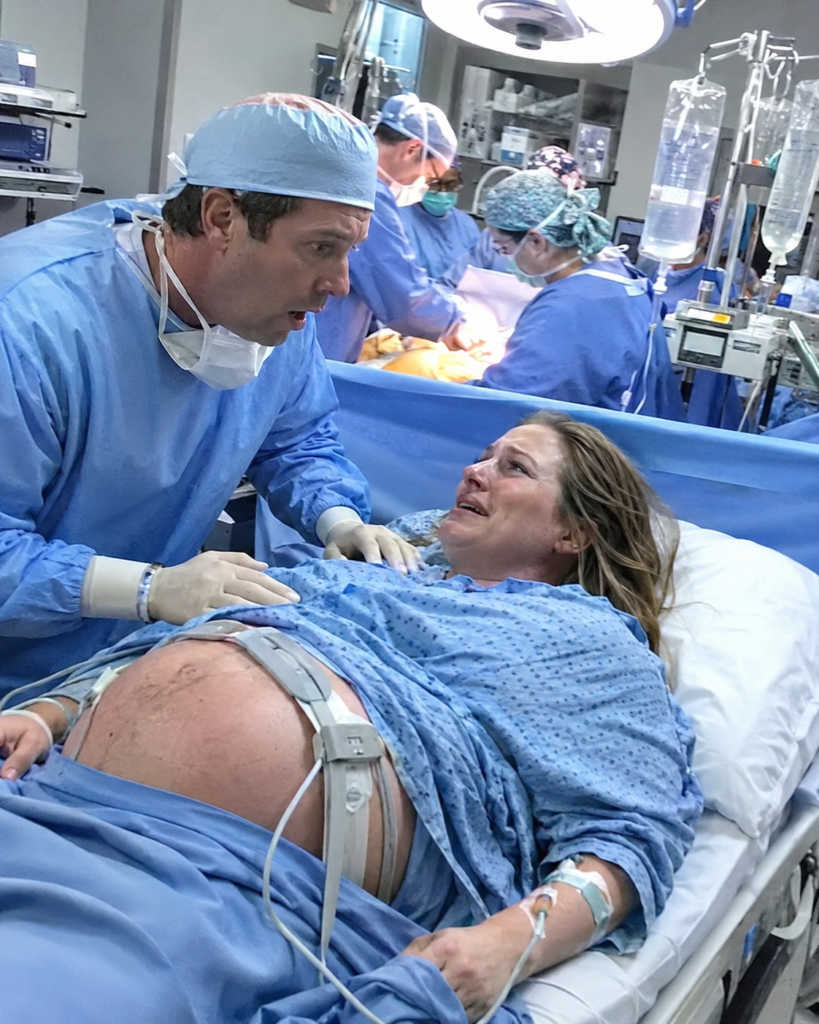
Rain whispered against the hospital window. Lucy’s tiny knitted cap remained in Ethan’s hand, bright yellow against his white shirt, while the paternity report trembled between Hannah’s fingers.
“The twins’ father was your brother,” she repeated.
Ethan lowered himself into the chair beside the bed.
“My father knew?”
“I don’t know how much he knew,” Hannah said. “Noah never told me everything at once. He believed secrets had to be opened carefully, as if the truth could cut the person holding it.”
Ethan looked at the report again.
Robert Alexander Caldwell.
His father’s full name. His signature. A date from eighteen months earlier.
The laboratory had not tested stolen medical material. Robert had consented.
“He signed this,” Ethan said.
Hannah nodded.
“Then he knew Noah was his son.”
“Yes.”
“And my mother knew too.”
“Eventually.”
Lena moved closer to Hannah’s bedside. Her hand rested protectively on the cabinet containing the sealed envelope.
Ethan noticed the gesture.
“I’m not here to take anything.”
“Your mother is looking for it,” Lena said.
“I know.”
“Then you should understand why we’re being careful.”
“I do.”
Hannah studied him. Five years earlier, he would have demanded answers. He would have taken control because control was the language his family spoke most fluently.
Now he sat with his hands open on his knees.
“What did Noah want me to know?” he asked.
Hannah looked toward the cabinet.
“Everything.”
She asked Lena to bring out the envelope.
It was thick, its corners softened from being carried for weeks. Noah had written three names across the front in blue ink.
HANNAH. ETHAN. GRACE.
Below them, he had added one sentence.
Open together, if possible.
Ethan called his sister.
Grace arrived twenty minutes later, wearing a camel-colored coat over clothes that looked hastily chosen. Her face changed when she saw Hannah.
“I heard you were stable,” she said. “And the babies?”
“Still fighting.”
Grace nodded, but her gaze had already found the envelope.
“What is that?”
“A message from Noah,” Ethan said.
The name seemed to pull the air from her.
Grace sat near the window.
“I should tell you something before we open it.”
Ethan waited.
Grace rubbed her thumb over the edge of her phone. “I knew he believed he was our father’s son. He contacted me last spring and asked for help obtaining old personnel and insurance records. I refused.”
“Why?”
“I thought he was trying to pressure the family into a settlement.”
Hannah’s expression tightened.
Grace saw it. “I was wrong.”
“That seems to be a family tradition,” Lena said quietly.
“Lena,” Hannah murmured.
“No. She deserves to be angry,” Grace said. “Both of you do.”
Hannah broke the seal.
Inside were copies of security logs, bank records, company memoranda and correspondence. A small encrypted drive had been taped to a page containing handwritten instructions.
There were also three letters.
Hannah handed Grace the one bearing her name.
Grace read the first paragraph, then stopped.
Her face went pale.
“What does it say?” Ethan asked.
She lifted her eyes.
“It says Noah knew who sent the original documents to the reporter.”
Hannah went still.
“Who?”
Grace folded the letter once, then unfolded it again.
“I did.”
The monitors beside Hannah’s bed continued their steady rhythm.
Ethan stared at his sister.
“You?”
Grace’s eyes filled, but her voice remained clear.
“Five years ago, I was working in financial controls. I found payments being moved between trial divisions. Patient complications were being recorded as unrelated events, even when the internal medical reviewers disagreed.”
“Which trial?” Ethan asked.
“Novacline.”
He recognized the name. It had been an experimental therapy for a rare blood disorder. Caldwell Biotech had suspended the trial after a newspaper investigation exposed irregularities.
The company had publicly claimed the safety concerns came from incomplete preliminary data.
“You leaked the records,” Ethan said.
“I sent them to a reporter anonymously. I believed the trial needed to be paused before another patient was harmed.”
“Why didn’t you go to the board?”
“I tried. My concerns disappeared into committees. One executive told me that a delay would destroy the company’s share price and cost thousands of jobs.”
“So you went outside.”
Grace nodded. “I panicked afterward. I told Mom what I had done.”
Hannah’s hand tightened around Noah’s papers.
“And she framed me.”
“I didn’t know that,” Grace said quickly. “I swear to you, Hannah. Mom told me the source could not be traced and that legal counsel had contained the situation. I thought she meant they had protected my identity.”
“You never asked how?”
“I was afraid.”
The answer was painfully small.
Hannah looked toward the rain-darkened window.
Fear had taken five years from her life. It had cost her Ethan, her reputation and every job that disappeared after a search of her name. She had spent months trying to clear a frozen bank account containing money she had never requested. She had moved twice when reporters found her address.
Grace had been afraid.
So had Ethan.
So, perhaps, had Vivian.
Hannah was tired of learning how much damage frightened people could do while calling it protection.
Ethan rose from his chair.
“Who created the evidence against Hannah?”
Grace looked at Noah’s letter again.
“Martin Vale.”
Their mother’s former chief of staff.
“He used a temporary employee profile from a foundation event,” Grace continued. “He duplicated Hannah’s badge identification, moved money through a consulting company controlled by his cousin and arranged for printed emails to be delivered to you.”
“Why Hannah?” Ethan asked, though part of him already knew.
Grace looked at him.
“Because she was close to you. If the family believed the leak came through someone you trusted, attention would shift away from internal finance.”
Hannah closed her eyes.
She had not been chosen because she was important.
She had been chosen because she was convenient.
“Did Mom order him to do it?” Ethan asked.
“Noah couldn’t prove that. His notes suggest she told Vale to protect me and stop the scandal. Vale designed the false trail himself.”
“And when she found out?”
Grace’s silence answered.
Ethan turned away.
Vivian Caldwell had not needed to invent the lie.
She had only needed to let it live.
Hannah opened the letter addressed to her.
Noah’s familiar handwriting covered four pages.
Hannah,
You once told me that a person can survive being abandoned, but surviving does not mean the abandonment stops hurting. I wish I could have repaired what was done to you without reopening it.
The evidence is enough. Independent specialists confirmed the access records, the payment trail and Vale’s authorization chain. Copies have been placed with an attorney who does not represent Caldwell Biotech. If anything happens to me, the documents will be released through proper legal channels.
Please believe this: my accident was an accident if the police say it was. Do not let grief teach you to see danger in every shadow. I investigated dangerous choices, but I did not discover a conspiracy of murder. I found something more ordinary and, in some ways, more painful—people protecting themselves one decision at a time until they could no longer recognize the truth.
Hannah paused.
Lena covered her mouth.
Noah had written the letter weeks before his death, yet it sounded like him sitting beside them—quietly refusing drama, insisting on facts even while facing the ruins left by other people’s fear.
Hannah continued.
Do not let anyone use my death to frighten you into silence. But do not let anger choose your life either.
The children deserve the truth about where they came from. They also deserve the freedom to become more than it.
I love you. That is the simplest fact I leave behind.
Hannah pressed the letter to her chest.
Ethan turned toward the window, giving her the privacy of not being watched.
Grace quietly wept.
For the first time since the accident, Hannah’s grief did not feel like a door closing.
It felt like Noah had left one open.
Ethan read his letter last.
His brother had addressed him simply.
Ethan,
We met twice, though you probably do not remember either occasion. Once in a company elevator, where you held the door while I carried three archive boxes. Once at a hospital fundraiser, where you thanked me for moving a chair out of an aisle.
I knew who you were both times.
You did not know who I was.
That was not your fault.
The letter explained that Robert had contacted Noah privately after receiving a message from Noah’s mother, Elena Mercer. She was dying and wanted her son to know the truth of his birth.
Robert had agreed to the paternity test.
He had also arranged Noah’s position at Caldwell Biotech, though neither had revealed their relationship.
Their meetings had been awkward, infrequent and unfinished.
Then came a paragraph Ethan read twice.
Our father asked me to investigate what happened to Hannah Brooks.
He knew the evidence against her did not make sense. He also knew your mother had prevented an independent review. He lacked the courage to confront the family publicly, so he gave the responsibility to a son he had only just acknowledged.
I resented him for that.
Then I found Hannah.
I expected to meet a woman defined by what your family had done to her. Instead, I met someone carrying groceries for an elderly neighbor after working a ten-hour shift. Someone who laughed when the paper bag broke. Someone who had lost almost everything and still stopped to gather oranges rolling through the snow.
I did not stay because your father asked me to find her.
I stayed because I loved her.
Ethan stopped reading.
Hannah was looking at him.
“Did you know my father sent Noah to you?”
“No.”
The discovery seemed to shift something inside her. Noah had told her he found her while investigating the leak. He had never said Robert began the search.
Ethan returned to the letter.
You may believe I took the life you should have had. I did not. Hannah chose me freely, and I am grateful for every day she did.
But she once chose you too.
What happened after that belongs to the two of you. Do not treat my death as permission to reclaim what you lost. Grief is not an open door. If she allows you into her life, enter carefully.
The twins will need stories about me. They may also need an uncle.
Be that, if Hannah asks.
Nothing more unless she asks for more.
Ethan folded the letter slowly.
The yellow cap was still on the edge of the bed.
He picked it up.
“I should return this to Lucy.”
Hannah watched him reach the doorway.
“Ethan.”
He turned.
“You can tell her about Noah someday.”
His expression softened.
“I’d be honored.”
An hour later, Vivian Caldwell arrived.
She did not enter with lawyers or assistants. She came alone, dressed in navy, silver hair perfectly arranged despite the rain.
Hospital security stopped her outside Hannah’s room.
Ethan met her in a private family consultation area with Grace beside him. Hannah had asked Lena to stay with her and had given Ethan permission to discuss only the evidence directly involving his family.
Vivian sat across from her children.
For once, she did not begin the conversation.
Ethan placed copies of Noah’s letters and records on the table.
“Martin Vale framed Hannah.”
Vivian looked at the documents but did not touch them.
“Yes.”
Grace inhaled sharply.
“You knew?”
“Not when he first did it.”
“When?” Ethan asked.
“Three days after the newspaper story appeared.”
“And you let us believe Hannah betrayed me.”
Vivian’s composure faltered.
“Vale told me reversing the story would expose Grace and create criminal liability. The trial would collapse. Investors would flee. Research programs unrelated to Novacline would lose funding.”
“So you chose Hannah.”
“I chose what I believed would preserve the greatest number of lives.”
“You preserved the company,” Grace said. “Not lives.”
Vivian looked at her daughter. “At the time, I could not separate the two.”
“That was the problem,” Ethan said.
His mother folded her hands.
“I never instructed Vale to create false evidence.”
“But once you knew, you protected him.”
“Yes.”
The word carried no excuse.
Grace’s voice shook. “You let me build my career on a lie.”
“I thought I was protecting you.”
“You protected me from consequences and left Hannah with consequences that belonged to all of us.”
Vivian lowered her gaze.
Ethan had seen his mother face hostile boards, government inquiries and reporters waiting outside courtrooms. She had never looked small.
She did now.
“How did you know Hannah was brought here?” he asked.
“I hired an investigator after Noah died.”
“To follow a pregnant woman?”
“To determine whether she had company documents.”
“You had her followed to her job?”
“Yes.”
The admission was quiet.
“The investigator saw the ambulance leave the warehouse and informed me.”
Horror moved across Grace’s face.
Vivian did not look away.
“No one at the hospital violated her privacy,” she said. “That suspicion was mine to carry, not theirs.”
“Why were you so afraid of the documents?” Ethan asked.
“Because they proved what I had done.”
Not Vale.
Not the board.
Not the market.
I.
For the first time, Vivian had named her own choice without hiding behind the family.
Ethan pushed Noah’s evidence toward her.
“These are being delivered to independent counsel and the appropriate regulators tonight.”
“I understand.”
“You will not contact Hannah.”
“I understand.”
“You will end the surveillance and provide every report the investigator created.”
“I already have.”
Grace stared at her. “Why?”
Vivian’s eyes moved toward the wall separating them from the patient rooms.
“Because when I heard she might die, I realized I had spent five years protecting the Caldwell name from a woman who had done nothing to harm it.”
Her voice thinned.
“And the person who harmed it most was me.”
The next morning, Vivian resigned as chair of Caldwell Biotech.
Her statement did not blame poor advice or incomplete information. She acknowledged that evidence had been fabricated against an innocent woman and that she had failed to correct it after learning the truth. She turned over internal records to independent investigators and agreed not to participate in company decisions during the inquiry.
Grace took a leave of absence from her position as chief financial officer.
The board appointed an outside law firm and a former federal judge to lead the investigation. Martin Vale’s actions were referred to authorities. Several executives connected to the Novacline trial were suspended pending review.
Hannah’s name was not released until she agreed.
When it was, the company issued a full public correction.
The apology could not restore five lost years.
It could not erase Ethan’s accusation in the rain or return the jobs Hannah had been denied. It could not give Noah the chance to hold Samuel and Lucy.
But it placed the truth where the lie had once stood.
For Hannah, that mattered.
Lucy’s condition worsened two days later.
A valve in her heart that often closed naturally after premature birth remained open, forcing her lungs to work harder. The neonatologist explained that medication might help, but there was a possibility she would need a procedure.
Hannah listened without interrupting.
When the doctor left, her hands began to shake.
“I thought she was improving.”
“She has improved,” Maya said. “This is a setback, not a verdict.”
Ethan waited outside the room until Hannah asked for him.
He found her beside Lucy’s incubator, one hand resting through the opening against her daughter’s back.
“Tell me what happens if the medicine doesn’t work,” she said.
He pulled up a chair but remained on the other side of the incubator.
He explained the options carefully, never promising what he could not guarantee.
“Is she in pain?”
“She’s being kept comfortable.”
“Is she afraid?”
“I don’t know,” he said. “But she knows your voice.”
Hannah looked down at Lucy.
“Noah used to sing to them.”
“What did he sing?”
“Old songs. Usually off-key.”
Ethan smiled faintly. “That may be a Mercer family trait. My father couldn’t carry a tune either.”
It was the first time either of them had spoken of Noah as family without hesitation.
Hannah began singing.
Her voice was soft and imperfect. Samuel stirred in the neighboring incubator. Lucy’s fingers flexed beneath the blanket.
Ethan remained beside them until Hannah finished.
The medication worked.
Not immediately and not completely, but enough. Lucy’s breathing eased over the following days, and the cardiology team postponed intervention.
Samuel reached another milestone first. A nurse placed him beneath Hannah’s hospital gown for skin-to-skin care. His cheek rested over her heart, and his entire body seemed to relax against her.
Ethan watched from the doorway.
“Come closer,” Hannah said.
He hesitated.
“You’re their uncle.”
The words undid him more completely than anger would have.
He approached Samuel slowly.
Hannah guided the baby’s hand toward Ethan’s finger.
Samuel gripped it.
“He’s stronger than he looks,” Hannah said.
“So are all of you.”
“No grand speeches.”
“Understood.”
“And no expensive gifts.”
“I haven’t offered any.”
“You were thinking about it.”
“I was considering a college fund.”
“He is nine days old.”
“Tuition increases quickly.”
Hannah laughed.
The sound was quiet and brief, but it was the first laughter Ethan had heard from her in five years.
He carried it with him for the rest of the day.
A week later, Ethan and Grace visited their father.
Robert Caldwell lived in a private rehabilitation residence overlooking Lake Michigan. The stroke had weakened his left side and slowed his speech, but his mind remained clear.
When Ethan placed Noah’s paternity report on the table, Robert closed his eyes.
“He found you,” Robert said.
“He found Hannah,” Ethan replied.
Robert nodded.
“That was the braver thing.”
Grace stood near the window. “Why didn’t you tell us?”
“I was ashamed.”
“Of Noah?”
“Of myself.”
Robert looked older than Ethan remembered. Not merely ill. Reduced by truths he had postponed too long.
“Elena Mercer worked in the records department at our first manufacturing site,” Robert said. “We were both young. I was married. She left Chicago before Noah was born. I sent money, but I did not give him my name.”
“Then she contacted you?”
“When she became ill. Noah agreed to meet me only after the test.”
“And you put him in the company,” Ethan said.
“He wanted access to the truth, not a position. I gave him both.”
“You asked him to find Hannah.”
Robert’s gaze dropped.
“I knew your mother’s explanation never made sense. Hannah had no reason to leak research files. But by then, Vivian controlled the legal response, and I had allowed myself to become useful only when the company needed my signature.”
“You could have spoken publicly.”
“Yes.”
“But you sent Noah.”
“Yes.”
The word was heavy with regret.
Grace turned from the window.
“Did you know I was the source?”
“Not until Noah found the original transmission records.”
“Why didn’t he expose me?”
“Because he believed you acted to protect patients.”
Grace’s face crumpled.
Robert reached for her hand with his stronger arm.
“He did not excuse what followed. But he understood the difference between exposing danger and hiding wrongdoing.”
Ethan thought of the brother he had passed in an elevator without recognizing.
“What was he like?” he asked.
Robert smiled.
“Stubborn. Careful. He asked questions and waited through silence until people answered honestly.”
Hannah had described him the same way.
“He would have been a good father,” Robert said.
“He already was,” Ethan replied. “He loved them before they were born.”
Robert looked toward the lake.
“I would like to meet the children one day.”
“That decision belongs to Hannah.”
“I know.”
It was the first request a Caldwell had made without assuming the answer.
Five weeks after their birth, Samuel left the incubator for an open crib.
Lucy followed nine days later.
The morning they were discharged, nurses filled Hannah’s room with blankets, medication instructions and warnings about sleep that made Lena laugh.
“You’re telling a woman with twins to rest whenever possible?”
“We are required to preserve the illusion,” the nurse said.
Ethan arrived carrying two approved infant car seats.
Hannah raised an eyebrow.
“You said no expensive gifts,” he reminded her. “These came from the hospital lending program.”
“I checked,” Lena said. “He’s telling the truth.”
“I’m learning,” Ethan replied.
Hannah’s apartment was on the second floor of a narrow brick building with no elevator. Lena had organized friends from the warehouse into a schedule for meals, laundry and rides to follow-up appointments.
Ethan did not try to replace them.
He took the Tuesday evening shift.
At first, he came only to check the babies’ weight logs and answer medical questions. Then he began washing bottles. Later, he learned that Samuel slept best when carried in slow circles around the kitchen, while Lucy preferred the sound of the old radiator clicking.
Hannah watched him earn his place one ordinary task at a time.
One night, after both babies finally fell asleep, they sat at the small kitchen table.
“Noah’s attorney called,” Hannah said.
Ethan set down his coffee.
“About the investigation?”
“About a scheduled message Noah left.”
The email had been designed to send if Noah failed to access his secure account for ninety days. Most of it contained instructions for his attorney and passwords for evidence already in safe keeping.
At the end was a video.
Hannah opened it.
Noah appeared on the screen in their old apartment. Behind him stood the crooked lamp he had promised to repair. He looked healthy, tired and slightly embarrassed.
“Hannah,” he began, “you’ll probably be angry that I recorded this.”
She pressed her lips together.
“He knew you well,” Ethan said.
Noah continued.
“If you’re watching, something prevented me from finishing this in person. I hope that something is less permanent than it sounds. Maybe I forgot a password. Maybe you changed it because I left dishes in the sink again.”
His smile faded gently.
“There is one truth I did not tell you. Robert Caldwell did not only ask me to clear your name. He gave me a box of letters Ethan had written after you disappeared.”
Ethan froze.
Hannah turned toward him.
“What letters?”
He stared at the screen.
“I wrote to you for almost a year.”
“I never received them.”
On the video, Noah lifted a bundle tied with string.
“Vivian intercepted them before they were mailed. Robert found them in her private files after his stroke, when the family office was reorganized. He gave them to me because he believed Hannah should decide whether to read them.”
Hannah looked at Ethan.
“You wrote to me?”
“After the anger faded. After I realized the bank evidence didn’t prove you had touched the money.” His voice tightened. “I apologized. I asked you to meet me. When you never answered, I believed silence was your answer.”
Noah’s image continued.
“I did not give Hannah the letters. At first, I told myself she had built a new life and did not need the past reopened. Later, I loved her, and my reasons became less noble.”
He looked directly into the camera.
“I am sorry for that.”
Hannah’s eyes filled.
“Where are they?” she whispered.
The video gave the location: a sealed archive box held by Noah’s attorney.
Two days later, Hannah received forty-three letters.
She did not read them all at once.
The first were defensive, written by an Ethan still trying to reconcile love with pride. The later ones changed. He questioned the evidence, described his failed attempts to locate her and admitted that trusting his family had been easier than admitting he had abandoned the person he loved.
The final letter contained only four sentences.
I do not know whether you will ever read this.
I no longer ask you to forgive me.
I only want the truth to find you someday.
You deserved better from me.
Hannah folded it carefully.
Ethan had not stopped loving her as quickly as she believed.
Noah had not hidden the letters to manipulate her. He had hidden them because he was human—afraid that opening an old door might cost him the life he cherished.
The revelation did not make either man perfect.
It made them real.
Months passed.
The independent investigation confirmed Noah’s evidence. Martin Vale admitted creating the false payment trail and employee profile. Vivian cooperated fully, and the public record cleared Hannah of every allegation.
Grace testified about the Novacline documents and the failure of internal reporting systems. She did not return as chief financial officer. Instead, she helped establish an independent patient-safety office with legal protection for employees who raised concerns.
Robert placed a substantial portion of his voting shares into a trust overseen by medical ethicists, patient representatives and independent trustees.
Hannah rejected a private settlement that required confidentiality.
She accepted compensation only after the agreement allowed her to speak freely and required Caldwell Biotech to fund support for families harmed by the Novacline trial.
A separate program was created for pregnant hourly workers who lacked paid medical leave.
Hannah named it the Mercer Family Bridge.
“It sounds like something Noah would have hated,” Lena said at the opening ceremony.
“He disliked buildings named after people.”
“He disliked ceremonies too.”
“He would have stood in the back and corrected the budget afterward.”
They laughed.
Samuel and Lucy, now fourteen months old, sat together on a blanket near the front row. Samuel attempted to steal his sister’s wooden toy. Lucy responded by placing one determined hand on his forehead and pushing him away.
“She’s still the smaller one,” Ethan said, “but she has strategic superiority.”
Hannah stood beside him.
“You taught her that.”
“I taught her nothing.”
“You gave her a toy medical bag.”
“It was developmentally appropriate.”
“It contained a working stethoscope.”
“For educational purposes.”
Across the room, Vivian stood alone.
She had not asked to hold the twins. She had not referred to herself as family. Since resigning, she had met regularly with affected patients and listened to accounts she once would have filtered through legal counsel.
Hannah walked toward her.
Vivian straightened.
“They’ve grown,” she said.
“They have.”
“I don’t expect forgiveness.”
“That’s good.”
Vivian accepted the words.
Hannah looked back at Lucy and Samuel.
“But they will grow up knowing the truth. All of it. Noah, Robert, Grace, Ethan, the company and what happened to me.”
“They should.”
“They will also know people can choose differently after doing harm.”
Vivian’s eyes brightened.
“Is that what you believe?”
“It’s what I hope.”
Hannah placed Lucy in her arms.
Vivian held the child as though receiving something both fragile and undeserved.
Lucy studied her solemnly, then grabbed the silver necklace at her throat.
Vivian laughed.
The sound startled everyone, including herself.
That evening, after the center closed, Ethan helped Hannah carry the twins to the car.
Samuel slept against his shoulder. Lucy rested in Hannah’s arms, her face pressed into the curve of her neck.
“I found something in the last box of Noah’s papers,” Hannah said.
Ethan waited.
“A list.”
“What kind of list?”
“Things he wanted the twins to know.”
She handed him a folded page.
The first entries were simple.
How to make pancakes without burning them.
Why their mother sang when she was worried.
Where to find the best view of the lake after snow.
The final line was written more carefully.
Family is not the name people give you. It is the truth they are willing to carry beside you.
Ethan read it twice.
“Hannah—”
“I’m not ready to pretend the last five years didn’t happen.”
“I would never ask you to.”
“And I won’t replace Noah.”
“I wouldn’t ask that either.”
She looked at him beneath the parking-lot lights.
“But I’m tired of letting fear make every decision.”
He remained still.
“What decision are you making?”
“Coffee.”
He blinked.
“We’ve had coffee.”
“Not while measuring formula or reading medical charts. Coffee somewhere with chairs that don’t fold.”
A slow smile appeared.
“Is this a date?”
“It’s coffee.”
“Understood.”
“No assumptions.”
“None.”
“And Lena chooses the babysitter.”
“I would expect nothing less.”
Hannah opened the car door, then paused.
“Saturday?”
“I’m free.”
“You’re a surgeon. You’re never free.”
“I’ll become free.”
She smiled.
It was not the smile of the woman he had loved five years earlier.
It belonged to someone changed by grief, motherhood, survival and truth.
He did not want the past returned to him.
He wanted the chance to know who she had become.
Two years later, pancakes burned in Hannah’s kitchen on a Sunday morning.
Samuel stood on a chair wearing one sock. Lucy sat on the counter under Ethan’s watchful hand, directing everyone with a wooden spoon.
“More berries,” she demanded.
“There are berries in the bowl,” Ethan said.
“More.”
“She has inherited the Caldwell approach to negotiation,” Hannah said.
“Unfair. She begins with a clear request.”
The doorbell rang.
Grace arrived carrying juice. Robert followed with a cane, moving slowly but proudly. Lena came behind them with three wrapped gifts, despite Hannah’s insistence that it was not a birthday.
Vivian entered last, holding a repaired lamp.
Hannah recognized it immediately.
“Noah’s lamp.”
“It was in the archive box,” Vivian said. “The wiring was unsafe.”
“He promised to fix it.”
“I thought someone should.”
They placed it beside the window.
When Ethan switched it on, warm light filled the room.
For a moment, Hannah could almost imagine Noah standing near the doorway, amused by the noise he had once dreamed of joining.
She did not feel that loving Ethan betrayed him.
Love was not a room with space for only one history.
It was the house built around every truth they had finally chosen to carry.
Samuel ran through the kitchen. Lucy followed, waving her spoon. Robert laughed. Grace rescued the pancakes. Lena opened the window to clear the smoke.
Ethan reached for Hannah’s hand.
On her finger was a simple ring he had given her three months earlier—not as a promise that nothing would ever hurt them again, but as a promise that neither of them would face the truth alone.
Hannah looked around the crowded kitchen.
Years ago, she had told Ethan she wanted a house full of noise, children racing between rooms and pancakes burning on Sunday mornings.
She had imagined happiness as a life untouched by loss.
She understood it differently now.
Happiness was not the absence of everything that had broken.
It was the light that entered when no one tried to hide the cracks.
THE END