My son, Daniel, was engaged to a woman named Vanessa Reed.
At thirty-two, Vanessa was a masterclass in modern, polished perfection. She was a corporate marketing director, impeccably dressed, wildly ambitious, and dripping with an effortless charm that she deployed like a carefully calibrated weapon. When Daniel was in the room, her voice was coated in honey. She would call me “Mom,” pour my tea, and stroke my son’s arm with the gentle devotion of a saint.
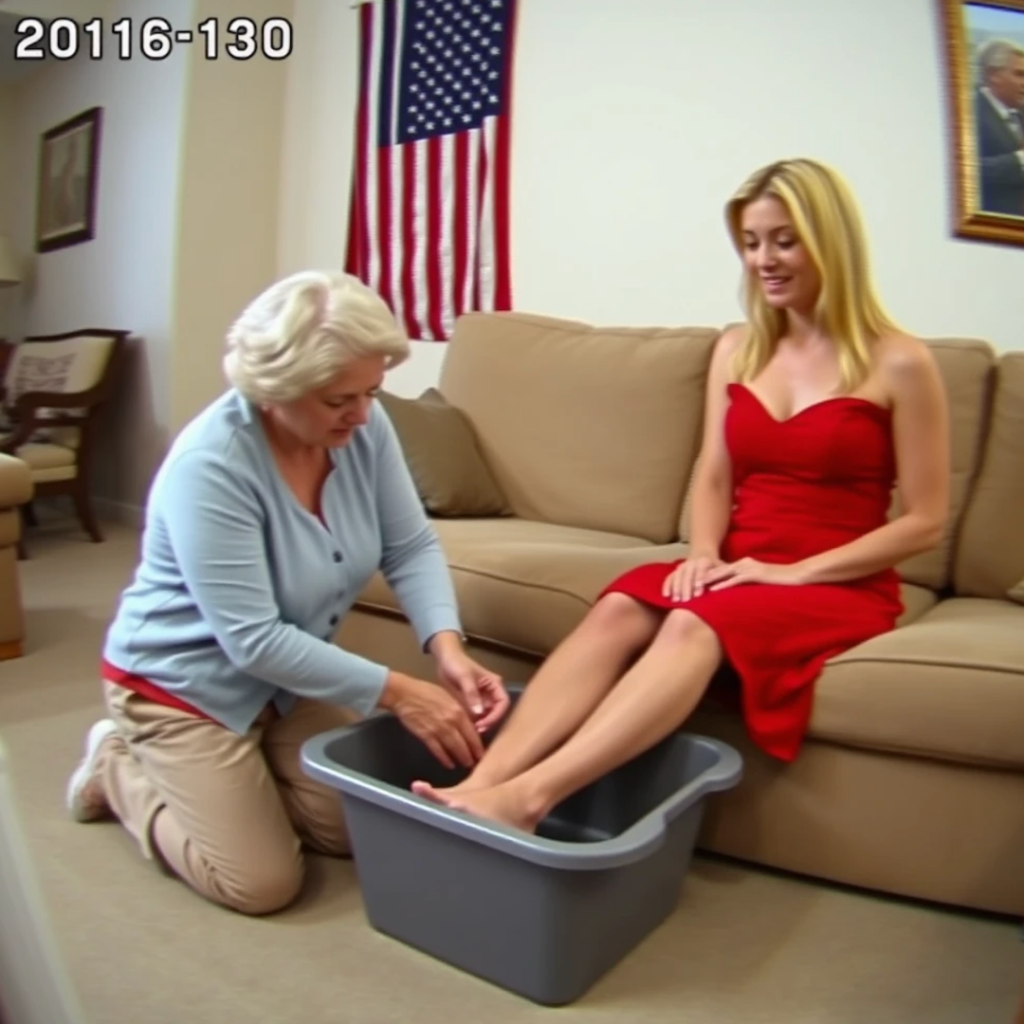
Daniel was completely blinded by it. He told me she was confident, driven, and exactly the kind of modern partner he needed. As a mother who only wanted her son’s happiness, I tried desperately to see those qualities the way he did. I truly tried.
But every single time Daniel left the room, the temperature dropped. Her honeyed smile evaporated, replaced by a gaze so cold and calculating it made the hairs on the back of my neck stand up.
The nightmare began when they moved into my house. Daniel and Vanessa had recently purchased a luxury downtown condo, but it required three months of extensive renovations. Since my arthritis had worsened over the brutal winter, Daniel suggested they stay with me in the suburbs. “It makes sense, Mom,” he had said, kissing my forehead. “We save on a short-term rental, and I get to make sure you’re taking your medication. It’s a win-win.”
I thought I was helping my family. Instead, day by day, inch by inch, I was slowly evicted from my own life. I became an unwanted ghost in the very house where I had raised my son.
Vanessa began a quiet, psychological campaign of territorial dominance. She complained about the smell of my traditional cooking, forcing me to boil vegetables in the garage kitchen because the scent of onions “lingered in her hair.” She took down my framed family photographs in the hallway, claiming the vintage frames “ruined the contemporary aesthetic she was trying to build.”
Then came the little commands disguised as polite requests.
“Margaret, since we are sharing this space now, maybe try not to shuffle your slippers so loudly in the mornings. It disrupts my meditation.” “Margaret, guests really shouldn’t enter the kitchen while I’m meal prepping. It’s unsanitary.”
Guests. She used that word deliberately. In a house whose mortgage I had paid off before she was even born, she had officially demoted me.
But the true breaking point arrived on a rainy Tuesday. Daniel had driven across town to sign permits with their contractor. Vanessa stayed behind, claiming she had to work remotely. She paced through my living room for hours, shouting into her phone in a ruthless corporate tone.
When she finally hung up, she stopped dead in the center of the room.
She was standing on the antique Persian rug. My late husband, Robert, had bought that rug for our tenth anniversary. It was woven with intricate crimson and gold threads, a masterpiece we had saved up for months to afford. It was the heart of my home.
Vanessa had just come in from the backyard. Her beige stiletto boots were caked in thick, wet, black mud.
She didn’t step off the rug. Instead, she looked me dead in the eye, smiled a chilling, reptilian smile, and deliberately scraped the sole of her muddy boot back and forth across the delicate crimson threads, grinding the wet dirt deep into the antique fibers.
“You missed a spot when you cleaned this morning, Margaret,” she said, her voice dropping the sweet act entirely.
I stared at the ruined heirloom, my heart hammering against my ribs. “I did not clean up after you, Vanessa, because I am not your maid. Please take your shoes off my husband’s rug.”
She laughed. It was a dry, hollow sound. She stepped even closer, towering over my frail frame, and folded her arms.
“Then act like you respect the woman who is taking over your son’s life,” she sneered.
Vanessa pointed a perfectly manicured finger at the dark, muddy stain on the beautiful wool. “Get down on your knees, Margaret. Scrub the mud out of my rug. And when you’re done with that, you can wipe my boots clean. Maybe then you’ll finally learn your place in my hierarchy.”
I laughed at first, a breathy, shocked sound, because the demand was too cartoonishly evil to be real.
“You must be out of your mind,” I said, clutching the edge of my armchair. “I will do no such thing. Get out of my living room.”
Vanessa did not laugh. The air around her turned toxic. She sat down gracefully on my floral sofa, extended her muddy boot over the ruined Persian rug, and stared at me with the dead eyes of a predator.
“Do it,” she commanded.
“If you think Daniel will tolerate you speaking to me this way, you are severely mistaken,” I warned her, my voice trembling with a mixture of rage and fear. “When he gets home, I will tell him exactly what you did.”
Vanessa tilted her head, her dark hair falling perfectly over her shoulder. “Oh, Margaret. You really don’t understand how the world works anymore, do you?”
She pulled her smartphone from her pocket and tapped the screen idly.
“Tell him,” she challenged softly. “Tell Daniel I was mean to you. Tell him I made a mess. Do you know what he will say? He will sigh, and he will look at you with that sad, pitying expression he’s been giving you lately.”
She leaned forward, dropping her voice into a vicious whisper.
“I’ve been laying the groundwork for weeks, you old fool. I’ve been telling him you’re getting confused. That you leave the stove on. That you misplace your pills. That you imagine conversations that never happened. He’s stressed, Margaret. He’s tired. If you start making wild, hysterical accusations about his loving fiancée forcing you to clean her shoes, he won’t think I’m cruel.”
A cold dread began to pool in my stomach.
“He will think your mind is finally slipping,” Vanessa said, delivering the fatal blow. “He will think the dementia has started. And with one single recommendation from me, Daniel will declare you mentally unfit, strip you of your power of attorney, and lock you away in a sterile, cheap nursing home so we can finally sell this dilapidated museum.”
My chest tightened so painfully I couldn’t draw a full breath. The room spun.
She wasn’t just threatening my pride. She was threatening my freedom. She was threatening to weaponize my son’s love and turn it into a cage. If Daniel believed her—if he truly thought I was losing my mind—I would lose him, my home, and my independence in one swift stroke.
“He’ll believe me, Margaret,” she whispered, her eyes shining with malicious victory. “He always does. Because he wants to sleep beside me, not take care of a decaying burden.”
My hands shook violently. I hated that the fear won. I hated the weakness of my aging body and the terrifying vulnerability of being elderly in a world that discards the old.
Slowly, agonizingly, I reached for a damp towel resting on the coffee table.
Every joint in my body screamed in protest as I lowered myself down. One painful inch at a time. The humiliation burned in my throat like swallowing crushed glass. I sank onto my swollen, arthritic knees, kneeling on the beautiful Persian rug my husband had bought me, right at the feet of a monster.
Vanessa leaned back into the sofa cushions, letting out a soft sigh of absolute satisfaction.
“Start scrubbing,” she purred.
My trembling fingers clutched the damp towel. I reached out toward the muddy sole of her designer boot. But just as the fabric grazed her leather shoe, a soft, electronic chime echoed from the corner of the ceiling. And then, the heavy oak front door violently clicked open.
Vanessa froze for half a second. The smug satisfaction vanished from her face, instantly replaced by a flash of panic.
“Get up,” she hissed at me, frantically kicking her foot back. “Margaret, get off the floor!”
But at seventy-eight years old, I do not spring to my feet on command. My knees were locked in agony, and my palms were pressed flat against the muddy rug as I desperately tried to push myself upright.
“Move!” she whispered harshly, reaching down to grab my arm, trying to yank me up as if my frailty was a deliberate inconvenience to her performance.
The heavy front door swung inward.
It was Daniel.
He stood in the entryway. The folder of contractor documents was clutched in his left hand, his truck keys in his right. At first, Vanessa clearly thought she could salvage the situation. She immediately smoothed her designer blouse, arranging her features into that practiced, angelic, concerned expression she wore for the rest of the world.
“Oh, honey, thank goodness you’re back!” Vanessa cried out, her voice dripping with fake anxiety. “Your mother slipped! I was just trying to help her up—”
She stopped.
Because Daniel wasn’t looking at her. And he wasn’t looking at me with confusion.
He was standing perfectly still, his eyes fixed on the scene before him. But his face… I had never seen that expression on my son’s face in his thirty-four years of life. All the warmth, the easy-going charm, the blind devotion he normally held for this woman had been entirely incinerated. His jaw was clenched so tightly a muscle ticked violently near his ear. His knuckles were white.
He looked terrifying.
Daniel slowly raised his left hand. He wasn’t just holding the contractor folder. He was holding his smartphone. The screen was glowing brightly.
“Daniel?” Vanessa faltered, her voice losing its honeyed edge. “Baby, what’s wrong?”
Daniel stepped into the living room, the door clicking shut behind him with the finality of a prison gate. He didn’t look at the mud on the rug. He didn’t look at the towel in my hand.
He looked directly at the small, black, spherical object resting on the top shelf of the bookcase in the corner of the room. A device Vanessa had assumed was a Bluetooth speaker.
“You missed a spot when you cleaned,” Daniel said.
His voice was a lethal, quiet monotone. It didn’t sound like a question. It was a direct quote.
Vanessa’s breath hitched. Her face drained of all color until her perfect makeup looked like a mask painted on a ghost.
“W-what?” she stammered.
Daniel looked back at her, his eyes burning with a cold, righteous fury. “I installed a Wyze security camera on that shelf three days ago, Vanessa. I wanted to make sure my mother didn’t fall while I was at work. It has a motion sensor. And it sends a live audio-visual feed directly to my phone.”
Silence hit the room like a dropped anvil.
Daniel took one step closer to the woman he had planned to marry, holding up his phone to show her the live, high-definition recording of her sitting on the couch. “I sat in the driveway in my truck,” Daniel whispered, his voice trembling with absolute disgust. “And I watched you. I heard every. Single. Word.”
Vanessa staggered backward as if she had been physically struck. Her designer boot caught the edge of the coffee table, and she collapsed heavily onto the sofa.
For the first time since I had met her, she had no polished answer. The absolute, undeniable digital proof hung in the air, suffocating her lies before she could even speak them.
Daniel didn’t yell. He didn’t scream. Somehow, his horrifying, icy calm was infinitely worse. He walked over to me, gently hooked his strong arms under my shoulders, and lifted me off the floor with the tender care one reserves for fragile glass. He guided me to my armchair and seated me safely.
“Mom,” Daniel choked out, a single tear escaping his eye as he looked at my bruised knees. “I am so, so sorry.”
“You did nothing wrong, Daniel,” I whispered, touching his hand.
Daniel stood up and turned back to Vanessa.
Desperation is an ugly thing on a proud person. Vanessa scrambled to her feet, tears streaming down her face—real tears this time, born entirely of self-preservation. She reached out to grab Daniel’s jacket.
“Baby, please!” she sobbed, her voice cracking. “You don’t understand! The audio is out of context! She provoked me! She’s been awful to me all week, and I just snapped! It was a joke, a terrible joke, I swear!”
Daniel looked at her hands on his jacket, then looked up into her panicked eyes.
“You threatened to put my mother in a nursing home,” Daniel said, his voice flat, dissecting her lie with surgical precision. “You threatened to fake a dementia diagnosis to steal her house. You made a seventy-eight-year-old woman kneel in the dirt.”
He grabbed her wrists and forcefully removed her hands from his body, stepping back as if she carried a disease.
“There is no context in the universe that justifies what I just watched you do,” he stated.
“Daniel, we are getting married in three weeks!” Vanessa shrieked, her panic turning into a frantic, chaotic anger. “You can’t do this! We have a life together! You love me!”
Daniel stared at her. “I loved an illusion. I loved the mask you wore. But this… this is who you are when you think nobody is watching. And I will burn in hell before I bind my life to a monster.”
He didn’t walk away. He didn’t tell her to pack her bags just yet. He did something that destroyed her completely.
Daniel pulled his phone back out, unlocked it, and dialed a number. He pressed the speakerphone button and set the device on the coffee table right in front of Vanessa.
It rang twice.
“Hello, Daniel!” a cheerful, professional voice answered. “This is Sarah from the Grand Plaza Country Club. I was just reviewing the floral arrangements for your wedding gala on the 14th!”
Vanessa gasped, covering her mouth with both hands. Her eyes widened in absolute terror.
“Hi, Sarah,” Daniel said smoothly, staring unblinkingly at Vanessa. “I need you to cancel the reservation. Cancel the catering, cancel the band, cancel the flowers.”
“Oh!” Sarah stammered, clearly shocked. “Daniel, I’m so sorry, but you understand the deposit is non-refundable at this stage? You’ll lose over thirty thousand dollars.”
“Keep the money,” Daniel said coldly. “It’s the cheapest price I could possibly pay to avoid ruining my life.”
He ended the call, cutting off the wedding planner’s gasp. He looked at Vanessa, whose entire social standing, financial future, and pristine reputation had just been vaporized in a ten-second phone call. “Your bags are upstairs,” Daniel whispered. “You have exactly fifteen minutes to get them out of my mother’s house before I call the police and have you arrested for elder abuse.”
Vanessa didn’t argue anymore.
The threat of police involvement—the threat of public, legal exposure that would undoubtedly ruin her corporate career—was the final nail in the coffin. She scrambled up the stairs, her breath coming in ragged, hysterical sobs.
Daniel didn’t follow her. He stood at the bottom of the staircase, a silent sentinel, ensuring she didn’t touch a single thing that didn’t belong to her.
Fourteen minutes later, Vanessa dragged two heavy designer suitcases down the stairs. Her face was blotchy, her perfect hair disheveled. She didn’t look at me as she dragged her bags toward the front door. But right before she crossed the threshold, she turned back, her face twisting into a mask of pure, venomous hatred.
“You’ll die alone in this rotting house,” she spat at me.
Daniel stepped forward, blocking her view of me entirely. “Get out.”
He slammed the heavy oak door in her face. The lock clicked into place with a heavy, satisfying finality.
The house became quiet in the strange, fragile way it does immediately after a violent storm has passed. Daniel stood by the door for a long time, his shoulders rising and falling heavily. Then, he turned, walked over to my armchair, and dropped to his knees.
Exactly where she had forced me to kneel.
He buried his face in my lap and wept. The strong, confident man who had just dismantled a monster broke down like a little boy.
“Mom, I am so sorry,” he cried, his tears soaking into my skirt. “I brought her here. I let her into your home. I was so blind. I should have protected you.”
I placed my wrinkled hands on his head, stroking his hair just as I did when he was a child frightened by thunderstorms.
“You did protect me, Daniel,” I said softly, the truth ringing clear in the silent room. “You saw the truth, and you didn’t look away. That is all a mother can ever ask of her son.”
That evening, we sat together in the kitchen. We didn’t turn on the television. We drank black coffee long after it had gone cold, talking honestly for the first time in months. The shame and fear Vanessa had tried to bury in silence could not survive the cleansing light of the truth. Neither did her reign of terror.
But the healing did not end with her departure. The next morning, I woke up with a renewed fire in my bones. I was not a fragile victim waiting to be rescued. I was the matriarch of this family.
I called Daniel into the living room. Together, we rolled up the ruined Persian rug. We didn’t throw it away; we sent it to a professional restorer. It would take time, but the mud would be washed out, and the gold threads would shine again.
Then, I hired a legal team.
I didn’t just update my will. I transferred the deed of the house into an irrevocable trust for my future grandchildren. I solidified my medical directives, placing an iron-clad legal wall around my autonomy. I ensured that no one, absolutely no one, could ever weaponize my age against me again.
We threw out the minimalist, cold decor Vanessa had forced upon us. We hung my vintage family photographs back in the hallway, right where they belonged.
What Vanessa thought no one would see became the exact catalyst that saved my life.
If you have ever watched someone reveal who they truly are in the dark, you know this story isn’t just about the elderly, or about toxic relationships. It is about dignity. It is about the one line in the sand that should never, ever be crossed.
Respect inside a home is not optional. And sometimes, the very technology a monster overlooks becomes the silent witness that changes everything.