Chapter 1: The Storm Outside and In
The windshield wipers of my beat-up Ford F-150 were fighting a losing battle against the freezing rain. It was one of those miserable November Tuesdays in Ohio where the gray sky feels like it’s pressing down on your chest, suffocating the daylight out of the afternoon. I wasn’t supposed to be at the school yet. Pickup at Oak Creek Elementary wasn’t for another hour. But I had this feeling in my gut.
Parents know what I’m talking about. It’s not a sound or a text message. It’s a sudden, icy drop in your stomach that tells you, with absolute biological certainty, that something is wrong with your kid. It’s an invisible tether that yanks you hard when they are in distress.
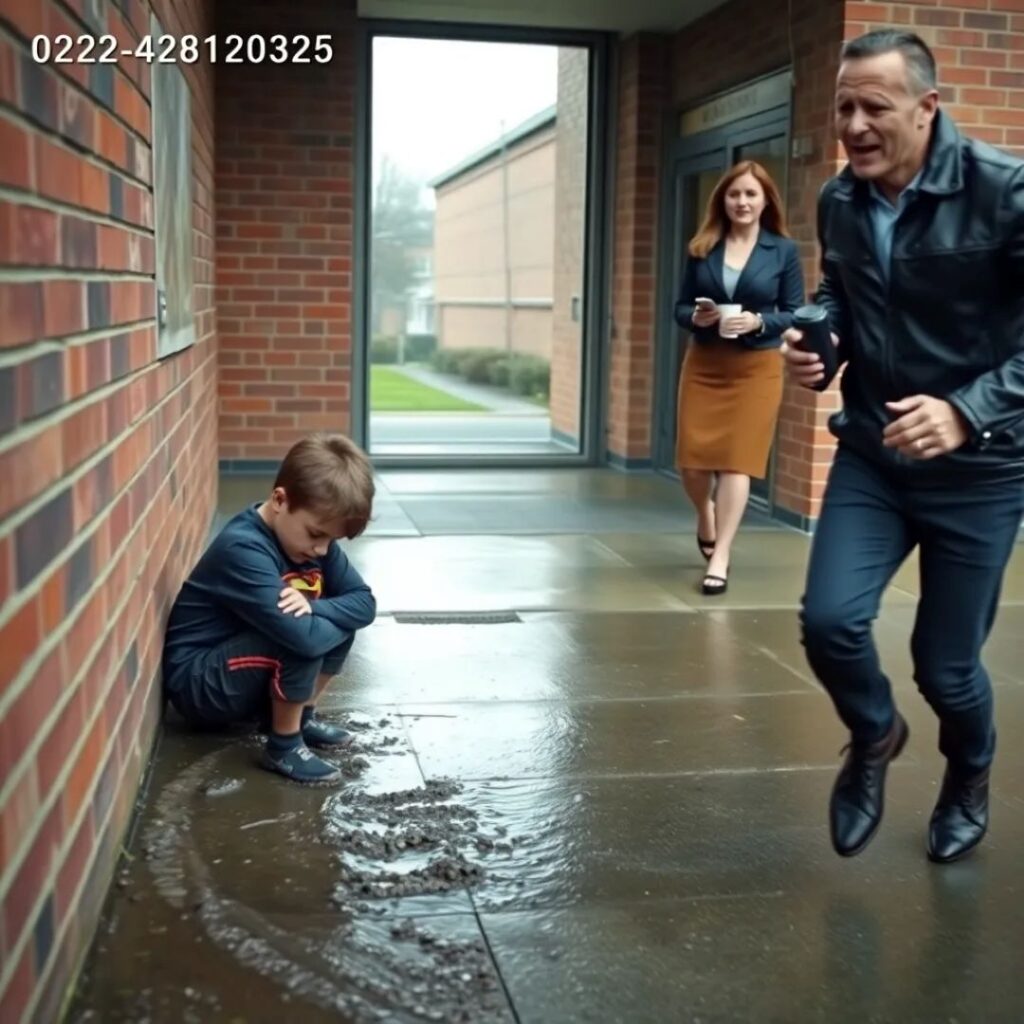
My son, Leo, is seven. He has non-verbal autism. He doesn’t speak, not in words that the rest of the world uses. He speaks in hums, in the rapid flapping of his hands when he’s excited, and in the way he grips my pinky finger with his entire hand when he’s scared. He loves the texture of velvet and hates the sound of vacuum cleaners. He’s the gentlest soul you’ll ever meet, a boy who will spend an hour watching a ladybug crawl across a leaf without ever disturbing it.
Raising him alone since his mom took off three years ago hasn’t been easy. It’s been a battle of IEP meetings, therapy schedules, and fighting for every inch of understanding from a world that wants him to be “normal.” But we had a rhythm, Leo and I. We were a team.
When I pulled into the nearly empty school lot, the building looked like a fortress against the storm. The brick walls were dark with rain, the windows fogged up, keeping the warmth in and the miserable weather out. I parked the truck, killing the engine but leaving the radio on low. I intended to just go to the office and check on him, maybe invent a dentist appointment to take him home early. The anxiety was making my hands shake against the steering wheel.
I grabbed my heavy leather jacket—the one with the “Iron Brotherhood” patch on the back, though I usually wore it inside out at school functions to avoid scaring the PTA moms—and stepped out. The wind hit me like a physical blow, carrying sleet that stung my face.
I slammed the truck door and started walking toward the main entrance, head down against the gale.
That’s when I saw it. Or rather, I saw a splash of color that shouldn’t have been there.
Around the side of the building, near the fenced-in playground entrance, there was a small figure huddled against the rough brick wall.
I stopped. The rain was coming down in sheets now, icy and sharp. I squinted, wiping water from my eyes with a rough hand, praying my mind was playing tricks on me. It couldn’t be a kid. No teacher, no human being, would leave a child out in this. It was thirty-five degrees, with a wind chill that bit right through denim.
The figure moved. A small hand came up to cover an ear. A repetitive, rhythmic rocking motion. Forward and back. Forward and back.
My heart didn’t just stop; it shattered into a million jagged pieces.
“Leo!”
I screamed his name, my voice tearing through the wind, raw and panicked. I didn’t walk; I sprinted. My heavy boots splashed through freezing puddles. I hit the chain-link fence separating the parking lot from the playground. It was locked. Of course, it was locked.
I didn’t think. I scrambled up the wet metal mesh, the links digging into my palms. I vaulted over the top, catching the leg of my jeans on a barb, ripping the fabric, not caring if it ripped my skin. I hit the wet asphalt on the other side and scrambled up.
He was sitting in a puddle. He wasn’t wearing his winter coat. He wasn’t even wearing a sweater. Just his thin, long-sleeved superhero t-shirt and jeans. His sneakers were soaked through.
“Leo, buddy, oh my god.”
I slid on the wet asphalt, dropping to my knees beside him. His lips were a terrifying shade of blue. He was rocking back and forth so hard his head was thumping against the brick wall. Thump. Thump. Thump. He was trying to regulate, trying to find some sensation other than the biting cold.
I ripped off my leather jacket and wrapped it around him, pulling him into my chest. He was freezing. He felt like a block of ice. He didn’t even look at me. His eyes were wide, staring at nothing, lost in a sensory overload of cold and wet and fear. He was completely shut down.
“I’ve got you. Daddy’s here. I’ve got you,” I stammered, rubbing his arms vigorously through the leather, trying to transfer my heat to him.
I looked up at the glass door he was huddled next to. It was the emergency exit to his classroom.
Inside, through the condensation and the rain-streaked glass, I could see the warm glow of the fluorescent lights. I could see the alphabet rug. I could see Mrs. Gable, his teacher. She was sitting at her desk, holding a steaming mug of coffee, laughing at something on her phone.
She was ten feet away. Separated by a pane of glass and a locked door.
She was warm. My son was freezing.
She had locked him out. Like a dog that had peed on the carpet.
Chapter 2: The Spark Before the Fire
A rage took over me that I have never felt in my life. It wasn’t the hot, flashy anger of a bar fight. It was a cold, dark, murderous thing. It was the instinct of a wolf finding its cub in a trap set by a hunter.
I stood up, holding Leo with one arm, and hammered my fist against the safety glass. The sound was loud, violent, a thud-crack that vibrated the whole frame.
Mrs. Gable jumped in her seat. She spun around, her hand flying to her chest. When she saw me—a 6’4″ bearded mechanic, soaking wet, eyes burning with a demon’s rage, clutching a freezing child—the blood drained from her face so fast she looked like a ghost.
She didn’t run to open the door. She hesitated. She looked at the door, then at me, and I saw the calculation in her eyes. She was wondering if she could pretend she hadn’t seen us.
That hesitation told me everything I needed to know. This wasn’t an accident. He hadn’t slipped out unnoticed. This was a punishment.
“Open the damn door!” I roared, my voice muffled by the glass but clear enough in intent.
She scrambled up, fumbling with her keys, and pushed the crash bar. The door swung open, and a blast of warm air hit us. It smelled of dry erase markers and floor wax—the smell of safety.
“Mr. Teller,” she stammered, stepping back, clutching her mug like a shield. “I… I didn’t know you were—”
“Get out of my way,” I snarled, pushing past her into the classroom.
The other kids were at the library. The room was empty except for her and the aide, who was hiding in the corner.
“Why was my son outside?” I demanded, my voice dangerously low. I was stripping Leo’s wet socks off, rubbing his frozen feet. “Why was he locked out in a storm without a coat?”
Mrs. Gable straightened up, trying to regain her authority. “Leo was being extremely difficult today, Mr. Teller. He was making loud vocalizations during silent reading. He was disturbing the class.”
“Disturbing the class?” I looked up at her, water dripping from my beard. “He has autism! He stims when he’s anxious!”
“We have a zero-tolerance policy for disruption,” she said, her voice trembling but defensive. “I told him to go to the cooling-off zone. He refused to put on his coat. He was non-compliant. We put him outside for a brief timeout until he calmed down. It’s… it’s standard procedure for behavioral correction.”
“Standard procedure?” I stood up, lifting Leo into my arms. He was still shivering, his teeth chattering a mile a minute. “To lock a non-verbal seven-year-old in freezing rain? Look at him! Look at his lips!”
“We have to think of the other children’s education,” she said, crossing her arms. “Maybe if you were more open to medication, as the Principal suggested…”
I didn’t let her finish. I turned on my heel and marched out of the classroom, down the hallway. I didn’t care about the trail of water I was leaving. I kicked the double doors to the main office open so hard they slammed against the wall.
Principal Halloway came out of his office, adjusting his silk tie. He looked at me, then at the wet, shivering boy in my arms.
“Mr. Teller,” Halloway said, using that condescending, calm voice bureaucrats use to manage angry parents. “There’s no need for a scene. Mrs. Gable just radioed me. We were following protocol for a disruptive student.”
“Protocol?” I stepped into his personal space. I smelled his expensive cologne. It made me sick. “You froze my son. You tortured him.”
“That is a gross exaggeration,” Halloway scoffed. “If you cannot control your child’s outbursts, the school must take measures to protect the learning environment. If you continue to be aggressive, I will have to call the police and have you banned from the premises.”
He looked at me with pure disdain. To him, I was just some grease-monkey single dad who couldn’t control his “broken” kid. He thought he held all the cards. He thought the school board and his policies protected him.
I looked at Halloway. I looked at Mrs. Gable, who was peeking through the office window.
“You locked my son outside because he was inconvenient,” I said, my voice dead calm. “And now you’re threatening me.”
“I’m stating facts,” Halloway said, checking his watch. “Now, please take your son and leave. We can discuss his enrollment status tomorrow.”
I laughed. It was a dark, dry sound that made the secretary flinch. “Don’t worry. I’m leaving.”
I walked out. I carried Leo to the truck, buckled him into his car seat, and cranked the heat up to the max. I wrapped him in the emergency foil blanket I kept in the glove box. I grabbed a bottle of water and held it to his lips.
“You’re safe, buddy,” I whispered, kissing his cold forehead. “Daddy’s sorry. Daddy’s so sorry.”
I waited until his color started to return. I waited until the shivering subsided to a tremble.
Then, I pulled out my phone.
I didn’t call the police. The police take reports. They file paperwork. They let people like Halloway hide behind unions and “he said, she said.” I needed something louder than a police report. I needed a witness. I needed an army.
I opened my contacts and scrolled to “The Brotherhood.”
I hit the group call button for the Inner Circle.
“Jax?” A deep voice answered immediately. It was Bear, the Sergeant at Arms of our local chapter. A man the size of a vending machine with a heart of gold and fists like sledgehammers. “Why are you whispering? You okay?”
“I’m at the school,” I said, my voice shaking. “They locked Leo outside in the rain. They froze him, Bear. They laughed about it while they drank coffee.”
There was silence on the other line. A heavy, pregnant silence.
“Who is ‘they’?” Bear asked, his tone shifting from casual to lethal.
“The Principal. The teacher. All of them. They said he was a distraction.”
“Is the boy okay?”
“He’s warming up. But they kicked me out. Said I was aggressive.”
“Aggressive?” I heard the sound of a pool cue being set down on a table in the background. “They haven’t seen aggressive yet.”
“I need you guys, Bear. I can’t do this alone. They’re going to sweep this under the rug.”
“Say no more,” Bear said. “Where are you parked?”
“Front lot. Main entrance.”
“Sit tight, brother. We were just about to start the Tuesday run. Looks like the route just changed.”
“How many?” I asked.
“Everyone,” Bear said. “We’re bringing everyone.”
I hung up.
I sat in the truck and watched the school. I watched parents starting to arrive for pickup in their SUVs and minivans. They walked in, smiling, oblivious. They had no idea what was happening inside those brick walls. They had no idea that the people they entrusted their children to were monsters.
Ten minutes later, the puddle in front of my truck started to vibrate.
It wasn’t thunder.
It started as a low rumble, distant, like a growling stomach deep in the earth. Then it grew louder. A roar. A thunderous, mechanical symphony of fifty V-twin engines tearing up the asphalt.
I looked in my rearview mirror.
They were coming. And they were bringing the storm with them.
Chapter 3: The Thunder Rolls In
The vibration started in the soles of my boots and worked its way up to my teeth. It wasn’t just sound; it was a physical force, a displacement of air that signaled the arrival of something ancient and undeniable. In the quiet, rain-soaked suburb of Oak Creek, where the loudest thing was usually a lawnmower or a soccer mom’s minivan horn, this was an earthquake.
I stepped out of the truck, closing the door gently so as not to wake Leo, who had finally stopped shivering and drifted into a warmth-induced doze. I stood in the freezing drizzle, crossing my arms over my chest, watching the entrance to the school lot.
The first bike crested the small hill leading to the school. It was Bear. You couldn’t mistake him or his machine. He rode a custom Harley Road King, all blacked out, no chrome, with ape hanger handlebars that forced him to sit tall, like a king on a throne of iron and combustion. Even through the rain, the single headlight cut a beam through the gloom like a lighthouse warning of a crash.
Behind him, the rest of the Iron Brotherhood poured over the hill like a landslide. Two by two. Formation tight. Precision riding that would make the Blue Angels jealous.
The sound was deafening now. It wasn’t the high-pitched whine of sport bikes; it was the guttural, chest-thumping potat-potato-potato of heavy American V-twins. It was fifty engines firing in sync, a mechanical heartbeat that drowned out the wind, the rain, and the polite society that had decided my son didn’t matter.
They didn’t just pull into parking spots. They took over.
Bear led the column straight into the bus loop—the sacred territory of the school district, marked with “NO UNAUTHORIZED VEHICLES” signs. Bear didn’t care about signs. He rolled his bike right up to the front curb, directly in front of the main glass doors where I had been kicked out ten minutes ago.
He killed the engine. Silence didn’t return immediately; my ears were still ringing. Then, forty-nine other kickstands scraped against the wet pavement in unison. Scrape. Clack.
It was a beautiful, terrifying choreography.
I watched the faces of the other parents who were sitting in their cars waiting for dismissal. A woman in a silver Lexus dropped her phone. A man in a sedan hurriedly locked his doors, his eyes wide as he stared at the sea of leather vests, patches, and bearded men dismounting in the rain.
They were scared. I understood that. To them, we looked like chaos. We looked like trouble. They saw the “1%” patches, the rockers on the back of the vests, the tattoos creeping up necks and onto hands. They didn’t see what I saw.
I saw “Tiny,” a six-foot-seven giant who spent his weekends volunteering at a dog shelter. I saw “Doc,” a former combat medic who had saved my life when I laid my bike down on Route 66 three years ago. I saw “Sledge,” a welder who built ramps for disabled veterans in his spare time.
They weren’t a gang. They were a family. And right now, they were a family that had been insulted.
Bear walked toward me. He didn’t run. Bear never ran. He moved with the slow, inevitable momentum of a glacier. He wasn’t wearing a helmet—Ohio law let us ride without them—and his long gray beard was soaked, water dripping from the ends. His eyes, usually crinkled with a joke, were hard as flint.
“Jax,” he said, his voice a deep rumble that carried over the wind. He grabbed my shoulder, his grip like a vice. “Where’s the boy?”
“In the truck,” I said, pointing behind me. “He’s warm. He’s sleeping.”
Bear nodded, looking past me at the school building. The lights in the office were still on. We could see silhouettes moving frantically behind the blinds. They knew we were here. It’s hard to miss fifty motorcycles parking on your doorstep.
“You said they locked him out,” Bear said, the words coming out slow, testing the weight of them. “In this?” He gestured to the freezing rain.
“Yeah. Teacher said he was ‘disturbing the class.’ Said he wouldn’t wear a coat, so they put him outside to ‘cool off.’ I found him huddled against the brick, turning blue, Bear. He was rocking. He was gone.”
I felt my voice crack again, the rage and the grief warring in my throat. “The teacher was drinking coffee. Just watching him.”
Bear’s jaw tightened. A muscle jumped in his cheek. He turned to the group behind him.
Fifty men were standing in the rain, silent, waiting for orders. They were soaked, cold, and looking for a reason to be angry.
“Listen up!” Bear bellowed.
Every head snapped toward him.
“This school,” Bear pointed a thick finger at the brick facade, “decided that Jax’s boy, Leo, wasn’t worth the heat. They locked a seven-year-old, non-verbal boy outside in thirty-degree weather because he was making noise.”
A low murmur went through the crowd. It was a dark sound, like a growl. These men had codes. You don’t hurt women.
You don’t hurt kids. And you never, ever mess with a brother’s family.
“They think they can bully a single father,” Bear continued. “They think they can hide behind their desks and their policies. They think nobody cares about one autistic kid.”
Bear paused, looking at the faces of his brothers.
“Do we care?”
“YES!” The shout was unison, loud enough to rattle the windows of the school.
“Are we going to let that slide?”
“NO!”
“Right,” Bear said, turning back to me. “We aren’t going to break anything, boys. We aren’t going to touch anyone. We are citizens. We are taxpayers. We are concerned members of the community.” A dark grin spread across his face. “We’re just going to go inside and ask some questions. All of us.”
“All of us?” I asked, looking at the small double doors.
“All of us,” Bear confirmed. “Doc, you stay here with Jax’s truck. Watch the boy. If he wakes up, keep him calm. The rest of you… form up.”
It was a siege. But it wasn’t a siege of guns or violence. It was a siege of presence.
We walked toward the doors. Bear and I in the front. The sound of a hundred heavy boots hitting the pavement was rhythmic, militaristic. Thud. Thud. Thud.
As we approached the glass doors, I saw the secretary, Mrs. Higgins, standing there. She was on the phone, her face pale, frantically gesturing. She saw the wave of black leather approaching—fifty large men, soaked, serious, and unrelenting.
She ran to the door and locked it. I heard the click of the deadbolt even through the glass.
Bear stopped six inches from the door. He didn’t bang on it. He didn’t yell.
He just stood there. He crossed his massive arms over his chest, planted his feet shoulder-width apart, and stared at her.
Then I stepped up beside him. Then Tiny. Then Sledge.
Within thirty seconds, the entire glass storefront of the elementary school was blocked by a wall of leather. We blocked the light. We blocked the view. We were a human curtain of judgment.
Inside, the hallway began to fill with teachers. They peeked out of classroom doors, eyes wide. The principal, Mr. Halloway, came storming out of his office, his face a mask of indignation and fear. He marched to the door, waving his hands, mouthing something like “Go away!”
Bear just smiled. It wasn’t a nice smile. He pointed to his watch, then he pointed to the door handle.
Halloway shook his head furiously. He pulled out his cell phone and held it up, showing us the screen. He was dialing 911.
“Let him call,” Bear said softly to me. “Sheriff Miller rides with the Black Hills chapter. He knows us. Besides, we aren’t breaking the law. Standing on a sidewalk isn’t a crime.”
But this wasn’t about revenge. Not really. It was about accountability.
“They’re going to try to wait us out,” I said. “Dismissal is in twenty minutes. The buses will be here. Parents will be walking up.”
“Good,” Bear said, not moving a muscle. “Let the parents see. Let the buses see. Let everyone see that the Iron Brotherhood is standing guard. Let them ask why.”
He turned to me. “We aren’t leaving until you get an apology, Jax. And we aren’t leaving until that principal looks me in the eye and explains why a coffee break was more important than your son’s life.”
The rain intensified, drumming against our helmets and shoulders, but nobody moved. Not an inch. We were statues of leather and resolve.
And then, Halloway made a mistake. He thought he could talk his way out of it. He unlocked the door, cracking it open just a few inches, keeping the chain on.
“You are trespassing!” Halloway squeaked, his voice cracking. “I have called the police! You need to disperse immediately!”
Bear leaned down, putting his face near the crack.
“We aren’t trespassing, Mr. Principal. We’re here for a parent-teacher conference.”
Bear pushed the door. He didn’t kick it. He just leaned his weight against it. The screws of the security chain groaned, the wood of the frame creaked.
Halloway scrambled back.
“Open the door,” Bear said, his voice dropping to a growl. “Or we’ll huff, and we’ll puff…”
Halloway looked at the fifty men behind Bear. He looked at the flimsy chain. He realized that if we wanted to come in, a chain wasn’t going to stop us.
With a trembling hand, he undid the latch.
The door swung open.
“After you, Jax,” Bear said, sweeping his arm toward the warm, dry hallway. “Go get your answers.”
Chapter 4: The Court of Public Opinion
Walking into the school hallway felt different this time. Ten minutes ago, I had been a frantic, soaking-wet father, dismissed as a nuisance, a “distraction” to be managed. I had been powerless, easily shooed away with threats of police and policy.
Now, I was the tip of a spear.
I stepped onto the linoleum, my boots leaving muddy, wet prints. Behind me, Bear entered, filling the doorway.
Then Tiny, who had to duck to clear the frame. Then Sledge. They filed in, one by one, silent and solemn. They didn’t shout. They didn’t knock things over. They simply lined the hallway.
They stood shoulder to shoulder against the lockers, creating a corridor of black leather that led straight to the main office. The smell of the school—crayons, floor wax, and damp coats—was instantly overpowered by the scent of rain, exhaust, and old leather.
Principal Halloway was backing away from us, retreating toward the safety of the main office counter. Mrs. Higgins, the secretary, was pressed against the back wall, clutching a stapler as if it were a weapon.
“This is… this is highly irregular!” Halloway stammered, his face flushing a deep, blotchy red. “You cannot bring a… a gang into an educational facility!”
“Club,” Bear corrected him calmly, his voice echoing in the tiled hallway. “Motorcycle Club. There’s a difference.
And we’re just here to support our brother.”
I walked straight up to Halloway. I didn’t stop until I was invading his personal space, forcing him to look up at me.
“Where is she?” I asked.
“Who?” Halloway blinked, sweat beading on his forehead.
“Mrs. Gable. The teacher who put my son in the freezing rain.”
“She is… she is with her class. You cannot disrupt the—”
“My son is in a truck outside, shivering,” I cut him off. “That is a disruption. Now, bring her out here. I want her to look me in the eye and tell me why.”
“I will do no such thing!” Halloway tried to puff out his chest. “I have the police on the line! They are minutes away!”
“Good,” I said. “I want them here. I want to file a report for child endangerment. I want to file a report for negligence.”
At that moment, the door to the teachers’ lounge opened. Mrs. Gable peeked out. She must have heard the commotion, or maybe the rumble of the engines had drawn her curiosity.
She froze.
She saw me. Then she saw the hallway. Fifty bikers. Lining the walls. Silent. Staring at her.
Her eyes went wide. She dropped her coffee mug. It shattered on the floor, sending brown liquid and ceramic shards everywhere. The sound was like a gunshot in the tense silence.
“Mrs. Gable,” I said, my voice carrying down the hall.
She flinched as if I’d hit her.
“Come here,” I said.
She shook her head, backing into the lounge, trying to close the door.
“Don’t,” Bear said. He didn’t shout, but his voice projected effortlessly. “We just want to talk, ma’am.”
She hesitated, then looked at Halloway for help. Halloway was useless, trembling behind the counter.
Slowly, terrifyingly, she walked out into the hallway. She looked small. Fragile. It was hard to believe this was the same woman who had sat comfortably drinking coffee while my son froze.
“I… I was following policy,” she whispered, her voice trembling. tears starting to well up in her eyes. “He was screaming. He wouldn’t stop screaming.”
“He wasn’t screaming,” I said, my voice shaking with suppressed emotion. “He was humming. He was stimming. Because the class was too loud. And instead of helping him with his headphones, instead of calling me… you threw him out.”
“I didn’t throw him out!” she protested, her voice rising to a shrill pitch. “I escorted him to the sensory break area!”
“The sensory break area is outside?” I pointed to the glass doors where the rain was still hammering down.
“In November? In a storm?”
“He wouldn’t put his coat on!” she cried. “I couldn’t force him!”
“So you sent him out without it?” Bear spoke up, stepping forward. He looked massive next to her. “You sent a seven-year-old boy into thirty-degree rain in a t-shirt? Lady, I wouldn’t do that to a dog.”
“I… I didn’t realize how cold it was,” she lied.
“You were drinking hot coffee!” I shouted, losing my composure for a second. “You knew exactly how cold it was! You were watching him through the window!”
The hallway went deadly silent.
“You watched him?” Bear asked, his voice low and dangerous. “You watched him freeze and you didn’t open the door?”
Mrs. Gable looked down at her shoes. She couldn’t answer. The shame was palpable.
Just then, the sound of sirens cut through the air. Blue and red lights flashed against the wet glass of the front doors.
The police were here.
Halloway let out a breath of relief. “Finally! Officers! In here! Help!”
Two deputies walked in, hands on their holsters, looking ready for a riot. They saw the bikers lining the hall. They paused.
The lead deputy was an older man, Sheriff Miller. He looked at the bikers. He looked at Bear. He looked at
Halloway.
He took his hand off his gun.
“Bear,” the Sheriff nodded.
“Sheriff,” Bear nodded back.
“What’s the circus, boys?” Sheriff Miller asked, looking around. “We got a call about a gang takeover. Hostage situation.”
“No hostages, Sheriff,” Bear said calmly. “Just a concerned parent meeting. We’re providing moral support.”
“Fifty of you?” The Sheriff raised an eyebrow.
“It takes a village,” Bear shrugged.
Halloway rushed forward. “Sheriff! Thank god. Arrest them! They are trespassing! They are menacing my staff! This man—” he pointed at me “—threatened me!”
Sheriff Miller looked at me. “That true, son?”
“I told him he was going to answer for what he did to my boy,” I said, stepping forward. “Sheriff, you know my son, Leo. You’ve seen him at the town fair.”
“I know him,” Miller said softly. “Good kid. Likes my badge.”
“They locked him outside,” I said, pointing to the playground door. “For twenty minutes. In this storm.
Without a coat. Because he was humming.”
The Sheriff’s face changed. The professional neutrality dropped, replaced by the look of a grandfather. He looked at the wet floor where I had tracked in water. He looked at my soaked clothes.
“Is the boy okay?” Miller asked.
“He’s hypothermic,” I said. “He’s in the truck warming up. I’m taking him to the ER as soon as I’m done here to get checked out.”
Miller turned slowly to Halloway. The look on his face was far more terrifying than anything the bikers had done.
“You locked a special needs child outside in a storm, Halloway?” Miller asked.
“It was… it was a cooling-off period!” Halloway stammered, realizing the tide had turned. “It is school policy!”
“Show me,” Miller said.
“What?”
“Show me the policy,” Miller said, holding out his hand. “Show me where it says in the district handbook that you can lock a minor outside in freezing conditions without protective clothing. Show me that page.”
Halloway turned pale. He opened his mouth, but nothing came out.
“And while you’re looking for that,” Miller continued, his voice hardening, “I’m going to need the security footage from the playground camera. Now.”
“I… I can’t release that without a warrant,” Halloway tried.
“That’s fine,” Miller said, pulling out his radio. “I’ll get a warrant. And I’ll get Child Protective Services down here too. Because in the state of Ohio, leaving a child in a situation that risks their health is a felony. It’s called child endangerment.”
Halloway slumped against the counter. Mrs. Gable covered her face with her hands and began to sob.
Bear stepped up next to the Sheriff. “We’ll wait right here, Sheriff. Make sure nobody… loses that footage.”
“You do that, Bear,” Miller said. “Just… keep the hallway clear for dismissal. Parents are starting to come in.”
And they were. The bell rang. The doors opened.
But instead of chaos, the parents walked in to find fifty bikers standing quietly, respectfully, leaving a path for the children.
As the kids started pouring out of the classrooms, eyes wide at the sight of the bikers, the men of the Iron Brotherhood softened. They smiled. They high-fived the brave kids.
“Cool bike!” a little boy shouted, pointing outside.
“Thanks, little man,” Tiny said, grinning.
The parents, confused at first, started to whisper. They saw Mrs. Gable crying. They saw the Sheriff grilling the Principal. They saw me, soaking wet, standing with the bikers.
Word spread fast. “They locked a kid out.” “They froze Leo.” “The bikers are here to protect him.”
By the time the buses were loading, the narrative had flipped. We weren’t the invaders. We were the guardians.
I walked back out to the truck. Doc was sitting in the passenger seat, reading a comic book to Leo, who was awake now and looking much better.
“How is he?” I asked, opening the door.
“He’s good,” Doc said. “Body temp is up. Color is back. He’s asking for nuggets.”
I let out a breath I didn’t know I was holding. I leaned my forehead against the steering wheel and closed my eyes.
“We aren’t done, Jax,” Bear said, appearing at my window. “This was just the opening act. Tomorrow, we go to the School Board.”
I looked at him. “The School Board?”
“Yeah,” Bear smiled. “And guess what? The whole chapter is coming. And the chapter from Columbus. And the one from Cleveland.”
“Why?” I asked.
“Because,” Bear said, looking at Leo through the window. “You don’t mess with our kids. And now, the whole state is going to know it.”
I looked at my phone. I had posted a picture of Leo shivering against the wall before the bikers arrived. Just a frantic, angry plea for help.
It had 5,000 shares.
The storm wasn’t outside anymore. The storm was online. And it was about to rain down on Oak Creek Elementary harder than they could ever imagine.
Chapter 5: The Paper Trail and the Public Court
The drive from Oak Creek Elementary to the Urgent Care on 4th Street was the longest five miles of my life. The rain hadn’t let up; if anything, it had hardened into a relentless, rhythmic drumming against the roof of the F-150. Beside me, Leo was quiet. Too quiet. He was wrapped in the foil blanket, clutching a stuffed dragon that Doc had pulled out of his saddlebag, his eyes fixed on the blurring streetlights passing by.
Every time I looked at him, a fresh wave of nausea hit me. I saw his blue lips. I saw the way his hands had been shaking—not the happy flaps of his stimming, but the violent, uncontrollable tremors of a body shutting down. I gripped the steering wheel so hard the leather creaked, my knuckles turning white.
I pulled into the Urgent Care lot. Doc had followed me on his bike, his hazard lights flashing, cutting a path through the evening traffic like an ambulance. He parked his bike on the sidewalk, right next to the automatic doors, and was off it before I even unbuckled Leo.
“I called ahead,” Doc said, opening the passenger door and helping me lift Leo out. The foil blanket crinkled loudly. “Dr. Evans is on duty. He’s a good man. He won’t brush this off.”
We walked in. The receptionist took one look at me—soaking wet, bearded, eyes wild—and then at the biker behind me, and then at the shivering child. She didn’t ask for an insurance card. She just pointed to the back. “Room 3.”
Dr. Evans was waiting. He was a sharp-eyed man in his fifties who had stitched me up once after a bad wrench slip in the garage. He didn’t waste time with pleasantries.
“Get him on the bed,” Evans commanded. “Nurse, let’s get vitals. Temp first.”
I stood in the corner, dripping water onto the sterile floor, watching them work. Doc stood by the door, arms crossed, a silent sentinel.
“96.2 degrees,” the nurse announced.
“Mild hypothermia,” Evans muttered, scribbling on his chart. He looked at Leo’s hands. They were red and chapped. He looked at the wet clothes we had peeled off him. “How long was he out there, Jax?”
“I don’t know,” I choked out. “I found him at 3:15. School lets out at 3:30. Teacher said she put him out for a ‘timeout.’ Could have been twenty minutes. Could have been forty.”
Evans stopped writing. He looked up, his glasses sliding down his nose. “A timeout? Outside? Today?”
“Yeah.”
“Is he verbal?” Evans asked, though he knew the answer.
“No.”
Evans closed the file with a snap that echoed in the small room. “Jax, I need to take photos of his hands and his ears for the record. This is frost nip. It’s early stage, but it’s tissue damage.”
“Do it,” I said. “Document everything.”
“I have to report this,” Evans said quietly. “Mandatory reporter laws. Even if you don’t want to press charges, I have to call CPS and the police.”
“The police already know,” Doc spoke up from the doorway. “Sheriff Miller is at the school seizing the security tapes.”
Evans nodded. “Good. Because this isn’t discipline. This is abuse.”
Those words hung in the air. Abuse. It transformed the situation from a “bad day” to a crime.
By the time we got Leo warmed up, fed him some warm soup, and got the all-clear to go home, it was dark. The adrenaline was fading, replaced by a bone-deep exhaustion. But the war was just starting.
My phone had been buzzing in my pocket for the last hour. Continuous, angry vibrations. When we finally got back to my small ranch house, I settled Leo into his bed. I turned on his sensory lights—the ones that project stars onto the ceiling—and put on his white noise machine. He curled up, exhausted, and was asleep in minutes. I sat on the floor by his bed for a long time, just watching his chest rise and fall, making sure he was still there.
Then, I walked into the kitchen and pulled my phone out.
I had posted that photo. The one of Leo huddled against the brick wall. I had written a caption, raw and unedited, just before the bikers arrived.
5,200 Shares. 12,000 Likes. 3,400 Comments.
I scrolled through them.
“This is Oak Creek? My kids go there! Who is the teacher?” “Fire them all. Jail time.” “I’m an autistic adult. This is torture. He was probably in sensory overload and they froze him.” “Where is this? I’m driving down there right now.”
And then, the notifications from the news outlets. Channel 5 wants an interview. The Columbus Dispatch sent a DM. CNN is asking for usage rights. My quiet life was over.
There was a knock at the door. Not the police knock. The Brotherhood knock. Three rapid taps, a pause, two hard thumps.
I opened it. It was Bear. And behind him, crowded into my small driveway, were ten other bikes. But it wasn’t just the guys from the ride. Standing next to Bear was a woman in a sharp blazer, holding a briefcase, looking completely out of place next to the leather-clad giants.
“Jax,” Bear said, stepping in. “This is Sarah Jenkins. She’s the lawyer for the Cleveland Chapter. We flew her down.”
“Lawyer?” I wiped my face with a towel. “Bear, I can’t afford a lawyer like this.”
“You aren’t paying,” Sarah said, stepping past Bear. She had eyes like a hawk. She set her briefcase on my kitchen table, pushing aside a stack of unpaid bills. “The Brotherhood legal fund is covering it. Now, sit down. We have work to do.”
I sat. The kitchen felt very small suddenly. Bear leaned against the fridge. Tiny and Sledge stood by the back door.
“First,” Sarah said, pulling out a legal pad. “Don’t delete the post. But don’t post anything else tonight. The school district’s lawyers are already spinning this. They released a statement ten minutes ago.”
“A statement?” I asked.
She turned her laptop around. “Read it.”
OFFICIAL STATEMENT FROM OAK CREEK SCHOOL DISTRICT: “Today, a security incident occurred at Oak Creek Elementary involving a local motorcycle gang attempting to intimidate staff and students. The district placed the school on lockdown. Regarding the allegations of student mistreatment: The district follows all state guidelines for behavioral management. The student in question was briefly separated from the class for the safety of other students after a violent outburst. We are cooperating with law enforcement regarding the trespassing incident.”
I felt the blood boil in my veins. “Violent outburst? He was humming! And ‘gang intimidation’? We stood on the sidewalk!”
“They are controlling the narrative,” Sarah said calmly. “They are painting you as a dangerous, unstable father with gang connections, and the teacher as a hero protecting the other kids. They are betting that the suburban moms will be more scared of the bikers than they are angry about the autistic kid.”
“They’re wrong,” Bear growled.
“They are,” Sarah agreed. “But we have to prove it. Sheriff Miller has the tapes?”
“He took the hard drive,” I confirmed.
“Good. That tape is the smoking gun. Without it, it’s your word against theirs. We need that tape released. But the District will fight to seal it, claiming ‘student privacy.’”
Sarah looked at me. “Tomorrow night is the monthly School Board meeting. Usually, nobody goes. Maybe three people.”
“Bear said we’re going,” I said.
“We are,” Sarah smiled, a sharp, predatory smile. “But not to intimidate. We are going to follow their rules perfectly. We are going to sign up for public comment. We are going to pack that room with taxpayers. And we are going to make them watch that video.”
“How?” I asked. “If they seal it?”
“Because,” Sarah tapped her laptop. “Ohio is a one-party consent state for recordings. And Sheriff Miller is an elected official who hates bullies. I just got off the phone with him. He can’t release the video to the media yet… but he can release a preliminary police report describing exactly what is on it. And he’s going to read that report at the meeting.”
Bear cracked his knuckles. “So we just need to make sure the Board listens.”
“Exactly,” Sarah said. “They think this is a PR problem. We need to show them it’s a revolution.”
Chapter 6: The Sea of Chrome
The atmosphere in Oak Creek the next day was electric. You could feel it in the air, a tension that vibrated like a plucked guitar string. I kept Leo home, obviously. We spent the day building a massive Lego castle in the living room. I tried to keep the TV off, tried to keep the world away, but the world has a way of leaking in.
My phone was useless—constant calls, texts, notifications. I finally turned it off. But every time I looked out the window, I saw more cars driving slowly past my house. Neighbors I had never spoken to were slowing down, looking at the bikes parked in the driveway, looking at the house. Some gave thumbs up. Some looked terrified.
At 5:00 PM, the preparations began.
The School Board meeting was scheduled for 7:00 PM at the District Administration Building—a fancy, modern structure in the center of town with a large auditorium that was usually empty.
Bear told me to be ready at 6:00.
When I walked out of my house at 5:55, wearing my best flannel shirt and clean jeans, holding Leo’s hand, I stopped dead in my tracks.
I expected the Brotherhood. I expected maybe the fifty guys from yesterday.
I was wrong.
The street—my entire suburban street—was gone. It was replaced by a sea of chrome and steel.
There were hundreds of them.
The call had gone out. “The Brotherhood” wasn’t just a local club. It was a network. And when the “911” went out regarding a child, they answered.
There were patches I recognized: The Cleveland Chapter, The Iron Horsemen, The Black Hills Crew. But there were others too. I saw the Christian Motorcyclists Association. I saw a group of military veterans on massive Triumphs. I saw sport bike riders in neon gear. I even saw a local Vespa club.
It wasn’t a gang. It was a coalition.
Bear was at the front, standing next to his bike, holding a spare helmet for Leo.
“We needed a bigger escort,” Bear grinned. “Hope you don’t mind the traffic.”
“Bear…” I was speechless. “How many?”
“Counted about four hundred so far,” Bear said. “More joining on the route. We got the permit for a parade procession. Police escort and everything.”
He handed the small helmet to Leo. Leo, usually shy, looked at the sea of motorcycles. His eyes went wide. He didn’t cover his ears. He reached out and touched the shiny chrome of Bear’s tank.
“He likes it,” I whispered.
“He’s one of us now,” Bear said softly. “Little Brother.”
We loaded up. I rode my bike, Leo strapped securely behind me. Bear took the lead.
The ride to the Administration Building was something I will tell my grandkids about. We took up all four lanes of Main Street. The sound was a continuous, rolling thunder that echoed off the storefronts. But it wasn’t aggressive. We rode slow. Stately.
People were lining the sidewalks. I saw signs.
JUSTICE FOR LEO. FIRE GABLE. AUTISM AWARENESS.
It wasn’t just bikers. It was moms with strollers. It was high school kids. It was the community. The school’s attempt to spin the narrative had failed. The picture of Leo had been too powerful. The truth was too obvious.
When we pulled into the Administration Building parking lot, we overflowed it instantly. Bikes parked on the grass, on the medians, on the sidewalks. We dismounted. Four hundred bikers removing helmets at once. The silence that followed was heavy.
“Remember,” Bear shouted to the crowd. “Respect. We are here to witness. We do not yell. We do not break. We stare them down.”
We walked toward the building. A phalanx of leather.
We filed into the auditorium. It seated maybe three hundred. It was full in minutes. The rest of the bikers lined the walls, filled the lobby, and spilled out into the courtyard, listening through the open windows.
I sat in the front row, Leo on my lap with his headphones on, playing on an iPad. Sarah, the lawyer, sat on my right. Bear on my left.
At 7:00 PM sharp, the School Board members walked onto the stage.
There were five of them. They looked like deer caught in the headlights of a semi-truck.
The Board President, a man named Mr. Sterling who owned a chain of car dealerships, tapped his microphone. Tap. Tap. Screech.
“Order,” he said, his voice wavering. “I call this meeting to order.”
He looked out at the sea of leather vests, crossed arms, and grim faces. He cleared his throat. “I… uh… I see we have a large turnout tonight. I would like to remind everyone that this is a place of civil discourse. Disruptions will not be tolerated.”
Nobody said a word. The silence was more intimidating than any shout.
“We will proceed to the agenda,” Sterling said quickly. “Item one: Budget approval for the new stadium lights.”
“Point of order,” Sarah stood up. Her voice was sharp, clear, and projected to the back of the room without a microphone.
“You must wait for public comment,” Sterling snapped.
“The crowd is here for one reason, Mr. President,” Sarah said. “We move to suspend the agenda and address the incident at Oak Creek Elementary immediately.”
“Seconded!” A voice shouted from the back.
“We cannot just—” Sterling started.
“Aye!” The entire room roared. Three hundred voices in unison.
Sterling looked at the other board members. They were terrified.
“Very well,” Sterling said, wiping sweat from his upper lip. “We will… move the comment section up. But we have a strict three-minute limit per speaker.”
“I only need five,” I said, standing up.
Sterling looked at me. He recognized me. “Mr. Teller. You may approach the podium.”
I walked up. The wooden floor creaked under my boots. I stood at the microphone, looking at the five people sitting on the raised dais. They looked down at me, trying to maintain their air of superiority. I didn’t have a speech written. I just had the fire in my chest.
“My name is Jax Teller,” I started. “I am a mechanic. I am a taxpayer. And I am the father of Leo, the boy sitting in the front row.”
I pointed to Leo. He didn’t look up from his iPad.
Yesterday, I found my son freezing to death against the wall of your school,” I said. “He was blue. He was shutting down. Because he made a noise.”
“Mr. Teller,” Sterling interrupted. “We cannot discuss specific student disciplinary records in a public forum due to privacy laws.”
“You already did,” I shot back. “You released a statement to the press calling him ‘violent’ and a ‘threat.’ You waived his privacy when you tried to smear a seven-year-old to save your own skins.”
The crowd murmured in agreement.
“The teacher, Mrs. Gable, said she was following policy,” I continued. “Principal Halloway said it was standard procedure. I want to know: Is it?”
I looked at each of them.
“Is it standard procedure to lock a non-verbal child outside in a storm? Is it standard procedure for a teacher to drink coffee while a student freezes? Is it standard procedure to lie to a parent?”
“We are investigating the incident,” Sterling said robotically. “It is a personnel matter.”
“It is not a personnel matter!” I slammed my hand on the podium. The sound echoed like a gunshot. “It is a human matter! You have policies for bullying among students. But who protects them from the teachers?”
“Your time is almost up,” Sterling said, checking his watch.
“I’m not done,” I said. “You called my friends here a gang. You called me a threat.”
I turned to the audience. “Look at them. These are veterans. These are business owners. These are fathers. They came here because they know right from wrong. Something you seem to have forgotten.”
“Mr. Teller, please sit down or we will have you removed,” Sterling said, gesturing to the police officer in the corner.
The officer was Sheriff Miller.
Miller didn’t move. He just crossed his arms and leaned against the wall.
“I don’t think he’s done, Mr. President,” Sheriff Miller said loudly.
Sterling froze. “Sheriff?”
Miller walked to the podium, standing next to me. He placed a thick file on the stand.
“I executed a warrant yesterday,” Miller told the Board. “I seized the security footage from the playground. I watched the whole thing. Two hours of video.”
The room went deathly silent.
“Mr. Teller didn’t exaggerate,” Miller said, looking directly at the Superintendent. “In fact, he downplayed it.
The video shows the child, Leo, standing at the door for ten minutes, begging to be let in. He was banging on the glass. He was crying. Mrs. Gable looked at him, laughed, and turned her back.”
Gasps erupted from the crowd. A woman in the second row started crying.
“Then,” Miller continued, his voice cold, “Principal Halloway walked into the classroom. He saw the boy outside. He saw the rain. And he closed the blinds.”
“Oh my god,” someone whispered.
“That is criminal negligence,” Miller said. “I have submitted my report to the District Attorney. Charges are being filed against Mrs. Gable and Principal Halloway this evening.”
Pandemonium.
The Board members were white as sheets. They hadn’t known Halloway was involved. They hadn’t known about the blinds.
“Now,” Sarah walked up to the microphone, standing next to me and the Sheriff. “Since we have established the facts, here is the demand of the parents and the taxpayers.”
She held up a piece of paper.
“We demand the immediate termination of Gable and Halloway. Not suspension. Termination. We demand a complete overhaul of the special needs disciplinary policy, to be drafted by a committee of parents and specialists, not bureaucrats. And we demand the resignation of anyone on this Board who knew about this ‘cooling off’ policy and did nothing.”
“You cannot demand our resignations!” Sterling sputtered.
“Actually,” Sarah smiled, “we can. This is a recall petition.” She slapped a stack of papers on the dais. “We have 5,000 signatures. That’s enough to trigger a special election. You can resign tonight, or we can fire you at the ballot box next month.”
Sterling looked at the papers. He looked at the angry crowd. He looked at the bikers lining the walls.
He realized his political career was over.
But the fight wasn’t done. Halloway wasn’t there. Gable wasn’t there. They were hiding.
And the system doesn’t break that easily.
Suddenly, the side door of the auditorium banged open.
A man in a suit walked in, followed by three uniformed police officers from the State Troopers—not the local Sheriff’s deputies.
“This meeting is adjourned!” the suit shouted. “I am from the State Department of Education. We are taking over this investigation. Everyone must clear the room immediately!”
The State was stepping in. And usually, when the State steps in, it’s to protect the institution, not the victim.
Bear stepped forward. “We aren’t going anywhere.”
The State Trooper put his hand on his baton. “Sir, move back.”
The tension in the room snapped tight. It was one thing to intimidate a school board. It was another to face down State Troopers.
I looked at Leo. He was watching the Trooper. He looked scared.
I had to make a choice. Escalate this into a riot, or play the long game.
“Bear,” I said, putting a hand on his chest. “Stand down.”
Bear looked at me, confusion in his eyes. “Jax?”
“We won tonight,” I said loud enough for the room to hear. “We exposed them. The Sheriff confirmed it. The recall is filed.”
I turned to the State official. “You want the room? You can have it. But the whole world is watching you now.
You bury this, and next time, we bring ten thousand.”
I picked up Leo. “Let’s go.”
We walked out. The crowd parted for us.
As we walked out into the cool night air, the bikers started their engines. Four hundred engines roaring to life. It was a sound of victory, but also a warning.
But as I strapped Leo onto the bike, I got a text message. It was from an unknown number.
Review the footage again. Look at the time stamp 14:02. Halloway wasn’t just closing the blinds. He was on the phone. Ask who he was talking to.
I stared at the screen. A whistleblower?
I showed it to Bear.
Bear read it and his eyes narrowed. “Who was he talking to?”
“I don’t know,” I said. “But we’re going to find out.”
The war wasn’t over. The conspiracy went higher than the Principal.
Chapter 7: The Ghost in the Machine
We didn’t go home after the School Board meeting. The adrenaline was still coursing through my veins, hot and jagged, but underneath it was a layer of cold paranoia. That text message—Review the footage again. Look at the time stamp 14:02. Halloway wasn’t just closing the blinds. He was on the phone.—burned in my mind like a brand.
We rode in a tight formation to the Brotherhood’s clubhouse on the outskirts of town. It was a converted warehouse, fortified with steel doors and security cameras. Inside, it smelled of motor oil, stale beer, and brotherhood. It was the safest place I knew.
Bear ordered a lockdown. The heavy steel shutters rolled down over the windows. Prospects stood guard at the gate. We weren’t taking chances with the State Police sniffing around.
“Sheriff Miller is meeting us here,” Bear said, hanging up his burner phone. “He’s taking a risk. If the State boys catch him sharing evidence with a ‘gang,’ he loses his badge.”
“He’s a good man,” I said, pacing the concrete floor. Leo was on the leather couch, fast asleep, covered in a patch-laden vest. “He knows this is bigger than a bad teacher.”
Twenty minutes later, the side door opened. Sheriff Miller walked in, looking ten years older than he had that afternoon. He wasn’t wearing his uniform. He was in civilian clothes, carrying a laptop bag.
He didn’t say a word. He walked to the bar, nodded at the bartender for a coffee, and set the laptop on the pool table.
“I shouldn’t be here,” Miller said, his voice gravelly. “The State Department of Education just issued a gag order. They’re trying to seal the investigation. They want to handle it ‘internally.’”
“That means they want to bury it,” Bear growled, leaning over the table.
“Exactly,” Miller opened the laptop. “But I got your text, Jax. About the phone call. So I went back to the raw footage before I handed over the hard drive.”
He clicked a file. The projector screen on the wall flickered to life.
It was the grainy, black-and-white security footage of the playground. There was Leo, a small, gray smudge against the brick wall, rocking back and forth. The rain was blurring the lens, but his distress was clear.
“Fast forward to 14:02,” I said, my throat tight.
Miller scrubbed the video forward.
On screen, the blinds of the classroom window parted. Principal Halloway appeared. He looked out at Leo. He watched him for a solid ten seconds.
Then, he lifted a phone to his ear.
He spoke for a moment, nodding. Then he looked at Leo again, his expression hard, unfeeling.
And then—this was the part I had missed the first time—he didn’t just close the blinds. He reached up and locked the window latch.
“He checked to make sure he couldn’t get back in,” I whispered, horror washing over me. “He made sure.”
“But who was he talking to?” Bear asked. “If we know who was on the other end, we know who gave the order.”
Miller sighed. “I ran a subpoena on Halloway’s cell records this morning. Before the gag order hit.”
He pulled a piece of paper from his pocket and slapped it on the felt of the pool table.
“14:02 PM. Outgoing call. Duration: 45 seconds.”
I looked at the name next to the number.
RECIPIENT: STERLING, ROBERT. (SCHOOL BOARD PRESIDENT).
The room went silent. The only sound was the hum of the refrigerator and the distant snores of my son.
“Sterling,” I said, the realization hitting me like a physical blow. “The guy who tried to shut me up at the meeting. The guy who runs the car dealerships.”
“Why?” Bear asked. “Why would the Board President care about one kid in a timeout?”
“It’s not about the timeout,” Sarah, our lawyer, said from the corner. She had been studying a stack of documents on the bar. “It’s about the numbers.”
She walked over, holding a budget report. “I’ve been digging into the District’s financials. Sterling has been pushing for a ‘District of Excellence’ grant. It’s worth five million dollars in state funding. But to qualify, the district needs to maintain a certain standardized test score average.”
She looked at Leo, sleeping on the couch.
“Special needs students,” she said softly, “often pull that average down. Unless…”
“Unless they aren’t enrolled,” I finished the thought. “Or unless they are forced into ‘alternative placement’ facilities outside the district.”
“Exactly,” Sarah nodded. “If you can document enough ‘behavioral incidents,’ enough ‘violent outbursts,’ you can legally expel a special needs child or force them into a private facility that the parents have to pay for. They were trying to build a case against Leo. They were trying to provoke him into a meltdown so they could document it and kick him out.”
My hands shook. It wasn’t just negligence. It was a conspiracy. It was a calculated, cold-blooded plan to torture my autistic son until he broke, just so they could get a better bond rating.
“They used the rain as a weapon,” I said, my voice trembling with a rage so pure it felt like white heat. “They wanted him to scream. They wanted him to hit someone. So they froze him.”
“And Sterling gave the order,” Bear said, his fists clenching until the knuckles popped. “Halloway called him to ask permission. And Sterling said, ‘Let him freeze.’”
Sheriff Miller closed the laptop. “This is conspiracy. This is child endangerment. This is corruption.”
“So arrest him,” I said.
“I can’t,” Miller said, looking defeated. “Not with the gag order. The State Troopers have jurisdiction now. If I move on Sterling, the District Attorney—who plays golf with Sterling every Sunday—will dismiss the charges and bury the evidence. They’ll say the video is inconclusive. They’ll say I tampered with it.”
“So we lose?” I asked.
Miller looked at me. Then he looked at Bear. A slow, grim smile spread across the old lawman’s face.
“I’m a cop, Jax. I have to follow the law. I can’t release this video to the press without breaking the chain of custody.”
He pulled a small USB drive out of the laptop. He set it on the edge of the pool table. Then, he turned his back and walked toward the coffee pot.
“However,” Miller said to the wall, “if I were to accidentally leave a copy of the evidence on a pool table in a biker clubhouse… and someone were to find it… and maybe upload it to the internet…”
Bear snatched up the USB drive before Miller even finished the sentence.
“Sheriff,” Bear said, grinning. “You are a clumsy man.”
“I am getting old,” Miller agreed, sipping his coffee. “Terrible memory. I’d hate for that video to go viral before the morning news cycle. That would really ruin Sterling’s breakfast.”
Bear handed the drive to “Tech,” a young prospect who was a wizard with computers.
“Tech,” Bear said. “Do we have a connection to the local news station?”
“I know the producer at Channel 5,” Tech said, already cracking his knuckles over his keyboard. “And I can blast this to every local Facebook group, Twitter thread, and TikTok page within a fifty-mile radius.”
“Do it,” I said. “Burn them down.”
Chapter 8: The Roar of Justice
The next morning, the sun rose over a different world.
I woke up on the clubhouse couch, Leo curled into my side. I checked my phone. It was frozen. The battery was draining just from the sheer volume of notifications coming in.
Tech had done his work.
The video was everywhere. It had a simple title: “THE CALL.”
It showed the footage of Leo freezing. It showed Halloway locking the window. And then, side-by-side, it showed the phone records with Sterling’s name highlighted.
The caption read: They froze a child for money. Board President Sterling gave the order.
It wasn’t just viral. It was nuclear.
I turned on the TV in the clubhouse. Every channel was covering it. There were news trucks parked on Sterling’s lawn. There were protesters surrounding the Administration building—not bikers this time, but grandmothers, teachers, students.
We packed up. It was time to go home.
But as we opened the warehouse doors, we saw them. Sheriff Miller was waiting. Behind him were two State Police cruisers.
My heart stopped. Had they come to arrest us for leaking the video?
Miller stepped forward. He looked tired, but happy.
“Jax,” he said. “Thought you might want a ride.”
“Am I under arrest?” I asked.
“No,” Miller smiled. “But you might want to turn on the radio.”
He cranked the volume on his cruiser’s PA system, tuning it to the news radio.
“…breaking news coming in from the District Attorney’s office. In light of the leaked video evidence, which has sparked national outrage, the State Attorney General has intervened. Board President Robert Sterling has been taken into custody on charges of Conspiracy to Commit Child Endangerment and Fraud. Principal Halloway and Mrs.
Gable have also been arrested. The Department of Education has suspended the District’s ‘Excellence’ application pending a federal investigation.”
I leaned against the doorframe of the warehouse. The tension that had been holding me together for forty-eight hours suddenly snapped. I felt my knees go weak.
Bear caught me. “Easy, brother. You did it.”
“We did it,” I whispered.
“Not done yet,” Miller said. “Jax, there’s someone who wants to talk to you. At the school.”
“The school?” I stiffened. “I’m never going back there.”
“Trust me,” Miller said. “You want to see this.”
We rode one last time. The Brotherhood, fifty strong, escorting my truck. But this time, we didn’t have to fight traffic. The police blocked the intersections for us. People waved from the sidewalks.
When we pulled up to Oak Creek Elementary, the scene was chaos, but it was a different kind of chaos. The media was there, sure. But so were the parents.
Standing on the front steps, where Halloway had tried to block us, was the new Interim Principal—a woman named Mrs. Higgins, the secretary who had looked terrified of us two days ago.
She walked down the steps as I got out of the truck with Leo.
She looked at the bikers. She looked at me. And she wept.
“Mr. Teller,” she said, her voice shaking. “I am so sorry. I knew. I knew they were tough on the special needs kids. I didn’t know about the money. I was too scared to speak up. I am so sorry.”
She knelt down in front of Leo.
“Leo,” she said gently. “We have a new rule.”
Leo looked at her, holding his stuffed dragon.
“No more timeouts,” she said. “And the sensory room? We’re moving it inside. To the library. With bean bags and soft lights.”
Leo didn’t answer with words. He just reached out and tapped her nose. Boop.
The crowd cheered.
That afternoon, as the sun finally broke through the gray Ohio clouds, I sat on my front porch. The bikers were gone, heading home to their families. The news vans had moved on to the courthouse to film Sterling’s arraignment.
It was just me and Leo.
He was playing in the yard, running in circles, flapping his hands, making his happy humming noises. He was loud. He was chaotic. He was perfect.
My phone buzzed. It was a text from Bear. It was a picture of a new patch. It was small, designed to fit on a kid’s denim vest.
It had a picture of a dragon, and underneath, the words:
LEO TELLER – IRON BROTHERHOOD – PROTECTED.
I looked at my son. The world was still a hard place. There would still be challenges. There would still be people who didn’t understand him.
But they would never, ever touch him again.
Because now they knew. You don’t just mess with a boy. You mess with the storm.