The envelope from the district court was wedged between a grocery store flyer and a cable bill, but the second I saw the return address, I knew it was the only piece of mail that mattered.
I stood at the end of my driveway in my navy work suit, my rolling suitcase tilted against my shin, and stared at it while the late-November wind whipped dead leaves against the curb. I had just gotten home from a three-day business trip to Chicago. My shoulders ached from airport seats and delayed flights. My mouth tasted like stale coffee. All I wanted was a shower, clean socks, and ten minutes in the quiet before I drove to the hospital to sit beside my son’s bed.
Instead, I was standing under a darkening sky with a courthouse envelope in my shaking hands.
The mailbox had looked swollen before I even opened it, stuffed full from being ignored for three days. But this envelope sat on top like it had been waiting for me. Like someone wanted to make sure I saw it first.
The paper crackled when I pulled it out.
I don’t remember walking up the path. I don’t remember dropping my suitcase inside the front door. I only remember ripping the seal with my thumbnail and unfolding the pages while still standing in the entryway, one heel half-kicked off, my travel bag slipping from my shoulder.
The first sentence blurred. Then snapped into focus.
You are hereby notified that criminal charges have been filed against you for child abuse. The alleged victim is Ethan Mitchell, age 12. Failure to appear will result in a warrant for your arrest.
For a second, the room tilted.
I caught myself on the console table, knocking over a framed photo of Ethan taken the summer before the accident. He was grinning in that picture, his dark hair flattened by lake wind, his front tooth still a little crooked because we’d been putting off braces until after soccer season. He looked so alive in it that sometimes I had to turn the frame facedown before I could sleep.
I stared at his smile now and felt all the air leave my body.
“No,” I whispered.
Then louder, “No.”
It was impossible. Absurd. Cruel.
My son, Ethan, had been in a coma for a year.
He had not been twelve for months. He had turned thirteen in a hospital bed with a ventilator humming softly beside him and a handmade banner taped crookedly to the wall because the nurses knew I couldn’t bear to let the day pass like any other.
He had not spoken. Had not gone to school. Had not taken a step outside that room.
So how could I be charged with abusing him?
I read the notice again, my eyes skipping over words they refused to accept: photographs, anonymous report, pattern of physical harm, minor child, protective review pending.
Every line made less sense than the one before it.
My brain tried to assemble reasonable explanations. Clerical error. Wrong address. Someone else named Ethan Mitchell. Some horrifying database mix-up.
But under those explanations, something colder slid into place.
Someone had used my name.
Someone had used my son.
I was in the car before I consciously decided to move.
The drive from my house to St. Catherine’s Medical Center usually took twenty minutes if traffic cooperated. That night every red light felt personal. My fingers slipped on the steering wheel because my hands wouldn’t stop sweating. At one point I realized I had been holding my breath for two blocks and had to force air into my lungs.
I kept hearing the words as if someone were reading them into my ear.
You are being charged with child abuse. The alleged victim is Ethan Mitchell.
By the time I parked in the hospital garage, I was trembling so hard I almost dropped my keys between the seats. I half-ran through the automatic doors, past the gift shop and the coffee kiosk that was closing for the night, through the long antiseptic corridor that led to the ICU wing I knew better than my own office.
The nurses at St. Catherine’s had become a strange second family over the past year. They knew how I liked Ethan’s socks folded. They knew I couldn’t stand carnations because they reminded me of funerals. They knew on bad days to bring me black coffee without asking and on worse days to sit beside me in silence.
Marie was at the desk when I came barreling around the corner. She looked up from a chart and blinked.
“Sarah?”
“Ethan,” I said. “Where is he?”
Her forehead creased. “In room twelve. Where else would he be?”
“I need to see him.”
She was already standing. “Are you okay? You look—”
I didn’t let her finish. I pushed through the double doors and strode into room twelve so fast I nearly collided with the IV pole.
And there he was.
White sheets. Blue blanket. One arm outside the covers. The rise and fall of his chest under the hospital gown. The rhythmic blip of the monitor. The small scar along his temple, silver now under the fluorescent light.
My son.
Sleeping, as he had slept for three hundred and seventy-two days.
I gripped the bed rail so hard it hurt.
“Ethan.” My voice cracked. “Hi, baby. It’s Mom.”
I reached for his hand. Warm. Real. Bigger than it had been a year ago, because even unconscious children grow. That truth had nearly broken me the first time I noticed it. Ethan had outgrown shoes, pajamas, the size of childhood itself, all while trapped in stillness.
Behind me, Marie came into the room more slowly.
“Sarah,” she said gently, “talk to me.”
I turned and handed her the court papers.
Her eyes moved over the page. I watched the exact moment her face changed.
“What the hell?”
“That’s what I’m trying to figure out.”
She read faster, flipping to the second page. “This says the report has been ongoing for months. Sarah, Ethan has not left this floor except for scans and physical therapy. Half this unit could testify to that.”
“I know.”
“Who would do this?”
I sank into the chair beside Ethan’s bed because my knees had suddenly gone weak. “I don’t know. But someone is using his name. And mine.”
Marie crouched beside me. “You need a lawyer.”
“I know.”
“You need copies of every hospital record since the accident. Admission, treatment logs, daily notes, all of it.”
“I know.”
But I hadn’t known any of it ten minutes earlier. Ten minutes earlier my biggest fear had been whether Ethan could hear me when I talked about the weather or books or the stupid office politics I narrated to fill the silence. Now I was sitting in an ICU room realizing someone out there had built an abuse case around a child who had never left his bed.
And if that was true, then there was another child somewhere.
A real child.
A hurt child.
That thought slid under my panic and stayed there.
Marie squeezed my shoulder. “Stay here with him a minute. I’ll call administration and see who can expedite records.”
After she left, I looked at Ethan’s sleeping face and tried to steady myself.
“I’m sorry,” I whispered. “I’m so sorry. I’m supposed to protect you and somehow they’re using your name for this.”
He didn’t move, of course. But I had spent a year speaking into silence. I had learned silence did not mean absence. Not always.
I sat with him until visiting hours technically ended, then took the elevator down to the parking garage and drove straight to a law office downtown.
I chose Mark Davis because someone at work had used him in a custody dispute and said he was sharp without being cruel. At eight-thirty on a Wednesday night I didn’t have the luxury of shopping for attorneys. I had desperation and a folder full of paperwork that made no sense.
His assistant had already gone home, but Mark himself opened the door after I pounded on the glass like a woman trying to outrun fire.
He looked to be in his early forties, tie loosened, sleeves rolled, office lights still on because that’s what attorneys seem to do—stay lit long after normal people have surrendered to evening. He took one look at my face and said, “Come in.”
I spread the notice, the hospital visiting logs from the nursing station, and Ethan’s ICU identification printout across his conference table. My voice shook for the first few minutes, then steadied as crisis did what it sometimes does: narrowed me into function.
Mark listened without interrupting.
He didn’t give me false comfort. He didn’t tell me not to worry. He asked for dates, timelines, names of detectives, any mention of agency involvement, whether I had enemies, whether Ethan had been listed anywhere public.
When I finished, he leaned back in his chair and exhaled.
“This isn’t a simple clerical error.”
My stomach dropped. “You think someone is framing me.”
“I think someone has deliberately associated a real abuse case with your identity. Whether that’s to harass you, hide themselves, or weaponize your son’s circumstances, I can’t say yet. But this is too specific to be random.”
The word weaponize made me feel sick.
Mark tapped the court notice with one finger. “Tomorrow morning we go to the police station together. Tonight I’m drafting a preservation request for every hospital record and internal communication related to Ethan’s care, and I’m contacting the court clerk to notify them you’re represented and disputing the allegations. No one talks to you without me present. Not the police, not child services, not anyone.”
I nodded, clinging to the structure in his voice.
He studied me for a moment. “Sarah, is there anyone in your life who would want to hurt you this way?”
There was a name in my chest before I let myself think it.
My sister, Jennifer.
But the idea was too ugly, too fast. I shook my head. “I don’t know.”
He didn’t push. “Then we find out.”
I got home after eleven. The house smelled stale from being shut up for three days. I should have unpacked, showered, eaten something. Instead I sat at the kitchen table under the weak yellow light and stared at the court papers until the words lost shape.
That was where grief always found me now: not in dramatic moments, but in stale kitchens at odd hours, when the ordinary world refused to stop just because mine had.
A year earlier, before the accident, my house had been noisy. Ethan left cleats by the door and cereal bowls in the sink. He whistled while doing homework and forgot to turn off lights and argued passionately about whether pancakes counted as dessert if you ate them at night. My sister’s daughter, Lily, used to come over every other Friday because the cousins were close in the easy, thoughtless way kids are when they assume time belongs to them.
Lily was ten, all elbows and bright opinions and glitter pens. She loved Ethan with the worshipful irritation younger girls sometimes reserve for older boys. He pretended she was annoying. Then made sure she got the bigger half of every cookie.
The day of the accident, they had walked to the corner store together.
Only one of them came back breathing.
After the funeral, Jennifer stopped speaking to me except through lawyers and the police. Then, after the police report concluded that witnesses had seen Ethan shove Lily just before the speeding truck hit them, she stopped speaking to me entirely.
I had tried anyway.
At first I called and left messages. Jennifer, please talk to me. We’re both in pain. Ethan is still in surgery. I don’t understand either. Please.
Then I sent food she never ate and letters she returned unopened and texts that stayed unread except for one: Don’t ever say his name to me again.
I had told myself her rage was grief. That it had nowhere to go. That she needed someone alive to blame because the driver was too simple, the universe too large, the truth too unbearable.
But rage calcifies if you feed it.
And Jennifer had been feeding hers for a year.
I went to bed at one in the morning and didn’t sleep at all.
By nine the next morning, Mark and I were sitting in a gray interview room at the police department.
The detective assigned to the case was named Elena Ruiz. She was younger than I expected, maybe mid-thirties, dark hair in a blunt bob, eyes so steady they made lying feel physically impossible. She greeted Mark politely, then looked at me with a guarded expression that said she had spent the last three months believing me capable of terrible things.
“Mrs. Mitchell,” she said, sitting across from us, “do you understand why you’ve been called in today?”
“Because someone is claiming I abused my son,” I said. “And that claim is impossible.”
“Impossible is a strong word.”
“My son has been in a coma at St. Catherine’s for the last year.”
Ruiz’s face barely moved. “We have photographic evidence of repeated physical abuse.”
My pulse thudded in my ears. “Then show me.”
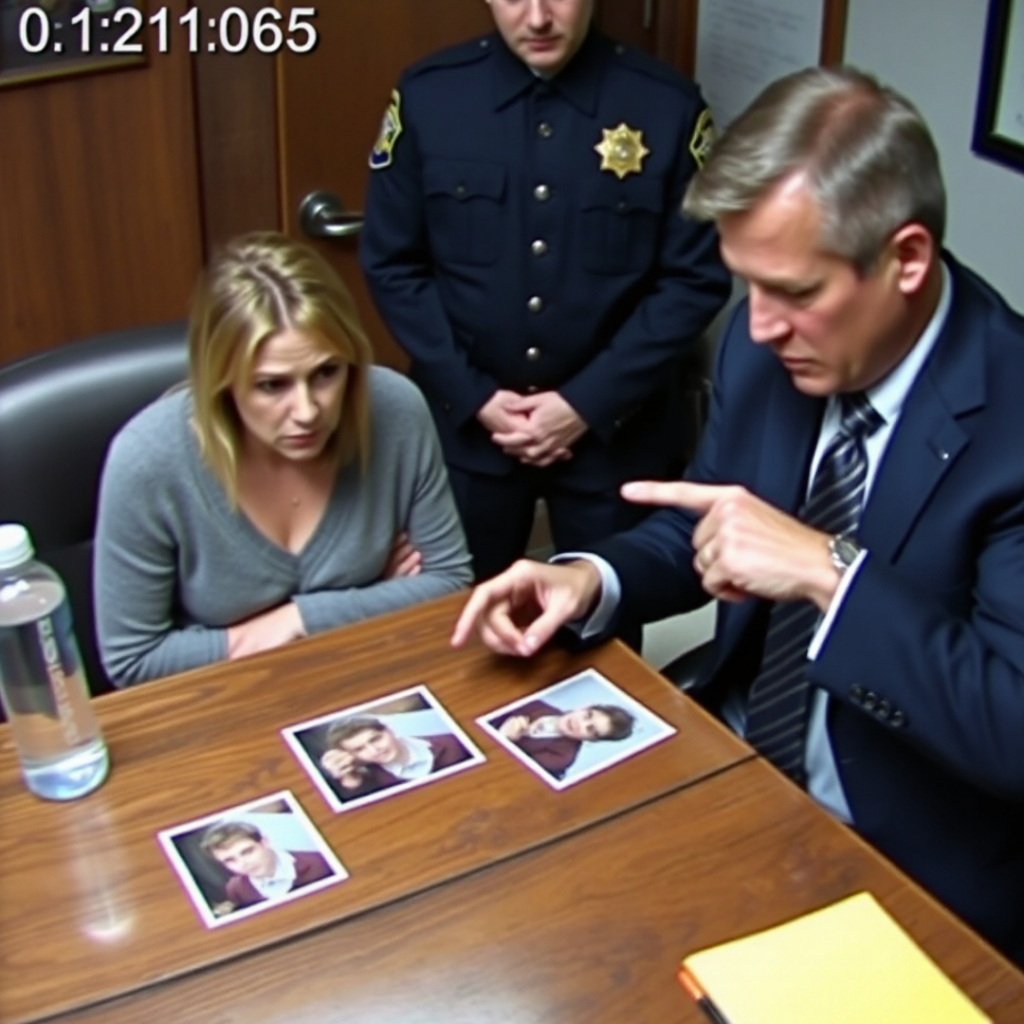
She opened a file folder and slid three photos across the table.
I had braced myself. It didn’t matter.
My body reacted before thought. My hand flew to my mouth. A sound escaped me—half gasp, half animal pain.
The child in the pictures was small, thin, shirtless. Bruises bloomed across his ribs and shoulders in different stages of healing. One eye was yellowing at the edges as if it had blackened weeks before. His lower lip was split. In one photo he was turned sideways, arms crossed over his chest with the instinctive posture of someone trying to disappear.
It was not Ethan.
That certainty came instantly. My son had a mole near his collarbone. This boy didn’t. Ethan’s front teeth had shifted after years of braces. This child’s smile, if he could have smiled, would have been different.
But he was a child. A real one. Hurt enough that anger nearly outpaced fear.
“This isn’t my son,” I said.
Ruiz’s gaze sharpened. “How can you be sure?”
“Because I know my child.”
The detective folded her hands. “Then whose child is it?”
I looked again.
Something flickered in memory. The shape of the face. The slope of the shoulders. The dark lashes against skin too pale from fear.
And then I knew.
Three months earlier, Jennifer had called me out of nowhere.
It had been the first time I’d heard her voice since before Lily’s funeral. I remember because I had nearly dropped my phone into the sink. When I answered, she didn’t say hello. She said, flat and almost triumphant, “I got Alex back from Ben. He can’t keep him from me anymore.”
Alex.
Her son from her first marriage.
He was eight. He had lived mostly with his father after the divorce because Jennifer had been unstable even before Lily died—nothing diagnosable, nothing I could point to in court, just the kind of volatility that made children flinch and adults make excuses. After Lily’s death, she had spiraled harder. Ben had requested full temporary custody of Alex while Jennifer “got herself together.” Three months ago, something must have changed. Legal leverage, some procedural lapse, maybe just exhaustion on Ben’s side. Whatever it was, Jennifer got Alex back.
And now a bruised little boy sat in front of me in glossy photos, carrying my son’s name.
I looked at Ruiz. “I think this might be my nephew.”
Mark turned slightly in his chair but said nothing.
Ruiz’s expression didn’t soften, but it shifted. “Why?”
“My sister regained custody of her son three months ago. He’s eight. The first report came in three months ago, right?”
She glanced at the file, then back at me. “Yes.”
“This boy looks like him.”
“Your nephew’s name?”
“Alex Finn Thompson.”
“Why would your sister identify him as Ethan Mitchell?”
Because she hated us. Because Lily died and Ethan lived. Because grief had rotted into vengeance.
But I couldn’t say all that without sounding like a woman making ugly guesses to save herself.
Instead I said, “My sister blames my son for her daughter’s death.”
That got Ruiz’s full attention.
Mark stepped in smoothly. “Detective, we can prove Ethan Mitchell has been hospitalized and unconscious for a year. We ask that you verify that immediately before taking any further action against my client.”
Ruiz studied us both, then nodded once. “I already requested confirmation this morning after receiving your preservation notice. But understand this, Mrs. Mitchell—until I verify the source of these reports, the case remains open.”
I swallowed. “Then verify it. Please.”
She gathered the photos, but not before I saw my own hand reach for the last one and stop inches away. I wanted to pick that child up off the page and pull him out of whatever room he’d been hurt in.
Ruiz noticed the movement.
“Do you have reason to believe Alex Thompson is in immediate danger?”
“Yes,” I said.
The answer came so fast and clean there was no room for doubt.
After the interview, Mark and I stepped into the cold parking lot. My legs felt unreliable.
He opened the passenger door of my car before saying, “You need to go see your sister.”
“I know.”
“Do not go alone.”
“I’m not waiting.”
He sighed. “Sarah—”
“If that’s Alex in those photos, I’m not waiting for paperwork.”
His face tightened. Then he nodded once, the way men do when they know they’re losing an argument and are intelligent enough to adapt instead of wasting time. “Fine. I’ll call child protective services on the way. If this is what we think it is, we want them moving now, not later.”
I drove toward Jennifer’s neighborhood with Mark following behind in his sedan.
The last time I had been to her house was eleven months earlier, right after Lily’s memorial service. People were still carrying foil-covered casseroles in and out. Lily’s stuffed rabbit sat on the entry bench where she had dropped it after a sleepover at my place. Jennifer stood in the kitchen in a black dress that hung off her shoulders and told me, in a voice so low it was almost intimate, “If your son ever wakes up, I hope he wakes up knowing what he did.”
I had not gone back.
Now, as I turned onto her street, the houses looked cruelly normal. Inflatable snowman on one lawn. Basketball hoop over another garage. Recycling bins tipped at the curb. It was impossible to reconcile ordinary suburban quiet with the photographs I had just seen.
Jennifer’s house sat halfway down the block, beige siding, blue shutters, front yard too tidy in the way of people trying to control at least one surface of their lives.
I rang the bell.
Movement behind the frosted glass.
The door opened three inches, chain still latched.
Jennifer looked older than forty-one. Not older in a graceful way. Older in the way grief ages people by subtraction. Her cheeks were hollow, and the skin beneath her eyes had taken on that bruised purple tone of chronic sleeplessness. Her hair, once the exact same chestnut as mine, was streaked harshly with gray.
When she saw me, her mouth hardened.
“What do you want?”
“I need to see Alex.”
“No.”
The chain rattled as she shifted her weight to close the door, but I put my hand flat against it.
“Jennifer, let me in.”
Her eyes flashed. “Get off my porch.”
“Then bring Alex to the door.”
“Why?”
“Because the police showed me photographs this morning of an abused child they claim is my son.”
That stopped her.
It was small, but I saw it. A pause too long. A breath caught and forced steady.
Cold moved through me.
“Jennifer,” I said, very quietly, “where is Alex?”
She laughed, but it came out wrong. “I don’t know what you’re talking about.”
“Yes, you do.”
Behind me I heard Mark’s car door slam. Jennifer saw him approach and her whole posture changed. Not fear exactly. Calculation.
“He’s at school,” she said.
“At ten-thirty in the morning?”
“Special program.”
“What program?”
She didn’t answer.
“Then show me a recent picture.”
Her eyes narrowed. “You can’t just show up here demanding—”
“Show me.”
For a second I thought she would slam the door in my face.
Instead she unlatched the chain with jerky fingers, stepped back into the hallway, and pulled her phone from the pocket of her cardigan. She scrolled, tapped, and held the screen up.
A little boy in a striped T-shirt sat on a couch with a video game controller in his lap. Dark hair. Sharp chin. Large solemn eyes that looked too old for his face.
Alex.
There were no visible bruises in that photo. Which meant one of two things: it had been taken before the abuse began, or she had framed the shot carefully.
“Where is he really?” I asked.
Jennifer lowered the phone. Something in her face gave way. Not guilt. Not even shame. Just exhaustion from holding a lie upright too long.
“You figured it out,” she said.
The sentence landed like a strike to the chest.
Mark came up the path then, his expression immediately changing when he saw mine.
“Jennifer,” I said, because I needed her to say it out loud. “Did you do this?”
She looked at me with empty, glittering eyes. “Yes.”
The word hung in the doorway.
I felt the air go thin.
“You abused Alex,” I said. “And sent the photos to the police using my name.”
She did not flinch. “Yes.”
“Why?”
Her face twisted then, and for a second I saw the sister I had grown up with—quick-tempered, proud, too intense for her own good—buried under something charred and unrecognizable.
“Why?” she echoed. “You really have to ask?”
“My son is lying in a hospital bed!”
“And mine is dead!”
The sound burst out of her so violently that I stepped back. A curtain twitched in the front window of the house next door. Somewhere down the street a dog started barking.
Jennifer pressed the heel of her hand to her mouth and then dropped it, laughing once in a broken little way.
“Lily is dead,” she said. “Ten years old. Buried because your son pushed her into traffic.”
“He didn’t—”
“There was a witness!”
Tears had sprung into her eyes, but they didn’t soften her. They made her look deranged, fever-bright.
“The police report said Ethan pushed her and then the truck hit them. Your son is alive. My daughter isn’t. You still get to sit by his bed and call yourself a mother. You still get hope. I got a gravestone.”
“Jennifer,” I said, my voice shaking now, “that doesn’t explain Alex.”
“It explains everything.”
It didn’t. That was the horror of it. There was no explanation big enough.
Before I could say anything else, a small voice drifted from deeper in the house.
“Mama?”
We all turned.
Alex stood in the hallway barefoot, one hand wrapped around the doorframe. He wore sweatpants and a dinosaur T-shirt too big for him, like hand-me-down pajamas. There was a yellowing bruise along his jaw. Another near his collarbone.
School, I thought wildly. He was supposed to be at school.
He wasn’t even surprised to see me. Just wary, the way children are around adults whose moods they do not trust.
My whole body went cold.
Then sirens cut through the street.
One patrol car. Then another.
Jennifer closed her eyes.
Mark exhaled behind me. “Good.”
I turned to him, stunned. He spoke low and quick.
“I called CPS and the department from your driveway.”
The first officer reached the porch before I could answer. Detective Ruiz was right behind him, coat open, expression carved from stone.
“Jennifer Thompson,” she said, stepping into the doorway, “we have probable cause to remove the child and arrest you for felony child abuse and filing false reports.”
Jennifer did not resist. She almost seemed relieved.
She looked at me one last time as the officer took her wrist.
“Remember this,” she said. “Your son killed my daughter.”
I wanted to slap her. I wanted to shake her until her teeth rattled and ask how she could say that with Alex standing ten feet away covered in her grief.
Instead I stepped past everyone and crouched in front of my nephew.
“Hey, Alex.”
He stared at me.
“It’s Aunt Sarah.”
“I know.”
His voice was flat. Too calm. Children in truly bad situations often sound that way—careful, almost adult, as if emotion is a luxury item they can’t afford.
I held out my hand. “You’re safe now.”
He looked at my hand, then over my shoulder as Jennifer was led away.
“She’s mad,” he whispered.
“No,” I said, even though it was partly a lie. “She’s sick. And people are going to help.”
He didn’t take my hand, but he didn’t run either.
A child services worker with silver hair and kind eyes introduced herself as Ms. Caldwell and wrapped a blanket around Alex’s shoulders. An officer disappeared upstairs. Ruiz stayed in the foyer taking in everything—the smell, the state of the house, the marks on the child.
I stood there in Jennifer’s living room while the life I had known as “my family” split open in every direction.
That night I lay awake hearing Jennifer’s last sentence on repeat.
Your son killed my daughter.
It was not new information. That was what made it unbearable.
For a year I had lived under the weight of the police summary and the witness statement. There had been no room for public ambiguity: Ethan shoved Lily, a truck came, Lily died, Ethan went into a coma. The driver had been drunk and speeding, yes, but Jennifer seized on the shove. The shove became the moral center of the story. People in our orbit, though too polite to say it outright, had sorted themselves accordingly. Some avoided me entirely. Some overcompensated with pity. All of them wondered.
I had wondered too.
Not whether Ethan had done it. The witnesses were clear.
But why.
Why would the sweetest part of my son—the boy who once cried for two days after accidentally stepping on a frog—push his little cousin into the street?
I had replayed every interaction from the days before the accident searching for signs of anger, resentment, bullying, secret cruelty. I found none. Ethan had teased Lily the way older boys tease girls they love: rolling his eyes, stealing her gummy bears, refusing to admit he let her win at Mario Kart. He had never been violent with anyone. Teachers described him as protective to a fault. His soccer coach once called him “the kind of kid you trust to watch the younger ones.”
And still, the report sat there in black and white.
Witness saw Ethan push Lily immediately before collision.
So I had lived in suspension. Loving my son. Sitting by his bed. Hating that sentence. Hating myself for sometimes almost believing it.
Now Jennifer’s crime had ripped old grief open and poured acid into it.
By morning I knew what I needed.
The truth.
Not the summarized version the police had built a year earlier. Not Jennifer’s grief-struck interpretation. Not my desperate maternal hope.
Everything.
When Mark answered my call, I said, “I want the accident records.”
There was a pause. “Sarah—”
“All of them.”
He must have heard something in my voice, because he did not try to persuade me out of it. “I’ll arrange it.”
We met Detective Ruiz that afternoon at the station. She carried herself differently now—not warm, exactly, but no longer suspicious in the same way. The hospital had confirmed Ethan’s status. CPS had removed Alex. Jennifer had confessed enough in the house to blow apart the false abuse case.
But none of that touched the old accident.
Ruiz led us to a small conference room and placed a thick file on the table.
“Everything we have from last year,” she said.
I opened it with fingers that didn’t feel like mine.
Traffic diagrams. EMT reports. Scene photos I skipped past without meaning to. Witness statements. Toxicology from the driver. The coroner’s summary for Lily. Neurosurgical updates for Ethan. Jennifer’s interview transcript, still damp-looking in my mind from all the tears she must have shed over it. My own statement, thin and useless because I had not been there.
Then the witness summary.
A store clerk from the corner deli had been outside taking trash to the dumpster. He looked up at the sound of screeching brakes and saw “the older child push the younger child” before both were struck by the truck.
Older child. Push.
That was the center of everything.
I looked up. “Was there security footage?”
Ruiz hesitated.
“Was there?”
“There was a possibility of footage from the convenience store,” she said carefully. “But at the time the witness statement and scene analysis seemed consistent. The investigation focused on the driver.”
Mark went still beside me. “You never checked?”
Her jaw tightened. “Not thoroughly enough.”
The room went very quiet.
I stared at her, and she did something I did not expect from a detective in an active department.
She looked ashamed.
“It should have been reviewed,” she said. “It wasn’t. That’s on us.”
Anger rushed in so suddenly I had to grip the edge of the table.
For a year my sister had hated my son based on an unfinished interpretation. For a year I had doubted him. For a year Ethan had lain unconscious while the only narrative left standing painted him as the last person Lily saw before she died.
And the footage might have existed the whole time.
“Get it,” I said.
Ruiz nodded. “We’re trying.”
Two days later she called.
“We found archived footage,” she said. “Come in.”
By then I had rehearsed the possibilities. Maybe it would show exactly what the witness saw, only clearer. Maybe it would confirm the worst. Maybe it would show nothing useful at all. I told myself I could survive any answer because uncertainty had already hollowed me out.
I was lying.
Mark met me in the station lobby and did not speak on the walk to the viewing room. Ruiz stood beside a monitor with another detective I didn’t know. No one made small talk.
“Are you ready?” she asked.
No.
“Yes.”
The footage was grainy black and white with a time stamp in the corner. Mid-afternoon. Cloudy day. Sidewalk outside the deli. Cars passing. People too far away to matter.
Then two figures entered the frame.
Ethan and Lily.
My breath caught so sharply it hurt.
They were laughing. I could tell by the tilt of Lily’s head and the way Ethan looked down at her, one shoulder hiked up like he was pretending not to enjoy whatever she was saying. He had a bag of chips in one hand. Lily was swinging something—probably a slushie—like the world had never once threatened either of them.
I started crying before anything happened.
Because there he was.
My son moving.
My son alive in the ordinary way.
No wires. No bed rails. No stillness.
Then the truck entered the frame.
Fast.
Too fast.
Everything happened in a blur. Ethan turned. Lily half-turned. Ethan lunged toward her. His arms extended. There was a violent collision of bodies and metal and then the picture shook as the impact rattled the camera mount.
I made a sound and covered my mouth with both hands.
Ruiz stopped the playback.
The room was silent except for my breathing.
“He pushed her,” I whispered.
“No,” Mark said quietly. “Not necessarily.”
I turned to him.
“Play it again,” he said to Ruiz. “Slower.”
The second time, she cut the speed in half.
It changed everything.
Ethan didn’t shove Lily forward into traffic.
He grabbed at her shoulders from the side and drove her away from the street, deeper toward the storefront. At the same time, his own body pivoted into the truck’s path like a shield.
It was desperate. Instinctive. The movement of a child who saw danger and threw himself at it without calculation.
But the truck was too fast.
The impact that took Ethan also clipped Lily and spun her down with him.
Ruiz froze the frame just before contact.
There, clear as daylight once you knew to look: Ethan’s feet braced toward the curb, not the road. His shoulders squared between Lily and the oncoming truck.
I made her replay it three more times.
Every time the truth sharpened.
He had been trying to save her.
He had seen it first and moved first and failed because he was twelve and the truck was monstrous and physics does not care how brave a child is.
By the fourth viewing I was sobbing so hard I couldn’t sit up straight.
Mark put a hand on my back and let me fall apart.
Ruiz stood very still by the monitor. When I finally looked up, her eyes were damp too.
“Your son tried to protect his cousin,” she said.
I wiped my face with both hands. “He was a child.”
“Yes.”
“And you never looked.”
The shame returned to her expression. “No. We didn’t.”
I wanted to hate her then. Maybe I did, for a minute. But underneath the anger was something louder and stranger.
Relief so fierce it bordered on pain.
Not because Lily was any less dead. She wasn’t.
Not because the accident hurt less. It didn’t.
But because the ugliest shadow over Ethan had lifted in an instant. My son had not gone into that coma as a boy who pushed his cousin to her death. He had gone into it trying to save her.
He had been a hero.
I pressed both palms to the table and bowed my head, crying the kind of tears that leave you emptied out afterward, raw and almost clean.
When I could finally speak, I said, “I want Jennifer to see this.”
Three days later I sat in a detention center visiting room with a tablet in my lap and waited for my sister.
The room smelled like bleach and stale air. There was a thick pane of scratched plexiglass between the seats and a handset attached by cords too heavy to break. In another booth, a man in county orange mouthed something urgent to an older woman who kept nodding without hearing him.
Then the side door opened, and Jennifer stepped in.
Jail had stripped her fast. She wore a gray jumpsuit and no makeup. Her hair was tied back badly, as if she had done it without a mirror. The fury that usually held her upright had burned down to ash.
She sat, lifted the receiver, and looked at me.
“Sarah.”
I picked up my own phone.
“I brought something.”
She gave a short humorless laugh. “Is it another reason to hate me?”
“No.”
I set the tablet against the glass so she could see the screen. “It’s the footage from the accident.”
Her face went blank. “I don’t want to watch that.”
“You need to.”
“Why?”
“Because everything you did grew out of what you think happened that day.”
The muscles in her throat moved as she swallowed. For a second I thought she’d refuse.
Then she said, “Fine.”
I hit play.
The first run was at normal speed. Jennifer stiffened when Lily appeared on-screen. By the time the truck hit, she was pressing the heel of her hand against her mouth, breathing through her fingers.
I rewound it.
“No,” she said. “I saw enough.”
“Not yet.”
I played it in slow motion.
Ethan turned. Reached. Drove Lily toward the storefront. Put himself between her and the truck.
Jennifer leaned forward.
The color left her face one layer at a time.
I played it again and froze the frame before impact.
“There,” I whispered. “Look.”
For several seconds she didn’t move. Didn’t blink. The handset trembled against her ear.
Then she made the smallest sound I have ever heard a human being make.
“No.”
I rewound and let it run again.
This time she saw all of it.
When the clip ended, Jennifer slumped so hard in the chair that for a wild second I thought she had passed out. Then the sob hit.
It ripped out of her like something torn loose.
She folded over herself, receiver clattering against the partition, shoulders shaking violently. The guard at the far wall looked over and then deliberately looked away.
I sat there crying too, because what else was there to do? We were two sisters divided by glass and grief and the unbearable fact that truth had arrived too late to save anyone from what came next.
After a long time Jennifer picked up the receiver again.
“Ethan was trying to save her,” she whispered.
“Yes.”
“I hated him.”
I said nothing.
“For a year.” Her voice cracked. “I looked at that boy’s hospital picture online and hated him. I told myself Lily would be alive if he hadn’t touched her. I told myself you were still a mother while I was standing over a child-sized casket, and the rage…”
She closed her eyes.
“The rage felt better than the emptiness.”
I gripped the phone harder.
“That doesn’t excuse Alex.”
“I know.”
Her voice broke on the words. No defensiveness left now. No weaponized sorrow. Just ruin.
“I know. God, Sarah, I know. I hurt my own son. I told myself I wasn’t really hurting him, not at first. Just enough for bruises. Just enough for pictures. Just enough to frighten you, to make the police harass you, to make you feel trapped the way I felt trapped. Then each time it got easier to tell myself one more time wouldn’t matter because I was doing it for Lily.” She shook her head, horrified now by her own logic. “What kind of mother does that?”
The answer sat between us like another pane of glass.
“A broken one,” I said at last. “A sick one.”
Tears streamed down her face. “Can you forgive me?”
I looked at her and saw every version at once: the teenager who taught me how to apply eyeliner; the sister who showed up at my college dorm with soup when I had the flu; the woman who held my hand during labor; the mother who buried a daughter; the mother who beat a son; the stranger who used my comatose child’s name as a weapon.
“I don’t know,” I said honestly. “Maybe someday. Not today.”
She nodded as if that was more mercy than she deserved.
“Will you tell Ethan?” she whispered. “If he wakes up. Will you tell him I know now? That I know he tried to save her?”
The question almost stopped my heart.
If he wakes up.
Not when. Not if God is kind. If.
“I’ll tell him,” I said.
On the drive back to the hospital, I cried so hard I had to pull into a gas station parking lot and sit with my forehead against the steering wheel until I could see clearly again.
Then I drove to St. Catherine’s and went straight to Ethan’s room.
He looked exactly the same as he had every day for months, which suddenly seemed miraculous and unbearable at once. How could a room remain so unchanged while the whole story of our lives shifted beneath it?
I sat beside him and took his hand.
“Hey, baby,” I said. “I know the truth now.”
The monitor kept time.
I told him everything. About the footage. About how brave he had been. About Jennifer seeing it. About Lily. About the fact that the world had misunderstood him and now, at least finally, it wouldn’t anymore.
And then, because truth has a way of reaching for more truth, I told him I was sorry.
“I should have fought harder,” I whispered. “I should have pushed sooner. I should have known the boy I raised would never do what they said without a reason. I’m sorry.”
His face didn’t change. But I had long ago stopped measuring the value of talking by visible response.
A nurse stepped in near the end. It was Marie again. She paused when she saw my face.
“Rough day?”
I laughed through tears. “The strangest day of my life.”
She came over, checked Ethan’s IV line, then touched my shoulder. “Tell him anyway.”
“I have been.”
“Good.”
I looked down at Ethan’s still hand in mine and squeezed it.
“I’m proud of you,” I said. “Do you hear me? I’m so proud of you.”
A week later CPS called about Alex.
His father, Ben Finn, was an Army engineer stationed in Germany for at least another four months. There were no other approved relatives in-state. A foster placement had been arranged, but because Alex knew me and because family placement is usually the priority, would I consider taking him temporarily?
The social worker, Dana Caldwell, said it carefully, like she expected me to say no.
Maybe she thought my plate was already too full. Hospital visits, legal hearings, work, my own unraveling family. Maybe she thought I would look at Alex and only see Jennifer’s betrayal.
Instead I looked around my silent kitchen and saw a different truth.
Alex was eight years old.
He had a dead sister, an incarcerated mother, an absent father, and bruises he would carry under his skin long after the ones on his body faded.
He was not my burden.
He was my family.
“Yes,” I said. “He can come here.”
There was a beat of surprise on the line. Then Dana said, “Thank you.”
The first evening Alex arrived, he stood on my porch with one small suitcase and a dinosaur backpack clutched to his chest like a shield. Dana knelt beside him giving last-minute reassurances in the warm practiced tone of people who ferry children through impossible transitions for a living.
I opened the door fully.
“Hi, Alex.”
He looked at me, then at the house behind me, as if trying to guess what kind of place he had been delivered into.
“Do I have to stay long?” he asked.
The question was not rude. It was survival.
“As long as you need,” I said.
He nodded once, not because he liked the answer but because he had learned adults answer in units children don’t control.
I showed him the guest room that had once been Ethan’s playroom, then his study corner, then his crash pad after he got “too old” for posters but not too old for LEGO cities. I had cleaned it the night before and put fresh sheets on the bed and bought a blue lamp shaped like a rocket because some desperate part of me thought a child arriving with one suitcase deserved at least one unnecessary thing.
Alex stood in the doorway and took it all in.
“Is this mine?”
“Your room while you’re here.”
He set his backpack down carefully.
“Can I keep the lamp on?”
“Yes.”
At dinner he barely spoke. He ate macaroni and apples in small controlled bites and watched me whenever I moved too quickly, the way skittish animals track hands before they trust them.
Afterward, while I rinsed plates, I heard his voice behind me.
“Is it because I was bad?”
I turned.
He stood barefoot in the kitchen, pajama pants dragging an inch too long.
“What?”
“Mom got mad because I was bad.”
The plate in my hand nearly slipped.
I set it down in the sink and knelt to his height.
“No, Alex. Listen to me. You were not bad.”
His eyes dropped to the floor.
“She said I made things worse.”
“She was wrong.”
“She said I looked like…” He stopped.
My heart clenched. Lily, I realized. Of course. Alex had Lily’s eyes more than Jennifer’s. Maybe grief had made that resemblance unbearable.
I reached out slowly, giving him room to lean away if he wanted. When he didn’t, I rested my hands lightly on his shoulders.
“None of this happened because of you,” I said. “Adults can break in ways that have nothing to do with children. Your mom made terrible choices because she was sick with grief and anger. That is not your fault. Not even a little.”
He looked up then, searching my face for the trap.
There was none.
Very gently, he stepped forward and let me hold him.
He felt too light.
Our new life began in that awkward, careful way all rebuilt things begin.
I woke him for school. Packed lunches. Signed permission slips. Learned he hated milk, loved astronomy, and refused to wear jeans if sweatpants were available. On weekdays I dropped him off at Jefferson Elementary, worked full days at the logistics firm where I was somehow still expected to care about vendor contracts, then drove to St. Catherine’s to sit with Ethan before going home to make dinner and supervise homework.
Busy was too small a word.
But the busyness was different from panic. It had shape. Purpose. It kept me moving.
At first Alex occupied the edges of the house like a polite ghost. He watched TV at low volume. Asked permission for everything. Folded his own pajamas under his pillow. Flinched if I raised my voice across a room, even when I was only calling him for dinner.
Then little things began to change.
He asked if he could help stir pancake batter.
He left crayons on the coffee table and forgot to apologize.
He argued passionately that Pluto should still count as a planet because “it’s rude to demote somebody after they already learned how to be a planet.”
One evening I caught him laughing at a cartoon and the sound startled both of us.
At the hospital, he was quiet at first.
“This is my son Ethan,” I told him the first Saturday I took him. “Your cousin.”
Alex studied the bed, the tubing, the machines. “Is he sleeping?”
“In a way.”
“Can he hear?”
“Nobody knows for sure.”
Alex walked to the bedside and looked Ethan over with grave concentration. Then he reached out and touched the back of Ethan’s hand with one finger.
“I’m Alex,” he said. “I’m gonna be at your house for a while.”
I bit the inside of my cheek so hard it hurt.
After that, visiting Ethan became part of our routine. Alex told him about school, about a book fair, about how one kid in class ate glue in second grade and still got invited to birthday parties so clearly social reputation was not purely merit-based. He narrated his life the way children do when they sense attention even in silence.
Sometimes I joined in. Sometimes I just listened to one boy talking to another who could not answer yet and thought how strange it was that life had brought us here.
Meanwhile, the legal machinery ground forward.
The false abuse charges against me were dismissed. Detective Ruiz pushed for an internal review of the original accident investigation. Jennifer remained in county custody awaiting trial on abuse and fraud charges, though her attorney argued mental collapse and complicated bereavement. Ben called from Germany twice a week to talk to Alex and thanked me so many times I wanted to tell him gratitude wasn’t the right currency for family. But maybe in his position I would have done the same.
Publicly, very little of the story escaped our immediate circle. There was no viral scandal, no television trucks. Just the quieter humiliation of local gossip recalibrating itself. A few people reached out. A few apologized. Many said nothing and pretended they had never believed the worst.
Grief teaches you how selective people’s memories are.
Three months after Alex moved in, on a rainy Saturday afternoon in March, everything changed.
We were in Ethan’s room. Alex sat in the visitor chair reading aloud from a battered library copy of Charlotte’s Web, frowning in concentration over every other sentence. I was by the window half-listening, half watching rain slide down the glass in silver threads.
The monitor gave a slightly different beep.
When you’ve spent a year in ICUs, you learn machine sounds the way new parents learn cries. My head snapped around before I consciously processed why.
Ethan’s right hand twitched.
Just once.
Small enough that if I had blinked I might have missed it.
I stood so fast my chair scraped the floor.
“Alex,” I said.
He stopped reading. “What?”
“Did you see that?”
Ethan’s fingers moved again.
Not a reflex. Not random. Deliberate.
The whole room narrowed to that hand.
“Go get the nurse,” I said, too loud.
Alex bolted.
I was already at the bedside, both my hands wrapped around Ethan’s.
“Ethan?” My voice shook wildly. “Baby?”
His eyelids fluttered.
My knees nearly gave out.
“Ethan, it’s Mom. I’m here.”
For one terrible second nothing happened and I thought maybe I had imagined the whole thing because hope can make fools of the desperate. Then his eyelashes quivered again. His brows drew together. Slowly, like a swimmer fighting up through black water, he opened his eyes.
They were unfocused at first, cloudy with sedation and disuse. But they were open.
I made a sound I will never be able to describe. Half sob, half laugh, all disbelief.
“Mama?” he whispered.
The voice was rough, torn from deep sleep. But it was his.
Behind me feet thundered into the room—Alex, Marie, two doctors, another nurse. Questions filled the air. Commands. Someone checking pupils. Someone adjusting monitors. Someone gently trying to move me out of the way.
I kissed Ethan’s forehead and cried into his hair.
“Welcome back,” I kept saying. “Welcome back, sweetheart. Welcome back.”
Alex stood in the corner with both hands over his mouth, his eyes huge and wet.
When the initial rush settled and the doctors were satisfied Ethan’s vitals were stable, Marie let Alex inch closer.
“Can I say hi?” he whispered.
Ethan’s eyes slid toward him, confused and exhausted.
“This is Alex,” I said, brushing Ethan’s hair back. “Your cousin.”
Something changed in Ethan’s face at the word.
“Lily?” he rasped.
The room went still.
My heart clenched so hard it felt like another impact.
“No, honey,” I said softly. “Alex.”
His brow furrowed. Then, memory returning in shards, he started to cry.
Not loud. Just tears spilling sideways into his hair.
“I tried,” he whispered.
“I know.”
“I saw the truck.”
“I know.”
“I pushed—”
“You tried to save her.”
His whole body trembled with weak, exhausted grief.
“I know,” I said again, because there was nothing else holy enough to offer in that moment besides truth.
Recovery was not magic. Waking was only the beginning.
Ethan had to relearn endurance before movement, movement before balance, balance before stairs. His muscles had weakened. His speech came back unevenly. Some memories were crisp; others were fogged by trauma and sedation. Rehabilitation was painful and exhausting and often humiliating in the quiet practical ways illness can be. A boy who once raced soccer drills now had to celebrate gripping a foam ball for thirty seconds.
But he was awake.
That fact lit every hardship from within.
Alex took to Ethan immediately, though he pretended not to at first. He brought him comics and school gossip and terrible kid jokes. Ethan, older and sharper even in weakness, listened with half-smiles and occasional dry comments that made Alex light up like he’d won something.
One night, after I tucked Alex into bed, he asked from under the covers, “Can Ethan stay here when he gets out of the hospital?”
I leaned against the doorframe. “That’s the plan.”
He considered this. “Good.”
“Why good?”
He shrugged. “Because this house sounds less empty when he’s in it.”
I had to turn off the lamp quickly so he wouldn’t see my face.
Once Ethan was strong enough for longer conversations, I told him about Jennifer.
Not all at once. Not every detail. But enough.
I told him she now knew the truth about the accident. That she had seen the footage. That she knew he had tried to save Lily. That grief had driven her to terrible things, including hurting Alex and falsely accusing me. I told him none of that was his fault.
He listened without interrupting, his fingers knotted in the hospital blanket.
When I finished, he asked, “Is Aunt Jen in jail because of me?”
“No,” I said firmly. “Because of her choices.”
He looked unconvinced.
“Ethan,” I said, taking his chin gently and making him look at me, “hear me. You are not responsible for the truck. You are not responsible for Lily dying. You are not responsible for Jennifer abusing Alex. The only thing you did that day was try to save your cousin. Do you understand me?”
His eyes filled. He nodded.
A week later I wrote Jennifer to tell her he had woken up.
Her reply came on lined jail stationery in a hand I barely recognized—shaky, smaller than before.
Hearing that Ethan is awake made me cry so hard the guard thought someone in my family had died. Maybe someone did. Maybe it was the version of me I used to be. Thank you for telling me. Thank you for Alex. I know I don’t deserve updates, but each one feels like water. If Ethan ever wants to see me, I will come if allowed. If he never does, I understand.
I read the letter twice, then folded it into my nightstand drawer.
Time moved.
Spring bled into early summer. Ethan traded the hospital bed for a rehab ward, then short supervised visits outside. Alex grew less flinchy, more eight. Jennifer’s attorney negotiated treatment requirements and supervised release terms pending sentencing. Ben returned from Germany at last, tan and guilt-ridden, and sat at my kitchen table crying quietly into both hands because he had not been there when his son needed him most.
“I don’t know how to thank you,” he said.
“You don’t have to.”
“I do.”
“No,” I said. “You just have to be his father.”
He nodded hard, as if accepting both a gift and a rebuke.
We worked out a plan together. Alex would remain primarily with me through the school year because stability mattered, but Ben would take him on weekends and gradually rebuild custody once the court approved. Family, I had learned, is often less about titles than about who keeps showing up when the floor falls out.
Six months after Ethan woke up, he asked to visit Lily’s grave.
We went on a Sunday afternoon.
The cemetery sat on the edge of town under tall maples that had just begun to redden at the tips. The sky was that hard bright blue of early fall. Ethan used a cane now, though he hated it. Alex walked on his other side carrying white carnations because he thought lilies would be “too on-the-nose,” which made Ethan laugh for the first time that day.
Lily’s headstone was small.
Too small.
No matter how often I visited, that was the first thing I noticed: how child-sized grief looks in granite.
Ethan stopped in front of it and stood very still. Wind moved his hair across his forehead.
Then he knelt awkwardly, ignoring my protest, and placed the flowers down.
“Hey, Lily,” he said.
His voice shook.
“I’m sorry I couldn’t save you.”
Alex set his own flowers beside Ethan’s.
“I’m Alex,” he said softly. “We never met, but I think you’d like me because I’m good at Mario Kart and I know a lot about birds.”
I laughed through tears.
Then another voice spoke behind us.
“Ethan.”
I turned.
Jennifer stood a few feet away in a gray coat, hands clasped so tightly in front of her they looked painful. She had been released on monitored bail to a treatment facility two weeks earlier. I knew that. I had not expected to see her here.
Ethan looked up, startled.
“Aunt Jen?”
Jennifer’s face crumpled at the sound. She came closer slowly, as if approaching a wounded animal she had no right to touch.
“I asked your mom if I could come,” she said. “If it was okay.”
It had not been a simple yes. Nothing about Jennifer was simple anymore. But there are moments when healing requires witnesses, and I suspected this was one of them.
Ethan leaned on his cane and stood.
Jennifer looked at him as if seeing both the boy he had been and the damage everyone had done around him.
“Thank you,” she whispered. “For trying to save Lily.”
Ethan’s throat worked. “I thought I did.”
“I know.”
Tears spilled down her face.
“I know now.”
For a long second neither moved.
Then Jennifer did something I had not expected from the sister I knew—proud, sharp, always allergic to humiliation.
She knelt.
Not dramatically. Not for effect. Just down into the damp grass in front of her son and her nephew and her dead daughter’s grave.
“Alex,” she said, turning first to her living child, “I hurt you. I was supposed to be your safe place, and I became the thing you were scared of. I am sorry in ways that are bigger than words. I’m getting treatment. I will keep getting treatment. And if someday you want me in your life, I will spend the rest of it being worthy of that.”
Alex looked at her, then at me, then back.
“You won’t hit me again?”
Jennifer’s whole body folded around the question.
“Never,” she said. “Not ever.”
He nodded once. It wasn’t forgiveness, not yet. But it was not refusal either.
Then she turned to Ethan.
“I hated you,” she said through tears. “And you didn’t deserve it. You were brave, and I made you into a villain because I couldn’t survive the truth any other way. I am so sorry.”
Ethan gripped his cane.
“I miss her too,” he said.
That broke whatever composure remained in any of us.
Jennifer cried openly. Alex cried because children cry when adults finally tell the truth around them. I cried because there is no dignified way to stand in a cemetery with your fractured family and pretend grace isn’t messy.
Even Ethan cried, and for a second I saw the twelve-year-old he had been, not the wary almost-fourteen-year-old illness had made him.
When the tears passed enough for breathing, Jennifer reached out hesitantly.
Alex moved first.
He stepped into her arms, stiff at first, then clinging. She held him like someone holding fire with reverence and terror both.
I looked down at Lily’s stone.
The wind moved through the maple leaves overhead in a hush that sounded almost like children running.
On the walk back to the parking lot, Ethan and Alex drifted ahead of us, arguing about whether birds counted as dinosaurs “in a practical sense.” Jennifer and I followed more slowly.
After a while she said, “Do you think we can ever be sisters again?”
I thought about the question instead of answering fast.
The old version, no. That was gone. Too much had happened. Too much had been destroyed in the space grief carved out and vengeance filled.
But family is not always restored by returning. Sometimes it’s rebuilt by admitting there is no return and choosing each other anyway in whatever shape remains.
“We can be something honest,” I said. “If you keep doing the work.”
She nodded. “I will.”
“Not for me.”
“I know.”
“For Alex.”
“For Alex,” she echoed.
“And for Lily.”
At that, she stopped walking and covered her mouth. Then she nodded again.
“For Lily too.”
That night, after I got the boys settled—Alex in his room with his rocket lamp on, Ethan in the guest room downstairs because he still struggled with stairs—I stood alone in the kitchen and listened to my house.
The refrigerator hummed. Pipes clicked softly as they cooled. From down the hall came the faint murmur of Ethan turning pages and Alex asking from his doorway whether astronauts ever got tired of seeing Earth from space.
It was not the life I would have chosen.
It was not the family I thought I had.
It was not untouched by loss.
Lily was still gone. Jennifer’s crimes did not vanish because understanding had arrived. Ethan still had a long road of recovery ahead. Alex still woke from nightmares some nights and needed the hallway light left on. There were court dates, therapy appointments, rehab schedules, and all the ordinary bills and exhaustion that keep real lives from ever becoming neat parables.
But there was truth in the house now.
Truth had cost us dearly. It had arrived late. It had not saved everyone.
Still, it was here.
A few weeks later, Ethan came home for good.
Marie cried when he left the rehab floor. So did I. Ethan pretended to be embarrassed by both of us while secretly loving every second of the attention. Alex made a welcome-home sign in crooked block letters and hung it over the fireplace with enough tape to strip the paint.
The first dinner we all ate together at my table felt almost sacred in its awkwardness. Ethan moved slowly, still careful with his right leg. Alex talked too much out of nervous excitement. I burned the garlic bread because I forgot it in the oven while helping Ethan sit down.
No one cared.
Halfway through the meal, Ethan looked around the table and said, “It feels weird.”
I laughed. “Good weird or bad weird?”
He thought about it. “Like after a storm when the power comes back on and everything’s the same, but you know it isn’t.”
I stared at him.
Then I reached over and squeezed his hand.
“Yeah,” I said. “Exactly like that.”
Months passed.
Jennifer entered a long-term outpatient program and accepted a plea deal that included prison time served, supervised probation, mandatory trauma treatment, and permanent CPS oversight before any unsupervised contact with Alex could even be considered. Some people in our extended family thought she got off easy because she was a grieving mother. Others thought prison for someone so clearly mentally broken was barbaric. Real life refused the clean moral lines everyone online seems to crave.
Ben ultimately regained primary custody of Alex, but by then the boy had woven himself into our daily lives in ways paperwork could not undo. He spent every Wednesday with us, every other weekend, most holidays, and nearly all school breaks. Sometimes he still called my house “home” by accident and then looked panicked, as if loyalty could be measured and punished.
Each time, I told him the same thing.
“You can have more than one home.”
Ethan started high school a year late and hated the cane until physical therapy gave him enough strength to trade it for only a slight limp on bad days. He joined the debate team because contact sports were off the table for now, then discovered he was excellent at arguing from evidence, which made me laugh harder than it should have. Once, after a meet, he came home waving a first-place ribbon and said, “Turns out surviving near-death trauma gives you confidence under pressure.”
I stared at him.
“Too dark?”
“Very.”
“Fair.”
Jennifer came to Lily’s grave on the anniversary each year. The first time Ethan chose to stand beside her. The second time Alex held her hand. Healing did not erase what she had done, but it changed the temperature of the air around us.
And me?
I learned things no one should have to learn and yet many women quietly do.
That institutions miss what they don’t bother to examine.
That grief can make monsters out of ordinary people if no one interrupts it early enough.
That children are often the first surfaces adults write their pain onto.
That motherhood is not sainthood, and love is not immunity from scrutiny, and the stories communities choose to believe can alter lives before facts ever catch up.
I also learned that truth can return from astonishing distances.
Sometimes in a grainy security recording.
Sometimes in a child’s first word after a year of silence.
Sometimes in a sister kneeling in wet cemetery grass because there is no dignified way left to apologize.
The following spring, nearly two years after the accident, we gathered in the hospital garden where Ethan had once practiced standing between parallel bars.
Now the bars were gone. He stood on his own, a little taller, a little thinner than before the accident, but solid. Alex tossed breadcrumbs at pigeons until a nurse scolded him. Jennifer sat on a nearby bench during her supervised visit, watching the boys with the raw, careful hope of someone trying to earn a place she once shattered.
Ethan looked at me and grinned.
“Race you to the fountain.”
“You absolutely will not,” I said.
He laughed and limped off anyway, Alex tearing after him.
Jennifer watched them go. For a long moment neither of us spoke.
Then she said, “Do you think Lily would have forgiven all of us faster than we forgive ourselves?”
I looked at the boys, at the weak spring sun turning the fountain water gold, at the future refusing to stop arriving.
“Yes,” I said. “I think she probably would’ve rolled her eyes and told us to get over ourselves.”
Jennifer laughed—a real laugh, rusty with disuse.
“I miss her.”
“I know.”
We sat there in the tender ache of that truth.
Across the garden, Ethan had slowed so Alex could catch up. When Alex reached him, they touched shoulders and kept walking together.
I used to think survival was the end of the story. That if Ethan woke up, if Alex was safe, if the charges against me disappeared, then maybe life would hand us a clean ending.
It didn’t.
What it handed us was harder and better.
A beginning built out of broken pieces we had finally stopped pretending were whole.
A family not restored to what it had been, but remade into something honest enough to hold pain without being ruled by it.
And on some quiet nights, when the house settles around me and I hear Ethan laughing in one room and Alex arguing with a video game in another, I think about that envelope from the district court—the one that felt like the end of everything.
Maybe it was.
Maybe it was the end of every lie that had been allowed to stand between us.
And maybe that was the only reason the truth finally had room to come home.
THE END