At 8:03 on the morning of her eighteenth birthday, Riley Carter became homeless with exactly $347.18 to her name.
By 8:17, she discovered that her mother—the woman everyone said had abandoned her twelve years earlier—had left behind a key.
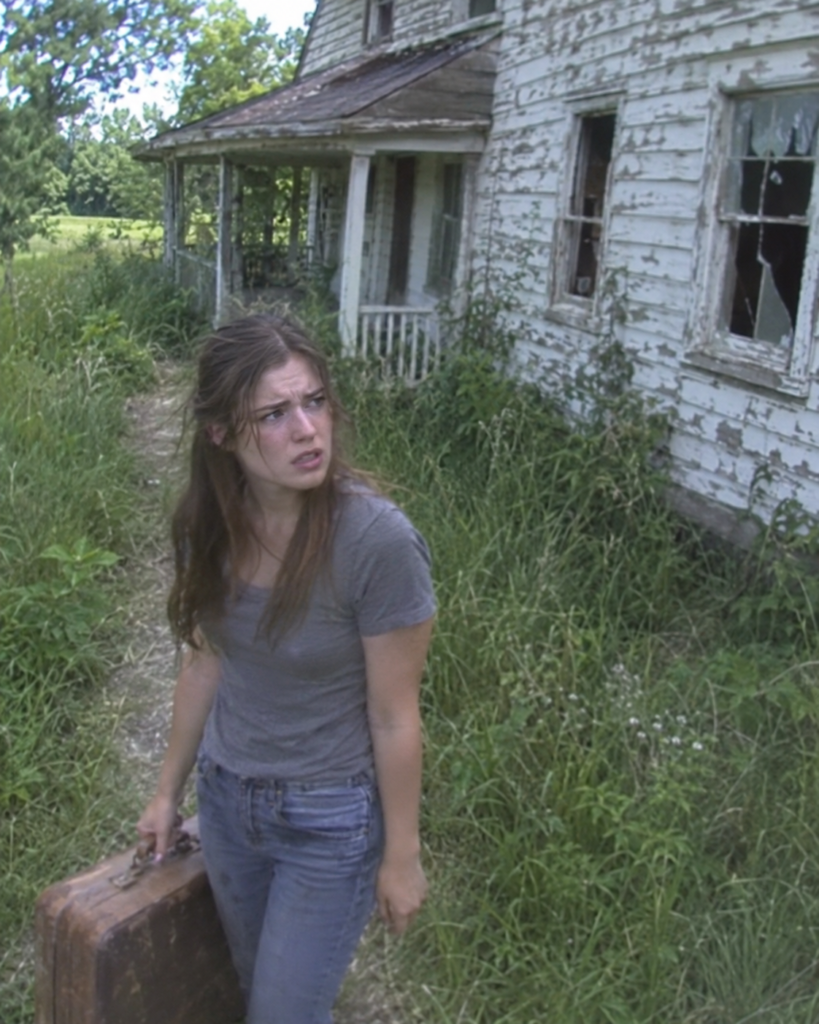
And by sunset, three strangers would be searching for Riley because that key opened something they had spent more than a decade trying to bury.
Riley stood on the cracked sidewalk outside Hawthorne Youth Residence in Columbus, Ohio, with a faded green backpack hanging from one shoulder and everything she owned packed inside a black rolling suitcase with one broken wheel.
Behind her, the brick building where she had lived for the last sixteen months looked strangely ordinary.
There were no balloons.
No celebration.
No one standing in the doorway crying because she was leaving.
A maintenance worker smoked beside the dumpsters while two younger girls argued near the basketball court.
Cars moved along the avenue.
People went to work.
The world continued as though nothing important had happened.
For Riley, everything had changed.
She had aged out.
The state was finished with her.
Her caseworker, Denise Holloway, stood beside her holding a manila folder.
“You have your identification?”
“Yes.”
“Social Security card?”
“Yes.”
“Birth certificate?”
“In here.”
“Transit voucher?”
Riley tapped the side pocket of her backpack.
Denise nodded.
“You know the shelter address?”
“Yes.”
“You need to be there by six if you want a bed.”
“I know.”
Denise looked uncomfortable.
She had been a decent caseworker, which in Riley’s experience meant she returned most phone calls and remembered Riley hated being called “sweetheart.”
There had been nine foster homes before Hawthorne.
Nine houses.
Nine bedrooms.
Nine sets of rules.
Don’t touch the thermostat.
Don’t eat after eight.
Don’t tell anyone what happens here.
Call us Mom and Dad.
Never call us Mom and Dad.
Stay out of the refrigerator.
Smile when the social worker visits.
Be grateful.
Be quiet.
Be temporary.
Riley had become very good at being temporary.
Denise held out the folder.
“There’s one more thing.”
Riley took it.
Inside were the usual discharge documents, a list of low-income housing resources, two bus schedules, and a paper explaining how to apply for food assistance.
Then something small slid from between the pages and struck the sidewalk.
Clink.
Riley looked down.
A brass key lay near her shoe.
It was old.
Not a modern house key.
The shaft was narrow, the bow shaped like a circle, and the metal had gone almost brown with age.
Riley picked it up.
“What’s this?”
Denise frowned.
“That was attached to something in your original intake property.”
“My what?”
“When you first entered care. You were six.”
Riley stared at her.
“I’ve never seen it.”
“I know.”
Denise opened the folder and removed a small evidence envelope.
“It was apparently sealed with belongings from your mother. Someone in records found the envelope last month when we were consolidating archived files. There was a note saying it was to be given to you when you turned eighteen.”
Riley stopped breathing for a second.
“My mother?”
Denise nodded.
Riley’s mother was a forbidden subject inside her own memory.
Her name had been Hannah Carter.
Riley remembered golden-brown hair.
A blue coffee mug.
A song sung badly while pancakes burned.
A lavender hand lotion.
Rain against an apartment window.
Then police lights.
Then strangers.
After that came the official version.
Hannah had disappeared.
She had struggled with drugs.
She had been unstable.
She had abandoned her daughter.
She was presumed dead.
Riley had asked for years whether a body had ever been found.
Nobody had given her a straight answer.
“What note?”
Denise handed her a folded piece of paper.
The handwriting was thin and uneven.
Riley,
If this reaches you, I failed to come back.
Please believe one thing before you believe anything else.
I did not leave because I stopped loving you.
Take the key to 117 Bellweather Road, St. Clair, West Virginia.
Do not give the key to anyone.
Do not trust anyone who tells you the house is empty.
I love you more than every mistake I ever made.
Mom.
Riley read it twice.
Then a third time.
Cars passed behind her.
Somewhere down the block, a horn sounded.
The whole city seemed to move farther away.
Denise spoke carefully.
“Riley?”
“What is Bellweather Road?”
“I don’t know.”
“You didn’t look it up?”
“I did.”
“And?”
Denise hesitated.
“There’s an old property outside St. Clair with that address.”
“How far?”
“About three hours southeast.”
“Who owns it?”
“That’s where it gets strange.”
Riley looked up.
Denise continued.
“County records list the owner as Bellweather Heritage Trust. No recent tax sale. No current resident. Satellite images show a house, but it looks abandoned.”
“My mother owned a trust?”
“I didn’t say that.”
“But you think this has something to do with her.”
“Yes.”
Riley folded the note.
Her backpack suddenly felt much heavier.
Denise reached into her coat and handed Riley twenty dollars.
Riley stared at it.
“I can’t take that.”
“It’s not from the department.”
“That’s why I can’t take it.”
“Buy lunch.”
Riley almost refused again.
Then she remembered she had $347.18 and nowhere to live.
She took the bill.
“Thank you.”
Denise nodded toward the key.
“What are you going to do?”
Riley looked at the old brass metal resting in her palm.
For twelve years, every adult in her life had told her the same thing.
Move forward.
Stop asking.
Accept what happened.
Build a new life.
But Riley had never accepted the story about her mother.
Not completely.
Because she remembered one thing that did not fit.
The night Hannah disappeared, she had knelt in front of Riley and zipped her yellow winter coat all the way to her chin.
Then she had whispered, “Whatever happens, remember I came back for you.”
Riley had spent twelve years wondering why a woman planning to abandon her daughter would say she was coming back.
Now she had a key.
“I’m going to West Virginia.”
The cheapest bus Riley could find left Columbus at 10:40.
She bought a ticket to Charleston, then spent another twenty-three dollars on a smaller regional line heading toward St. Clair.
By the time she stepped off the second bus, she had $249.63 remaining.
St. Clair was barely a town.
One gas station.
One diner.
A hardware store.
A church with white siding.
A row of old brick storefronts along Main Street.
Beyond them, hills covered in red and gold October trees rose beneath a steel-gray sky.
Riley checked her phone.
No rideshare service.
No city buses.
Bellweather Road was eleven miles away.
She walked into the diner.
A bell jingled.
Four men sitting near the counter turned toward her.
Riley ignored them.
The waitress was a woman in her sixties with silver hair pulled into a loose ponytail.
“Coffee?”
“Actually, I need directions.”
“That usually comes with coffee.”
Riley almost smiled.
“Then coffee.”
She sat at the counter.
The woman poured her a cup.
“Where you headed?”
“Bellweather Road.”
The coffee pot stopped moving.
Only for a second.
But Riley noticed.
“Which part?”
“117.”
The waitress slowly set down the pot.
One of the men at the counter glanced over.
Riley saw it.
“Something wrong?”
The waitress lowered her voice.
“You visiting somebody?”
“I don’t think anyone lives there.”
“That’s right.”
“Do you know the place?”
Everybody apparently did.
The woman wiped her hands on her apron.
“Old Carter house.”
Riley’s fingers tightened around the coffee cup.
“Carter?”
“That was the family name generations ago. House has been empty a long time.”
“My name is Riley Carter.”
The waitress stared at her.
The four men had gone quiet.
One of them turned completely around.
He was broad-shouldered, somewhere in his late fifties, wearing a brown canvas jacket.
“What did you say your name was?” he asked.
The waitress gave him a sharp look.
“Eli.”
“What?”
“Leave the girl alone.”
Riley looked between them.
“My name is Riley Carter.”
The man stood.
He had a weathered face and a thin white scar above his eyebrow.
“Your mother Hannah?”
Riley felt every muscle in her body tighten.
“You knew her?”
The man looked as though he had seen a ghost.
“I knew your grandfather.”
“My grandfather?”
“Samuel Carter.”
Riley had never heard that name.
“He lived out there?”
“Until 2004.”
“What happened?”
Eli looked toward the window.
“Fire.”
Riley’s stomach dropped.
“The house burned?”
“Not the big house. Workshop. Samuel died inside.”
The waitress interrupted.
“That’s enough.”
“No,” Riley said. “Please.”
Eli studied her.
“You really Hannah’s girl?”
Riley pulled the note from her pocket but kept her hand over most of it.
She showed him only the signature.
Eli looked at the handwriting.
His expression changed.
“That’s hers.”
“You recognize it?”
“Yes.”
“How?”
“She used to help your grandfather at the feed store when we were kids. Everybody knew everybody around here.”
Riley leaned forward.
“Why did she leave?”
Eli did not answer immediately.
Finally he said, “Because after Samuel died, she started telling people the fire wasn’t an accident.”
The diner felt suddenly colder.
Riley remembered Denise’s words.
Do not trust anyone who tells you the house is empty.
“Who did she blame?”
Eli sat down.
“A company called North Vale Energy.”
“What is that?”
“Coal, timber, gas leases. Back then it was run by Warren Vale. Now his son Dean runs most of it.”
“What did that have to do with my grandfather?”
“Samuel owned around four hundred acres in these hills.”
Riley nearly laughed.
“My grandfather owned four hundred acres?”
“Closer to four hundred and thirty.”
Nobody had ever told her.
Eli continued.
“North Vale wanted mineral rights. Samuel refused. Said his family had lived there since 1911 and nobody was going to blast apart the ridge while he was breathing.”
“And then he died in a fire.”
“Yes.”
“Was anyone charged?”
“No.”
“What happened to the land?”
“Complicated.”
Riley touched the brass key inside her pocket.
“Can you take me there?”
Eli stared at her.
The waitress said, “Bad idea.”
Riley looked at her.
“Why?”
The waitress answered quietly.
“Because people still drive up that road sometimes.”
“What people?”
“Nobody you want noticing you.”
That should have frightened Riley enough to walk away.
Instead, something old and angry woke inside her.
For twelve years, adults had made decisions about what Riley was allowed to know.
For twelve years, every unanswered question about Hannah had been filed under complicated.
She was done with complicated.
“I’m going,” she said. “I can walk if I have to.”
Eli sighed.
“Finish your coffee.”
His truck smelled like sawdust, motor oil, and peppermint gum.
They drove out of St. Clair beneath a sky that threatened rain.
As the town disappeared, pavement narrowed.
Houses grew farther apart.
Then houses disappeared completely.
The road climbed through thick forest.
“So what happened to Hannah?” Riley asked.
Eli kept his eyes forward.
“I don’t know.”
“You said you knew her.”
“Knew her when she was young. After Samuel died, Hannah became obsessed with proving he’d been threatened over the property.”
“Did you believe her?”
“I believed Samuel had enemies.”
“That wasn’t my question.”
Eli gripped the wheel.
“Yes.”
Riley looked out the window.
“Why didn’t anyone help her?”
“Some tried.”
“And?”
“One changed his story. One moved away. One died.”
Riley turned toward him.
“What?”
“Heart attack. Probably really was a heart attack. But after that, people got quiet.”
“Did my mother own the house?”
“Technically the Carter property went into a family trust after Samuel died.”
“Bellweather Heritage Trust?”
Eli glanced at her.
“How do you know that name?”
“County records.”
He nodded slowly.
“Then it still exists.”
“You sound surprised.”
“I am.”
They drove another mile.
Eli suddenly slowed.
Ahead stood a chain stretched across the road.
A metal sign read:
PRIVATE PROPERTY
NO TRESPASSING
NORTH VALE LAND MANAGEMENT
Riley stared at it.
“I thought the Carter trust owned the land.”
“So did I.”
Eli stopped the truck.
“Maybe we should head back into town and check records first.”
Riley saw tire tracks in the mud beyond the chain.
Fresh ones.
Somebody had driven through recently.
She looked toward the forest.
“Can we go around?”
Eli laughed once.
“You really are Hannah’s daughter.”
They parked near the ditch.
Eli retrieved a flashlight and pry bar from behind his seat.
“Stay close.”
They walked around the gate.
The forest swallowed them almost immediately.
Leaves covered the old road.
Branches scraped Riley’s jacket.
After half a mile, she saw stone pillars rising between trees.
Beyond them stood the house.
Riley stopped.
It was enormous.
Three stories.
Dark wood siding.
A steep roof with broken slate shingles.
A wraparound porch sagging at one corner.
Ivy climbed the walls.
Several windows were boarded.
One upstairs window hung open like a black mouth.
“This belonged to my family?”
“Yep.”
“How could nobody tell me?”
Eli looked at the house.
“Maybe somebody worked very hard to make sure they didn’t.”
They crossed the yard.
Riley climbed the porch steps.
The front door was thick oak.
She removed the brass key.
Her hand shook slightly.
She inserted it into the lock.
It did not fit.
Riley frowned.
Eli tried the side entrance.
Locked.
They walked around the house.
Kitchen door.
No.
Cellar door.
No.
Detached shed.
No.
Riley felt foolish.
Maybe she had come hundreds of miles chasing nonsense.
Then she noticed something carved into the key’s circular bow.
Three tiny letters.
B.H.R.
“What does BHR mean?”
Eli looked.
“No idea.”
Riley examined the house.
Above the porch was a decorative wooden emblem.
A bell.
Inside the bell were three letters.
BHR.
She climbed the steps again and looked beside the door.
Nothing.
Then she noticed a small brass plate buried beneath layers of flaking paint.
She scraped it with her thumbnail.
BELLWEATHER HOUSE REGISTRY.
Under the plate was a tiny keyhole.
Riley inserted the brass key.
Click.
Nothing happened.
Then somewhere inside the wall, something heavy dropped.
Eli stepped backward.
“What was that?”
Riley pushed the front door.
Still locked.
Then she heard another sound.
Wood grinding against wood.
They followed it around the porch.
One section of decorative paneling had opened three inches.
Behind it was a narrow compartment.
Inside sat a metal box.
Riley pulled it out.
There was no lock.
She lifted the lid.
Inside were three things.
A photograph.
A cassette tape.
And a second key.
Riley picked up the photograph first.
A young woman stood on the porch holding a dark-haired little girl.
Hannah.
Riley.
Riley was maybe four.
Written on the back:
If she comes here alone, it means I didn’t make it.
Riley stopped breathing.
Eli looked away.
She picked up the cassette.
A label read:
RILEY — FIRST.
Eli whispered, “We need a tape player.”
Riley looked toward the dark windows.
“My mother left this house like a puzzle.”
“Your grandfather loved puzzles.”
“Then I think there’s a tape player inside.”
The second key opened the front door.
The smell hit them first.
Dust.
Wet wood.
Mildew.
Old fabric.
Riley stepped into a wide foyer where a chandelier hung beneath a ceiling webbed with cracks.
Furniture remained under white sheets.
Family portraits lined the staircase.
A grandfather clock stood silent in the corner.
It did not look like a house abandoned in a hurry.
It looked preserved.
Waiting.
Riley walked into the living room.
Books filled floor-to-ceiling shelves.
A piano sat under a dusty window.
Eli ran one finger across a table.
“Someone’s been maintaining parts of this place.”
Riley turned.
“How can you tell?”
“No animal droppings. No major vandalism. Roof should’ve collapsed years ago.”
They searched downstairs.
In a study, Riley found an old stereo system.
Beside it sat a cassette deck.
“No way.”
Eli plugged the system into the wall.
Nothing.
“Power’s off.”
He found a portable cassette recorder in a cabinet.
Its batteries were dead.
Riley dug through drawers until she found two sealed packages of batteries.
Expired nine years earlier.
One pair worked.
She inserted the cassette.
For several seconds there was only static.
Then a woman breathed.
Riley froze.
“Riley.”
Her mother’s voice.
Older than Riley remembered.
Tired.
But unmistakable.
“If you’re listening to this, then you’re eighteen, or somebody broke every promise they made to me.”
Riley sat slowly in a chair.
“I need you to understand something. I never abandoned you. I placed you where I thought you would be safe for seventy-two hours. Seventy-two hours became twelve years because the people I was running from found me before I could return.”
Riley covered her mouth.
The tape continued.
“My father discovered North Vale had been illegally extracting coal beneath neighboring properties and falsifying land transfers. He gathered records. He planned to give them to federal investigators. Three days before the meeting, his workshop burned.”
Eli closed his eyes.
“I found copies of his evidence. That is why I ran.”
Riley’s heart pounded.
“If you have reached Bellweather, the first key brought you inside. The second will show you why the house matters. Go to the library. Find the book that doesn’t belong.”
The tape clicked off.
Riley jumped up.
“Library.”
They searched rooms until they found a narrow chamber behind the study.
Thousands of books.
Riley scanned the shelves.
“How are we supposed to know which one doesn’t belong?”
Eli looked around.
“Samuel alphabetized everything.”
Riley examined titles.
History.
Mining law.
Botany.
West Virginia county records.
Then, on a shelf of encyclopedias, she found a children’s book.
The Velveteen Rabbit.
Her stomach twisted.
“My mother used to read this to me.”
She pulled it.
The entire shelf shifted.
A narrow doorway appeared behind it.
Eli muttered, “Samuel, you crazy old man.”
Behind the shelf was a staircase descending underground.
Cold air rose from below.
Riley switched on her phone flashlight.
“Stay here if you want.”
“Not happening.”
They descended.
At the bottom was a concrete room.
Metal filing cabinets lined the walls.
Old survey maps covered a table.
A reel-to-reel recorder sat beneath shelves of binders.
There were photographs of excavators, trucks, streams filled with black runoff, signed contracts, checks, property deeds.
Eli picked up a folder.
“Oh, Lord.”
“What?”
“These are drilling records.”
“So?”
“These sites were never permitted.”
Riley opened another folder.
Inside were copies of land transfers with names crossed out and replaced.
Then she found something that made her sit down.
A folder marked:
RILEY ANNE CARTER — BENEFICIARY.
Inside was a legal document.
Bellweather Heritage Trust.
Primary beneficiary upon eighteenth birthday: Riley Anne Carter.
She read the acreage twice.
428.6 acres.
House.
Timber rights.
Mineral rights.
And a reserve account.
Riley looked at Eli.
“This says the trust belongs to me.”
Before Eli could answer, a sound came from above.
A door slammed.
Both of them froze.
Then came footsteps.
More than one person.
Eli shut off his flashlight.
Riley’s heartbeat thundered.
A man called from upstairs.
“Eli?”
Eli’s face changed.
“You recognize him?” Riley whispered.
He nodded.
“Dean Vale.”
Another voice said, “Truck’s outside. They’re here.”
Riley gripped the beneficiary papers.
Eli leaned close.
“There another way out?”
“How would I know?”
“Your mother loved puzzles.”
Riley looked around desperately.
Four walls.
Cabinets.
Maps.
One staircase.
Then she remembered the tape.
The second will show you why the house matters.
Not the room.
The house.
Riley searched the wall.
She saw an old survey map mounted behind glass.
Bellweather Ridge.
A red line ran from the house toward the creek.
She pulled the map aside.
Behind it was a steel wheel.
She turned it.
Nothing.
Footsteps moved into the library above.
Dean’s voice came closer.
“You know what happens if they find the archive.”
Someone answered, “Then we make sure there’s nobody left to explain where it came from.”
Riley looked at Eli.
His expression told her she had heard correctly.
She pulled harder on the wheel.
It moved.
A section of the concrete wall opened.
Beyond it stretched a narrow tunnel.
Eli grabbed two binders and stuffed them beneath his jacket.
Riley took the beneficiary file, Hannah’s evidence folder, and the cassette.
They entered the tunnel.
Eli pulled the door shut behind them.
Darkness swallowed everything.
The tunnel was barely wide enough for one person.
Old electrical wires followed the ceiling.
Rusty rails ran along the floor.
“Mine tunnel?” Riley whispered.
“Probably older. Maybe Samuel connected it to one of the nineteenth-century shafts.”
They moved quickly.
Behind them came a distant metallic bang.
“They found the door,” Riley said.
“Keep moving.”
The tunnel descended.
Water covered Riley’s shoes.
Her phone battery showed twenty-eight percent.
After several hundred yards, the passage split.
Left.
Right.
No markings.
Riley stopped.
“Which way?”
Eli examined the walls.
“Could guess.”
“Bad time for guessing.”
Riley remembered her mother’s note.
Do not trust anyone who tells you the house is empty.
Then she remembered the key.
B.H.R.
Bellweather House Registry.
Everything had directions hidden inside directions.
She shined her phone toward the ground.
Near the right tunnel, someone had scratched a rabbit into the stone.
Two long ears.
The Velveteen Rabbit.
“Right.”
“You sure?”
“My mother read me that book.”
They turned right.
Minutes later, voices echoed behind them.
Flashlights appeared at the junction.
“They’re coming.”
Riley and Eli ran.
The tunnel became steeper.
Riley slipped, caught herself, kept moving.
Ahead, the passage ended at a steel ladder.
Eli climbed first.
He shoved a hatch.
It did not move.
“Locked?”
“Something’s on it.”
Behind them, light brightened.
Riley climbed beside him and pushed.
Nothing.
Footsteps splashed closer.
A man shouted.
“Stop!”
Eli braced his shoulders against the hatch.
“Together!”
They pushed.
Once.
Twice.
On the third attempt, dead leaves and stones spilled through.
The hatch opened.
Cold evening air rushed in.
Eli climbed out.
Riley followed.
They emerged beside an old stone foundation near a creek.
“Where are we?”
“Maybe half a mile from the house.”
A flashlight beam appeared below.
They ran into the woods.
Rain began.
Hard.
Within minutes, leaves were slick and visibility dropped.
Eli led Riley downhill.
“We get to the county road, we call state police.”
“Why not local?”
“Because Dean Vale plays golf with the sheriff.”
“Great.”
A vehicle engine roared somewhere nearby.
Headlights swept through trees.
“They have an access road,” Eli said.
Riley’s shoes sank into mud.
Branches whipped her face.
She clutched the file beneath her jacket.
All her life, Riley had believed surviving meant staying unnoticed.
Don’t argue.
Don’t demand.
Don’t take up space.
But Hannah had spent twelve years leaving a path for her daughter to follow.
A key.
A photograph.
A cassette.
A book.
A tunnel.
Her mother had expected Riley to come.
That thought frightened her more than the men chasing them.
Because it meant Hannah had believed she might not live long enough to explain any of it herself.
They reached a narrow creek.
Water surged from the rain.
Eli looked upstream.
“Bridge is that way.”
Headlights appeared through the trees behind them.
“No time.”
The creek was twenty feet wide.
Fast.
“Can you swim?” Eli asked.
“Yes.”
“Good.”
“That doesn’t mean I want to.”
Eli stepped into the water.
Riley followed.
Cold seized her legs.
The current pushed hard.
They moved sideways.
Halfway across, Riley’s foot slipped between rocks.
She fell.
Water swallowed her.
The file tore from beneath her jacket.
“No!”
She grabbed it with one hand.
The current pulled her downstream.
Eli caught her backpack strap.
For a moment they were both dragged sideways.
Then his boots found solid ground.
He hauled Riley upright.
They stumbled onto the opposite bank.
Riley coughed violently.
The folder was soaked.
Pages stuck together.
But she still had it.
Eli laughed breathlessly.
“Hannah really should’ve picked somewhere warmer.”
Riley started laughing too.
She had no idea why.
Fear.
Exhaustion.
Maybe because she was eighteen, homeless, soaked, being chased through a West Virginia forest over a four-hundred-acre inheritance she had learned about less than an hour earlier.
Nothing about the day made sense anymore.
Then a gunshot cracked across the creek.
The laughter stopped.
A bullet struck a tree six feet away.
“Move!” Eli shouted.
They ran.
They reached County Route 9 almost forty minutes later.
No vehicles.
No houses.
No cell service.
Riley leaned against a guardrail.
“We can’t keep running.”
“We don’t have to.”
Eli pointed uphill.
A red light blinked above the trees.
“What is it?”
“Fire tower.”
They climbed.
By the time they reached it, darkness had fallen.
The old fire lookout station appeared abandoned, but a small emergency radio remained locked inside a metal cabinet.
Eli smashed the rusted padlock with a rock.
“Please tell me that works.”
He switched it on.
Static.
Then a voice.
He transmitted their location and asked for state police.
The operator demanded details.
Eli gave them.
Riley removed her wet documents.
Her phone suddenly caught one weak bar of signal.
Messages appeared.
Three missed calls.
Unknown number.
Then a fourth call came through.
Riley stared.
“Don’t answer,” Eli said.
She answered.
“Hello?”
Silence.
Then a man said, “Riley Carter.”
Dean Vale.
“You’ve had an exciting birthday.”
Riley felt cold again.
“How did you get my number?”
“Your case records were never difficult to access.”
That sentence frightened her more than the gunshot.
“You’ve been watching me.”
“We kept track.”
“Since I was six?”
“I wouldn’t call it watching.”
“What would you call it?”
“Risk management.”
Riley gripped the phone.
“What happened to my mother?”
Silence.
Then Dean said, “Your mother created problems she didn’t understand.”
“That isn’t an answer.”
“She was offered money. She refused.”
“Where is she?”
“I don’t know.”
Riley looked at Eli.
Dean continued.
“But I know she left you something more valuable than old papers.”
“The house?”
“The property.”
“So it is mine.”
“It’s complicated.”
Riley almost laughed.
That word again.
Everybody’s favorite word when the truth was inconvenient.
“No,” Riley said. “It’s actually starting to feel pretty simple.”
Dean’s voice hardened.
“You’re eighteen years old with no money and no idea how any of this works. I can offer you two hundred thousand dollars tonight.”
Eli shook his head.
Riley said nothing.
“Think about it,” Dean continued. “You could walk away from everything. Apartment. College. Car. No more shelters. No more foster homes. No more wondering where you’ll sleep.”
For one dangerous second, Riley pictured it.
Two hundred thousand dollars.
That morning, twenty dollars from Denise had mattered.
Two hundred thousand could transform her life.
Dean knew exactly which wound he was pressing.
Then Riley looked at the wet cassette lying beside her.
Her mother had not spent twelve years hiding evidence so Riley could sell it back to the people who frightened her into disappearing.
“You sound nervous,” Riley said.
Dean went silent.
Riley continued.
“If these papers are worthless, why are your people chasing me through the woods?”
“Be careful.”
“You first.”
She disconnected.
Eli raised an eyebrow.
“You inherited Hannah’s mouth too.”
Sirens sounded in the distance.
This time Riley did not run from them.
West Virginia State Police arrived with county emergency crews.
Dean Vale’s men disappeared before troopers reached Bellweather.
But they left evidence.
Boot prints.
Vehicle tracks.
A broken hidden door.
Shell casings near the creek.
And one of their trucks stuck in deep mud on a forestry trail.
Inside it, police found bolt cutters, flashlights, gasoline containers, radios, and documents identifying a North Vale security contractor.
The wet files from Bellweather were photographed and transferred into protective evidence storage.
By midnight, Riley sat beneath a hospital blanket in a small emergency room while a nurse cleaned scratches on her arms.
A state investigator named Monica Grant sat across from her.
“You understand we’re going to need a complete statement?”
“I figured.”
“And the location of the underground archive?”
“I’ll show you.”
Grant watched Riley carefully.
“You’re not required to go back tonight.”
“I’m not going tonight.”
“Good.”
“I’m going tomorrow.”
Grant almost smiled.
“We’ll discuss that.”
Around two in the morning, Denise Holloway called.
Riley answered.
“Are you okay?”
“You heard?”
“A state investigator contacted Ohio child services.”
Riley stared at the floor.
“Denise, someone accessed my file.”
Silence.
“What?”
“Dean Vale knew my phone number. He knew I aged out today. He said they’d kept track of me.”
“I’m reporting it immediately.”
“There’s something else.”
“What?”
“My mother didn’t abandon me.”
Denise said nothing.
Riley felt tears coming but refused to let them fall.
“She left a recording. She said she was supposed to come back after seventy-two hours.”
“Oh, Riley.”
“Everybody told me she chose to leave.”
“I’m sorry.”
“For twelve years.”
“I know.”
“No. You don’t.”
Riley ended the call before her voice broke.
For a long time she sat alone.
Then Eli entered carrying two paper cups.
“Hospital coffee,” he said. “Official beverage of bad decisions.”
Riley took one.
“Thank you.”
He sat beside her.
“You did well today.”
“I almost drowned.”
“Still counts.”
“I’m homeless.”
Eli looked at her.
“Technically, I think you own a mansion.”
“It has mold.”
“Rich people call that historic character.”
Riley finally laughed.
Then her expression changed.
“Do you think my mother is dead?”
Eli stared into his coffee.
“I don’t know.”
“Everybody keeps saying that.”
“Because it’s true.”
“She made those tapes like she knew she might disappear.”
“Yes.”
“What if she’s alive?”
“Then we keep looking.”
“We?”
Eli shrugged.
“You think I’m letting Samuel Carter’s granddaughter wander through abandoned mines alone?”
Riley smiled faintly.
Something about the word granddaughter hurt.
And healed.
The next morning, the Bellweather property became a crime scene.
State investigators entered the underground archive with Riley and Eli.
They photographed every cabinet before moving anything.
By afternoon, federal investigators had arrived.
The records were bigger than Riley had understood.
They documented unauthorized mining.
Water contamination.
Bribes.
False property transfers.
Fraudulent mineral leases.
And payments to public officials stretching back more than twenty years.
But the discovery that changed Riley’s life was inside a fireproof cabinet behind the final row of files.
Investigator Grant opened it.
Inside were twelve cassette tapes.
A passport.
A birth certificate.
A stack of letters.
And a sealed envelope addressed to Riley.
The passport belonged to Hannah Carter.
The last official stamp was dated three years after Hannah supposedly disappeared.
Riley stared.
“She was alive.”
Grant nodded.
“At least until 2017.”
Riley opened the letters.
They were all addressed to her.
None had been mailed.
Riley read the first.
Dear Riley,
Today you turned seven.
I bought a cupcake from a grocery store and lit one candle in a motel bathroom because I was afraid someone would see me through the window.
I wish I could tell you where I am.
I wish I could hear your voice.
I am staying away because the men looking for me know you are the only person I would risk everything to see.
Someday I hope you can forgive me.
Riley pressed the paper against her mouth.
There were letters for every birthday.
Eight.
Nine.
Ten.
Eleven.
Twelve.
Thirteen.
Fourteen.
Fifteen.
The last one was written when Riley turned sixteen.
Then nothing.
Riley opened it.
Dear Riley,
Something has changed.
I think someone inside the system has been giving them information.
If I cannot reach you by your eighteenth birthday, go to Bellweather.
The house was never the secret.
The secret is what your grandfather protected beneath it.
But there is one thing I protected somewhere else.
You.
If you are reading this, you survived every person who failed you.
Do not let anger become the only thing they left you.
There is a blue box beneath the apple tree.
The one beside the stone wall.
Inside is the truth about me.
Love always,
Mom.
Riley looked at Eli.
“Apple tree.”
He nodded.
“I know where.”
They went outside with Grant.
Behind the house stood an old orchard.
Most trees were dead.
One twisted apple tree remained beside a collapsed stone wall.
Investigators brought shovels.
Two feet underground, they struck metal.
The blue box was small.
Inside were two hard drives wrapped in waterproof material, another tape, cash sealed in plastic, and a handwritten journal.
The journal told the rest.
Hannah had spent years collecting evidence against North Vale while moving between temporary jobs and false addresses.
She had tried twice to contact federal investigators.
Both times, someone apparently warned North Vale.
Hannah came to believe a former local prosecutor named Calvin Rusk was protecting the company.
Rusk later became a regional judge.
More disturbing was the final entry.
November 3, 2024.
I found the person who gave Riley’s location to Vale.
Martin Keene.
Keene had been an attorney contracted by the foster-care agency overseeing Riley’s case when she was a child.
Hannah wrote that she planned to meet an investigative journalist in Pittsburgh.
She believed the journalist could publish enough evidence that killing her would no longer keep the secret buried.
The next page was blank.
Riley whispered, “That was almost two years ago.”
Grant took the journal.
“We’ll find the journalist.”
They did.
Her name was Olivia Bennett.
She had never met Hannah.
But she had received a package from her.
Inside had been a flash drive and instructions to release its contents if Hannah failed to call within forty-eight hours.
Olivia had tried.
Before publication, her apartment was burglarized.
The drive vanished.
She had assumed Hannah had panicked and disappeared again.
Now federal investigators had something they had never possessed before.
The original hard drives.
Within seventy-two hours, North Vale Energy offices were searched under warrant.
Dean Vale was detained for questioning.
Calvin Rusk resigned from his judicial position before investigators publicly announced the nature of the inquiry.
Martin Keene disappeared.
For the first time, Riley understood why Hannah had built a trail instead of simply trusting authorities.
Some of the people who were supposed to protect her had been connected to the people she feared.
But there was still one unanswered question.
Where was Hannah?
Three weeks passed.
Riley stayed in St. Clair.
She refused to sleep inside Bellweather until the wiring, roof, and plumbing were inspected, so Eli and his wife Marlene offered their spare bedroom.
Riley initially said no.
Then Marlene said, “I’m not asking whether you want charity. I’m asking whether you want eggs in the morning.”
Riley stayed.
Federal attorneys confirmed Bellweather Heritage Trust was legitimate.
The property had been protected by provisions Samuel Carter created before his death.
North Vale’s claim to manage portions of the land was based on documents investigators now suspected were fraudulent.
The trust reserve account was smaller than Riley had imagined.
Not millions.
After taxes, legal fees, and maintenance obligations, it contained about $186,000.
To Riley, it might as well have been a fortune.
For the first time in her life, she had choices.
She could sell.
Developers called immediately.
One offered $1.4 million for the entire property.
Riley refused.
Not because she suddenly loved four hundred acres of wet Appalachian forest.
Because Bellweather had become the only place on earth where evidence existed that her childhood had not begun with abandonment.
Her mother had loved her.
Imperfectly.
Desperately.
From a distance.
But she had loved her.
Then, on a rainy Tuesday morning, Investigator Grant called.
“Riley, we found something.”
Riley stood from Eli’s kitchen table.
“What?”
“Martin Keene used a credit card at a motel outside Erie, Pennsylvania.”
“You found him?”
“Not yet. But after reviewing his phone records, we found repeated calls to a nursing facility near the Pennsylvania-New York border.”
Riley’s stomach tightened.
“Why does that matter?”
Grant paused.
“There’s a patient there named Anna Carson.”
“So?”
“She was admitted eighteen months ago after being found unconscious beside a rural road.”
Riley stopped moving.
“She had no identification. Severe head trauma. Memory impairment.”
Riley could hear her own breathing.
“Why are you telling me this?”
“Because investigators showed staff an old photograph of Hannah.”
Silence.
Grant’s voice softened.
“They believe Anna Carson may be your mother.”
The nursing facility was four hours away.
Riley barely remembered the drive.
Eli took her.
Grant met them outside.
“Before you go in,” she said, “you need to understand she may not recognize you.”
Riley nodded.
“She has fragmented memory. Some days are better than others.”
“Did you do DNA?”
“Preliminary comparison with records is consistent. We’re waiting for final confirmation.”
Riley looked at the entrance.
“What happened to her?”
“We believe Keene arranged to meet her in late 2024 after telling her he wanted to help expose Vale. Something happened. We don’t know everything yet. She was found injured the next morning approximately thirty miles away.”
“Did Keene put her there?”
“We’re investigating.”
Riley’s hands shook.
For twelve years she had imagined meeting her mother a thousand different ways.
Angry.
Screaming.
Crying.
Demanding answers.
None of those fantasies included a quiet hallway smelling of disinfectant.
A nurse led Riley into a sunroom.
A woman sat near the window.
Her hair was shorter than Riley remembered.
Mostly brown, threaded with gray.
She was thin.
A blanket covered her legs.
Riley stopped in the doorway.
Everything inside her seemed to break at once.
The woman turned.
Her eyes were the same.
Riley knew immediately.
“Hannah?” she whispered.
The woman stared.
Riley stepped closer.
“My name is Riley.”
Nothing.
Riley’s heart shattered.
Then Hannah looked at Riley’s face.
Her brow tightened.
She lifted one trembling hand.
“Rabbit?”
Riley froze.
The Velveteen Rabbit.
Their book.
Riley began crying.
“Yes.”
Hannah’s eyes filled with tears.
“My rabbit.”
Riley crossed the room.
She dropped to her knees beside the chair.
For several seconds neither of them spoke.
Then Hannah touched Riley’s hair.
“You got big.”
Riley laughed through tears.
“You took too long.”
“I’m sorry.”
It was barely a whisper.
Riley closed her eyes.
She had imagined that apology for half her life.
Now that it came, she discovered something unexpected.
She did not need it as much as she once had.
She took her mother’s hand.
“I found the house.”
Hannah stared at her.
“Bellweather?”
“Yes.”
“The tapes?”
“Yes.”
“Samuel’s room?”
“Yes.”
Hannah began shaking.
“They know?”
“Everybody knows.”
Hannah looked terrified.
“No. Riley, Vale—”
“Dean Vale can’t reach us.”
“You don’t understand.”
“Mom.”
The word felt strange.
Beautiful.
Painful.
“Listen to me.”
Hannah became still.
“They found the files. Federal investigators have the drives. The property is protected. They’re investigating Vale, Rusk, Keene, everyone.”
Hannah looked toward Grant.
Grant nodded.
“It’s over?” Hannah whispered.
Riley thought about that.
“No.”
Then she squeezed her mother’s hand.
“But we’re not running anymore.”
The investigation lasted eleven months.
Dean Vale was eventually indicted on multiple federal charges connected to conspiracy, fraud, obstruction, illegal extraction operations, and attempts to destroy evidence.
Calvin Rusk faced separate charges relating to bribery and obstruction.
Martin Keene was arrested in Pennsylvania after trying to cross into Canada using another man’s identification.
Evidence recovered from his storage unit connected him to the attack that had left Hannah unconscious.
The investigation also reopened the death of Riley’s grandfather.
Authorities could not conclusively prove who started the workshop fire.
But forensic reviews and financial records established that Samuel Carter had received threats in the weeks before his death.
For Riley, that uncertainty was difficult.
She had wanted every answer.
Eventually she learned some stories do not end with every mystery solved.
They end when the truth becomes strong enough that lies can no longer control what comes next.
Hannah continued rehabilitation.
Her memory never returned perfectly.
Some years were blurred.
Some faces gone.
But she remembered Riley.
Not all at once.
In pieces.
Burned pancakes.
A yellow winter coat.
A stuffed rabbit.
A little girl who hated peas.
A song about stars.
Those fragments were enough to begin.
Riley enrolled at a community college the following fall to study historic preservation and nonprofit management.
People in St. Clair found that choice amusing.
“You inherit an abandoned mansion,” Eli told her, “and decide you want a degree that teaches you how expensive abandoned mansions are?”
“Exactly.”
Bellweather took almost two years to restore.
They did not make it luxurious.
Riley did not want chandeliers and marble countertops.
She wanted the house useful.
The roof was repaired.
Unsafe wiring was replaced.
Windows were restored.
The library reopened.
The secret underground archive was preserved behind reinforced glass.
One section became a small local history center documenting land rights, mining communities, environmental damage, and the Carter case.
But Riley’s favorite part was upstairs.
Six bedrooms.
Each simple.
Each warm.
Each with a lock on the inside.
Those rooms became temporary housing for young adults aging out of foster care.
Nobody was required to call anyone Mom or Dad.
Nobody was told to be grateful.
Nobody had their food locked away.
Nobody was expected to disappear on their eighteenth birthday.
Residents could stay while working, studying, saving money, and searching for permanent housing.
Riley named the program Bellweather Landing.
On opening day, Denise Holloway drove from Columbus.
She stood on the restored porch and stared at the building.
“You actually did it.”
Riley smiled.
“You sound surprised.”
“I watched you leave Hawthorne with $347.”
“Three hundred forty-seven dollars and eighteen cents.”
Denise laughed.
“You still remember?”
“I remember every penny.”
Hannah sat nearby beneath the apple tree in a blue chair.
She walked with a cane now.
Some mornings she remembered everything.
Other mornings she asked Riley whether Samuel would be coming home for dinner.
Riley had learned not to correct every mistake.
Healing was not a courtroom.
It did not require perfect testimony.
Late that afternoon, after the guests left, Riley walked upstairs.
A seventeen-year-old girl named Mia was moving into one of the bedrooms.
Two garbage bags contained nearly everything she owned.
Riley recognized the posture immediately.
Shoulders tense.
Eyes measuring exits.
Waiting for the rules.
Mia placed her bags beside the bed.
“How long can I stay?”
“As long as you follow the program and you’re working toward your next step, we’ll figure it out.”
“What if I mess up?”
“You probably will.”
Mia looked surprised.
“So what happens?”
“We talk about it.”
“You don’t throw people out?”
“Not for being human.”
Mia looked around.
The room contained a desk, dresser, lamp, quilt, and window overlooking the orchard.
“Why are you doing this?”
Riley leaned against the doorway.
Because once, she could have answered that question with anger.
Because adults failed me.
Because the system forgot me.
Because powerful people stole twelve years from my mother.
All of those things were true.
But none of them were the whole truth anymore.
“Because eighteen shouldn’t be a cliff,” Riley said.
Mia looked at her for a moment.
Then nodded.
That night, Riley walked downstairs after everyone had gone to bed.
Rain tapped softly against the restored windows.
Hannah was asleep in the living room.
A book rested open on her lap.
The Velveteen Rabbit.
Riley smiled.
She stepped onto the porch.
Two years earlier, she had arrived there believing she possessed nothing except a broken suitcase and an old brass key.
Now warm lights glowed behind every upstairs window.
Eli had repaired the porch swing.
Crickets sang in the tall grass.
Beyond the orchard, four hundred acres of forest rolled into darkness.
Riley reached into her pocket.
She still carried the original key.
She had cleaned it but never polished away every stain.
Some marks deserved to remain.
Hannah appeared quietly behind her.
“You leaving?” she asked.
Riley turned.
“No.”
For a moment, confusion crossed Hannah’s face.
Then it cleared.
She looked at the porch.
“At Bellweather?”
“Yeah.”
Hannah smiled.
“Your grandfather always said this house waited for the right person.”
Riley laughed softly.
“He built secret tunnels under it.”
“He was dramatic.”
“That might run in the family.”
Hannah sat beside her.
For several minutes they watched lightning flicker far beyond the ridge.
Finally Hannah said, “I’m sorry I wasn’t there.”
Riley knew she meant the birthdays.
The foster homes.
Graduations.
Christmas mornings.
Bad nights.
Good nights.
Every ordinary moment that could never be returned.
Riley sat beside her.
“I used to think finding you would give those years back.”
Hannah looked down.
“It doesn’t.”
“No.”
“I wish it did.”
“So do I.”
Riley took her mother’s hand.
“But I found out something better.”
“What?”
Riley looked through the front window.
Inside the house, a hallway light had been left on for the young people sleeping upstairs.
A small thing.
A safe thing.
A light someone would wake up and see.
“I get to decide what happens with the years ahead.”
Hannah squeezed her hand.
Rain began falling harder.
Riley thought about the girl she had been on that sidewalk outside Hawthorne.
Eighteen years old.
Three hundred forty-seven dollars.
No home.
No family she could reach.
A bus voucher in her backpack.
A mysterious key in her palm.
She had believed the key would unlock a door.
She had been wrong.
It unlocked a history.
It unlocked evidence.
It unlocked danger.
It unlocked a hidden inheritance.
It unlocked the truth about her mother.
But most importantly, it unlocked something Riley had spent her childhood believing belonged only to other people.
A place where she was not temporary.
A place where nobody could decide she had overstayed her welcome.
A place where the door would still open tomorrow.
The following morning, Riley hung the old brass key inside a glass frame near Bellweather’s entrance.
Underneath it was a small plaque.
Visitors often stopped to read it.
It said:
SOME KEYS OPEN HOUSES.
SOME OPEN THE TRUTH.
THE BEST ONES OPEN A WAY HOME.
And for the first time in her life, Riley Carter knew exactly where hers was.