PART 2
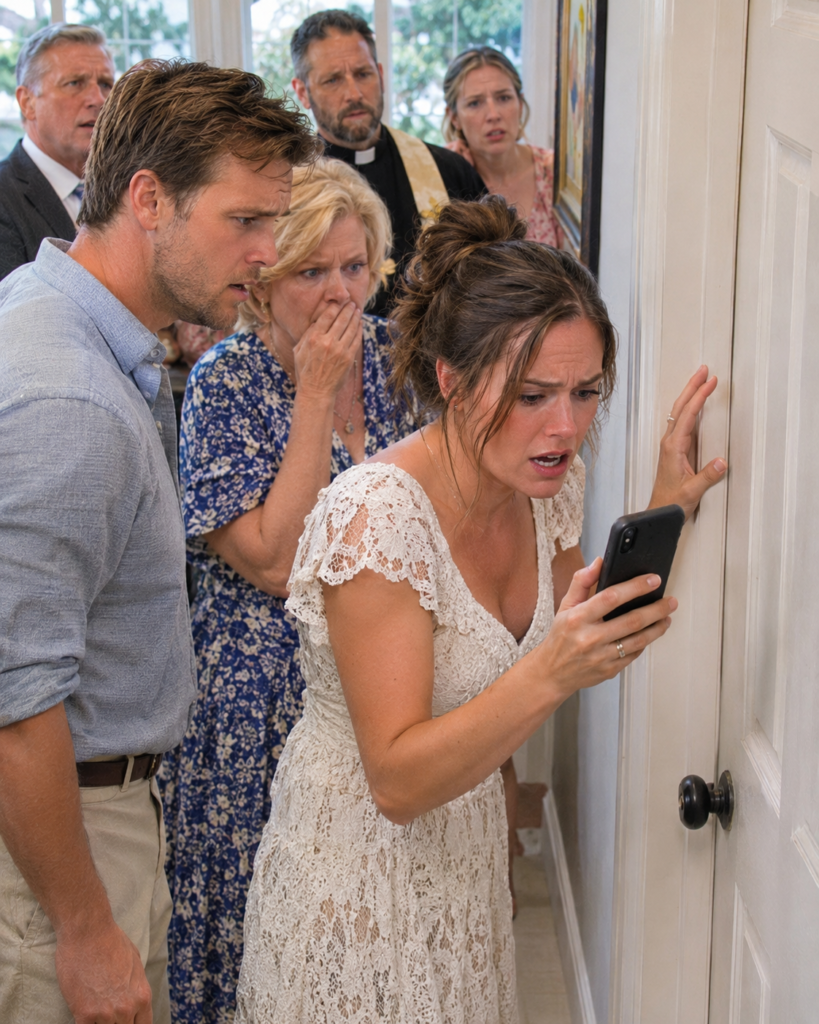
Nick stepped back and kicked the door.
The lock broke on the second kick.
Charlene was sitting in a rocking chair by the window with Ada in her arms, smiling. The bottle was almost empty.
Ada’s lips were gray-blue. Her eyes were half-closed. Formula was dribbling out of her nose.
“She’s sleeping,” Charlene said. “See? You all worry too much.”
I took my daughter out of her arms.
I turned Ada face-down along my forearm, her head low, and patted her back firmly between the shoulder blades. The way the NICU nurses had taught me. Five times.
A gush of thick formula came out of her mouth.
Then she coughed. A tiny, wet, angry cough.
Then she cried.
The siren on my phone stopped. Her oxygen climbed. 86. 90. 93.
I sat down on the floor and held her against my chest and let myself shake.
The ambulance arrived seven minutes later.
At the hospital, Ada’s cardiologist, Dr. Abiola, met us in the emergency room. She’d been called on the way.
Ada had aspirated. Thickened formula had gone into her lungs. With her heart condition, her body couldn’t handle the stress.
“Another few minutes,” the doctor said quietly, “and we’d be having a very different conversation.”
Ada spent four nights in the pediatric ICU.
Nick sat beside me the whole time. He didn’t say much the first night.
On the second night, he finally talked.
“She did this to me too,” he said. “When I was a baby. Cereal in the bottle. Whiskey on my gums. My sisters told me. I always thought it was funny.”
He looked at Ada in her tiny bed, with tubes in her nose.
“It’s not funny.”
Charlene called his phone forty times that week.
He didn’t answer until Friday.
“Mom,” he said, “you locked my daughter in a room and ignored a medical alarm because you wanted to prove a point. You’re not going to see her until I can trust you. And I don’t know when that will be.”
She screamed at him. He hung up.
Missy, his sister, sent me a long text that night. She’d been in the hallway. She’d seen everything.
“I’m sorry I didn’t help sooner,” she wrote. “She’s always been like this. Nobody ever stopped her before.”
Ada had her heart surgery in February. It went perfectly.
The hole is closed now. She drinks normal bottles. She’s chubby and loud, and she laughs at our dog.
We still keep the sock in a drawer. Just in case.
Charlene has not held Ada again.
Last month, she sent a birthday card with a check inside and a note: “From the grandmother you’re keeping from me.”
Nick wrote back four words.
“You kept her quiet.”
THE END.
──────────────
“That’s how we did it in my day” isn’t medical advice. A mother’s instinct, and her baby’s doctor, come first.
What would you have done if you were Jess in that hallway? Tell us in the replies.