Part 2:
While I was there, I moved a little extra from my checking account, too. Enough that if anything strange happened, I would not be left scrambling to cover rent. When the transfer confirmation popped up, my thumb hovered over the screen.
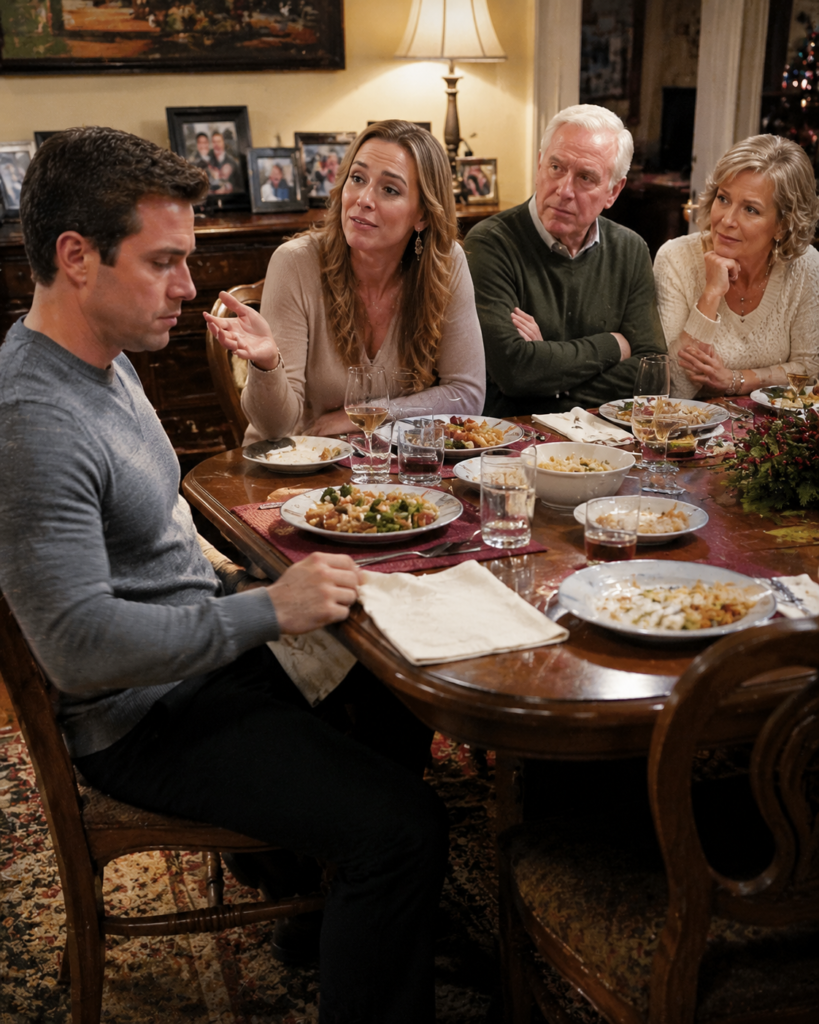
For a second, I thought about my sister, about my parents, about that long wooden table where the air had gone heavy the moment I mentioned the bonus. I thought about how many times over the years I had quietly picked up the check, quietly paid off a bill, just this once, quietly handed over my card so a crisis could magically disappear.
Then I went to the settings and froze my credit. The app walked me through each bureau, each toggle, each extra layer of security. I changed passwords I had been using for years, turned off autofill, and deleted old devices from my account. I removed the in case of emergency login my parents still had from back when they said they just wanted to help keep an eye on things. That part hurt more than moving the money. It felt like cutting the last thread of a rope I had been hanging on to since my early 20s. Back then, I had believed that being open with them about my finances meant we were a team.
Now I knew better. Teams do not vote to split one person’s paycheck down the middle because someone else chose to have children. By the time I finished with the banks, my tea had gone cold. I carried the mug to the sink, rinsed it out, and watched the last lukewarm swirl disappear down the drain. My phone buzzed on the table behind me. One vibration, then another, then a third in quick succession. I dried my hands and went to check. The first message was from my sister. A picture of her kids in their pajamas leaning against each other on the couch.
The caption underneath was a single line about how fast they were growing and how hard she was trying. The next notification was a voicemail from my mother. I did not listen to it right away, just read the automatic transcription, something about understanding how stressed I must be, about not letting money come between siblings, about how a good daughter knows when to step in. Under that was a text from my dad: short, blunt, no emojis, no softening words. He reminded me that family had carried me when I was younger, that I had an obligation to give back now that I was comfortable.
That word dug under my skin more than anything else. Comfortable meant my hard work was just background noise. Comfortable meant the long nights and short weekends did not count because I was not changing diapers or packing lunches. More messages came in over the next hour. Some were straight guilt. Some were dressed up as concern. Some were clipped and irritated. None of them asked how I felt sitting at that table. None of them wondered why I had not said a single word before I walked out. I set the phone face down on the table and left it there until the screen went dark again.
The apartment stayed quiet. The only sound was the low hum of the fridge and the soft creek of the building settling around me while my family lit up a group chat I wanted no part of anymore. The next time I saw her, the air had already cooled. That evening, I pulled my jacket tighter as I walked from my parking spot toward my building. Someone was leaning against the brick wall near the entrance. It took a second for my brain to match the outline to a person I knew. Then she straightened up and my stomach dropped before my mind even said her name.
My older sister Shannon was waiting for me outside my apartment. She looked like she had just come from work, hair pinned back, tote bag on one shoulder, phone in her hand. To anyone else, she probably seemed like a tired mom catching her breath. To me, she looked like a problem that had followed me home. She did not wave. She pushed off the wall and stepped into my path, so I had to stop or walk through her. I stopped. She asked why I had not been answering her messages, like she was asking why a machine had stopped working.
Before I could reply, she said she knew the bonus had already hit my account and wanted to know what my plan was. For a second, I almost laughed. The idea that my plan for money I had earned was somehow open for family discussion would have been funny if it had not been so exhausting. I told her I did not intend to hand over half of it. Her expression stayed steady. She said it was not handing over, it was sharing. She reminded me she has two kids, that daycare and groceries and gas are draining her, that she is barely keeping up.
She listed bills like she was reading from a script, as if reciting them would automatically transfer responsibility to me. While she talked, I noticed how she had positioned herself between me and the door. Not aggressively, just enough that if I wanted to get past her, I would have to squeeze by or ask her to move. The old version of me might have stood there and absorbed it. Let her words pile up until guilt did the work for her. The version of me who had spent the night before scraping every point of access out of my financial life was not interested in playing that role again.
I told her the money was already handled, that it was set aside for my needs, that I was not available to be anyone’s safety net. She stared at me like I had spoken a different language. Then she shifted. She said she was doing her best, that she was alone with the kids most days while her boyfriend worked odd hours, that things were tight. She called me lucky for coming home to a place where I could shut the door and think only about myself. I did not argue with her version of her reality.
I did not list the choices she had made that led to the bills she was drowning in, the trips she had put on credit cards, the second car she had kept even when she could not afford the insurance. All of that would have turned into another fight about how I never support her. Instead, I repeated what I had already said. The bonus was mine. I was keeping it. I wished things were easier for her, but I was not the solution. Her face tightened. She said she could not believe how cold I had become, that she never would have imagined I would hoard money while my own niece did not have shoes she thought were good enough for school.
The accusation hit hard, but I let it land instead of scrambling to fix it. She told me mom was upset, that dad was disappointed, that everyone was talking about how different I had been lately. She said it like a verdict, like the family had convened a jury in my absence. I did not ask what they had said. I did not apologize. I looked at the door behind her and then back at her. I told her I was going inside. For a moment, she did not move. Then she stepped aside just far enough that I could reach the handle.
As I put my key in the lock, she said they were not going to forget this, that I was making a mistake I would have to live with. I turned the key, opened the door, and walked through without answering. The hallway took the sound of her voice as the door closed behind me, and I was grateful for the solid weight of it between us. The calls from my parents began the next morning. The phone buzzed on my nightstand, flashing first mom, then a few minutes later, Dad. I let both of them ring until the voicemail icon settled in the corner of the screen.
I lay there while the room brightened. I knew that if I looked, there would be words already waiting to tell me what I was supposed to feel. Eventually, I slid a thumb across the glass. My mother’s voicemail scrolled down in pale gray text. She said she had barely slept, that money should never come between sisters, that I had always been the steady one, the child she could count on. The message tilted toward the suggestion that I could take some pressure off my sister just this once, as if this were the first time anyone had asked.
My father’s was shorter and harder. He wrote that he did not recognize my behavior, that this was not how he and my mother had raised me, that adults sit down and work things out. The term we need to talk sat in the middle like a command. Below the voicemails, the family group chat had erupted overnight. My sister had written long paragraphs about how humiliated she felt, how she had bragged about me and then been blindsided. My mother responded with lines about compassion. My father dropped in phrases about duty and gratitude. None of them asked why I had not argued back at dinner.
None of them mentioned the moment when they treated my bonus like an extra dish on the table. I closed the app and set the phone face down. I made coffee, showered, pulled on work clothes, packed my laptop. The motions were simple enough to do on autopilot. Underneath them, a thought kept pressing in. They had lost access to my money. They did not know that yet. Sooner or later, they would discover it. The first hint came at lunch. I logged into the carrier portal to pay my cell bill and noticed the line at the top of the page.
The account was still under my father’s name. My number was one line in a family plan he controlled. A leftover from the years when I could barely cover rent. Every month I sent him my share without thinking about what that setup still allowed him to do. Now I thought about it. With a few clicks, he could cut my service. He could see dates and times for calls and texts. The places my number formed part of a login. It was not a direct route into my bank, but it was still a hand on a doororknob. I spent my break on hold while a representative moved my number into a new account under my own name.
To them, it was routine. To me, it felt like sliding one more bolt into place. After work, I went looking for other threads. An old streaming service still used the email my mother knew by heart. The payment method was mine. The profiles were theirs. I cancelled the subscription, waited for the confirmation, then reopened it under a fresh email with a password no one else knew. By the time I finished, my shoulders achd. I closed the laptop and sat back in the quiet apartment. My phone lit up again. This time it was my grandmother. I answered.
Her voice came through thin but steady. She said she had noticed how still I had gone at dinner, how quickly I had left. She did not mention the bonus. She did not mention my sister. She just asked if I was doing all right. For a moment, I waited for the pivot into a favor. It never came. I told her I was tired, that work had been heavy, that I was stepping back from putting myself on call for every crisis. I did not list transfers or passwords. I let the outline sit there between us. There was a pause.
Then she sighed in a way that sounded like old understanding. She said she had seen the same pattern before, that whenever someone in the family managed to get ahead, the rest treated it like a shared jackpot. She added that nobody could keep filling everyone else’s cup without running dry. We did not talk long. After we hung up, I stayed where I was, staring at nothing in particular. The anxious beat in my chest did not disappear, but something shifted beside it. For the first time since that dinner, someone in my family had named what was happening without asking me to fix it.
A month slid by faster than I expected. I worked, slept, answered only what had to be answered, and ignored the rest. The calls from my parents slowed when it became clear I would not pick up. My sister’s messages shifted from long paragraphs to the occasional clipped line I left unread. The silence between each attempt stretched wider until it became its own kind of habit. One evening, after closing my laptop, I realized I had started measuring my days by something other than their moods. The apartment no longer felt like a waiting room. It felt like a place I actually lived in.
That should have been enough, but the knot in my chest never completely loosened. As long as I stayed in the same city, walking the same streets they knew, it felt like they were just around the corner, waiting for the right excuse to knock again. My job did not care where I sat as long as the work was done. I had always treated that as a perk. Now I saw it as a door that had been open the whole time. I began looking at maps instead of messages. I checked rental listings in towns whose names I only knew from weather reports, places with grocery stores and libraries and not much else.
I wanted somewhere large enough that I would not stand out, but small enough that nobody would assume I was close by if they went looking. After a week of emails and virtual tours, I signed a lease for a small place in a town a few hours away. It was not dramatic. No coastline, no mountain view, just a narrow apartment over a bakery on a street where the loudest sound was the delivery truck that came before sunrise. I told my manager, Grant Ellis, during a one-on-one that I would be moving. He lifted an eyebrow, then said it made no difference to the team as long as my connection stayed stable.
There was no lecture, no curiosity about my reasons, just a brief nod and a note on a schedule. The day I started packing, I called my grandmother. I wanted her to hear it from me before anyone else noticed my change of address. She listened while I described the new place, the bakery downstairs, the way the landlord had warned me about early morning noise, but promised the bread was worth it. She was quiet for a while after I finished. Then she told me a story I had never heard. Years ago, before I was born, one of her own brothers had landed a job that paid more than anyone in the family had ever seen.
The rest of them had treated his paycheck like a solution to every problem. Eventually, he had moved three states away just to get out from under the requests. Nobody ever framed it as survival in the retellings. They called it abandonment. They still do. Listening to her, I could hear the same pattern stretched across decades. Different names, different numbers, the same expectation that one person’s effort belonged to everyone else. She said she was too old now to pretend she did not recognize it. She told me quietly that leaving did not make me heartless, that sometimes distance was the only way people like us stopped being rewritten into someone else’s idea of generous.
We did not say goodbye in any grand way. When we hung up, I sat on the edge of my half empty bed and looked at the stacks of boxes around the room. Nothing in them was particularly valuable on paper. A few dishes, some books, clothes, an old lamp from a thrift store. The most expensive thing I was taking with me was the decision to stop being available. Moving day came without fanfare, a rented truck, a key left on a counter, a last glance at walls that had heard too many voicemails buzz through them. I locked the door and walked away.
The drive to the new town was long enough for my thoughts to thin out. By the time I parked behind the bakery and carried the first box up the narrow stairs, I was too tired to be anxious. The apartment smelled faintly of coffee and yeast. The floor creaked in the middle of the room. The windows rattled a little when trucks went by. That first evening, I walked to the corner store for basics. No one knew my name at the register. Nobody asked who my family was or commented on how long it had been since they last saw me.
I bought bread I had not baked, milk I did not have to share, and carried the small bag home through streets that held no history with me. It was imperfect and small and for the first time entirely mine. A few weeks later, the town had settled into a rhythm I could move through without thinking. Mornings began with the rattle of delivery carts under my windows and the smell of bread from the bakery downstairs. By the time I logged on for work, the street had already done half a day’s worth of living. My life shrank in a way that made it easier to breathe.
Groceries were a short walk away. The library card in my wallet had a new barcode. People on the sidewalk knew me only as the woman who lived above the bakery. On video calls, nothing behind me suggested anything in my life had changed. For a little while, I pretended distance and safety were the same thing. One afternoon, I turned the corner toward my building and saw a car parked just past the alley. It did not belong on that street. The paint was dull from highway miles. The back seat crowded with bags. The license plate snapped into focus first, then the familiar dent near the rear bumper.
My feet slowed. Three silhouettes stood near the trunk. As I drew closer, the shapes became people I knew better than anyone and trusted less than I had ever admitted. My parents and my sister were waiting outside my building. There was no reason for them to be in that town except me. I did not know whether it was a forwarded piece of mail, a careless comment, or my grandmother’s worried honesty that had given them my new address. It did not really matter. They had found me. My mother lifted her hand in a small wave. My father folded his arms.
My sister’s expression hovered somewhere between anger and relief. My keys were already in my hand. I kept walking until I stood far enough away that I could still turn around if I chose. My mother said they had been worried, that my move had been sudden, that they had driven for hours just to check on me. The word bonus never left her mouth, but it sat underneath every sentence. My father asked why I had not told them where I was going. He said, “Families do not vanish from each other’s lives,” that adults do not move without leaving a forwarding number.
My sister stayed quiet until my mother paused. Then she said the rent on her place had gone up, that the car needed repairs, that the kids school wanted more fees. Each problem was lined up and held out. None of them asked how I was doing in this new town. None of them asked what had pushed me far enough that leaving without a conversation had felt like the only option. I said I was fine. I told them I appreciated that they had come. Then I added that I was not inviting anyone upstairs. Surprise crossed my mother’s face.
She glanced toward the narrow door beside the bakery, then back at me. My father’s jaw tightened. He reminded me that they were my parents, not strangers off the street. He asked if I really meant to talk to them out here, like salespeople I wanted to send away. I answered that the apartment was my space, that I needed it to stay that way. I did not raise my voice. For a moment, nobody spoke. Then my sister stepped forward. She said she understood wanting space, but that this had gone far enough. She mentioned the bonus without naming it, calling it that extra money I was sitting on.
While other people in the family struggled, she said she was not asking for charity, only for me to be fair. Behind me, the bakery door opened and closed as someone stepped out to shake a mat. I did not turn around. I kept my eyes on the three people in front of me, and the way their worry never quite covered the calculation underneath. I told my sister I was not redistributing anything. I said I had closed the open tab they seemed to think existed in my bank account. I told my parents I was no longer comfortable having my finances treated like a community resource.
My father asked if I had any idea how ungrateful that sounded. My mother said she could not recognize the person standing in front of her. My sister said she hoped I remembered this moment the next time I needed help and no one picked up the phone. The words landed sharp and familiar. I told them I was not changing my mind. After that, there was nothing left for them to say that they had not already thrown at me in some form. My mother wiped at her eyes. My father shook his head. My sister turned toward the car with a muttered comment about wasted gas.
I watched them get in and closed the doors. The car pulled away from the curb and disappeared around the bend. When the street was quiet again, I climbed the stairs to my apartment, unlocked the door, and stepped inside alone. Time did not rush after they drove away. Days stacked up quietly. I worked, walked the short streets, heard the bakery trucks at dawn. Nothing outside my window showed that my parents and my sister had stood there asking me to open a door I had already closed. What changed was the noise level in my life. The calls stopped first.
No more missed attempts from mom or dad. No fresh voicemails transcribing speeches I did not want to hear. The family group chat slid so far down the list of conversations that it dropped out of sight. I did not erase it. I let it sink into the background. Every so often, my grandmother’s number appeared. I answered when I could. She did not turn our talks into reports, but pieces still slipped through. My sister was picking up extra shifts. My parents were watching the kids more because child care kept rising. There was talk of cutting back and being tired.
None of it sounded like a catastrophe. It sounded like what happens when people live within the results of their own math instead of someone else quietly fixing it. From a distance, I could see how much of myself had gone into softening those results: covering a late payment here, paying for a repair there, saying yes to just this once until those moments blurred into years. When my part disappeared, their lives did not collapse. They adjusted without me. Mine did, too. I filled my time with things that were not emergencies. I joined a weekend hiking group outside town, lingered at the library, learned the names of the people who handed me coffee on busy mornings.
Nobody there knew me as the dependable one in a messy family. They knew me as the woman who liked the darker roast and always brought her own bag. At work, I chose projects because they interested me, not because I was trying to prove anything. When recognition came, it felt light. A title changed, a raise landed, and my first thought was not who might be waiting to carve off a piece. Guilt still tried to find a way back in. It usually showed up at night while I was doing something ordinary, folding laundry, rinsing dishes, standing by the window.
It reminded me that my parents had once driven me to school and sat through concerts. It asked, “What kind of daughter walks away from people she grew up with?” When that happened, I let the memories play all the way through. The good parts and also the pieces that usually get edited out. The bill handed to me as soon as the guests left. The way my sister lined up problems like invoices. The look my parents gave me whenever a new crisis appeared as if my paycheck were equipment waiting on the wall. I stopped cutting those parts from the story and guilt stopped sounding like the only honest voice in the room.
I did not send a declaration ending the relationship. I did not gather witnesses or make a speech. I just kept living in a way that did not leave space for the old arrangement. I answered when my grandmother called. I stayed quiet the rest of the time. Sometimes families break in one loud moment. Mine simply thinned at the edges until there was more distance than connection. Occasionally, another detail reached me. My sister selling the second car she never really needed. My parents talking about a smaller place because the house felt too big and too expensive. Ordinary adjustments.
The kind people make when the numbers stop adding up and there is no one left to quietly bridge the gap. If there was resentment, it stayed on their side of the line. On my side, something else took root. I began to understand how completely I had treated generosity as a reflex instead of a choice. If I had something, I gave it. If I did not, I found a way anyway. I called that love. Most of the time, it was fear of what would happen if I ever said no. Pulling that yes back did not turn me into the villain of our family story.
It turned me back into a person with limits. Setting boundaries did not fix everything. It did not rewrite the past or erase every late night replay. But it gave me one solid thing I had never really had before. The right to decide where my effort went and what it was actually building. If any part of this sounds familiar, I am not here to hand you a script. Every situation is different and only you know the risks of changing yours. What I can tell you is this. You are allowed to draw a line. You are allowed to step back from people who only reach for you when they need something.
You are allowed to build a life that does not revolve around putting out fires you did not start. That choice will not make you heartless. It will make you honest. And if you have stayed with me through this whole story, thank you for listening. I hope something in it helps you see your own boundaries a little more clearly