I bought the house in secret because my family had spent my entire adult life treating every good thing I earned as something they were entitled to divide.
It was a small brick house in Charlotte, North Carolina, with a blue front door, a fenced backyard, and a kitchen window that caught the morning light so beautifully I cried the first time my realtor handed me the keys. I was thirty-one years old, single, working as an operations manager for a logistics company, and after nine years of overtime, cheap apartments, canceled vacations, and quiet sacrifices, I finally owned something that had only my name on the deed.
Nobody knew except my realtor, my lender, and my best friend Olivia.
That was the plan until I came home from a hardware store run on a Thursday evening and found my parents’ SUV parked in the driveway.
For a second, I thought someone had died.
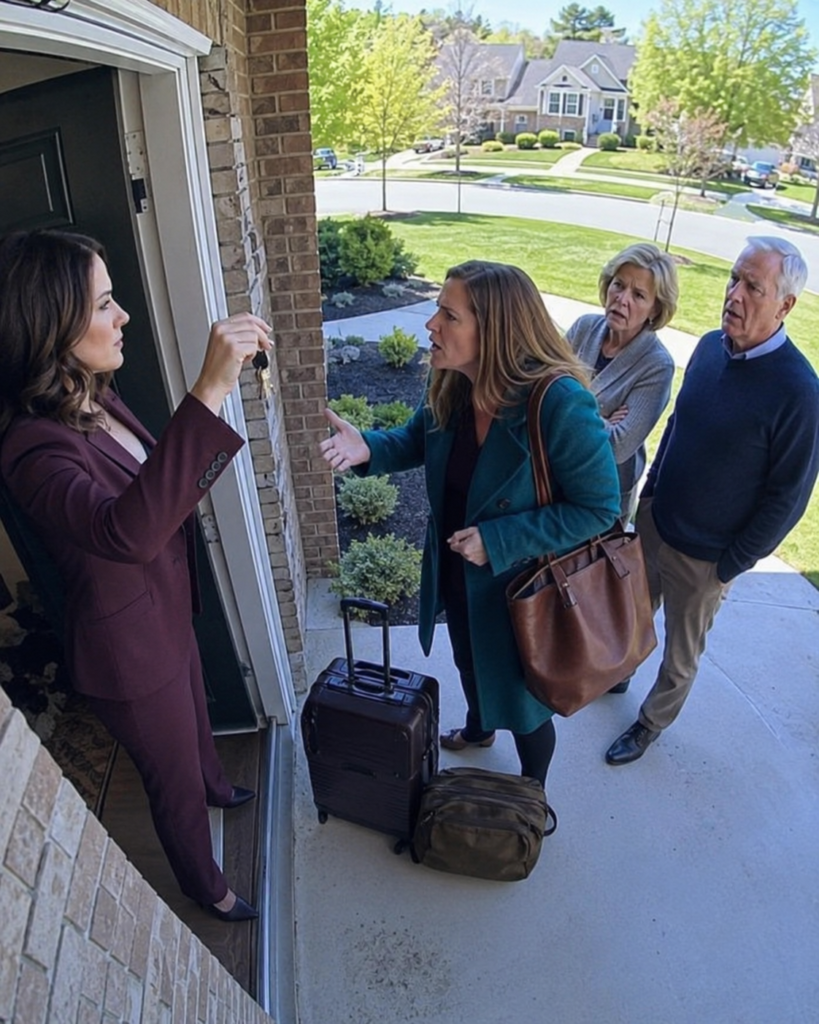
Then I saw my sister, Brooke, standing in my living room with her shoes on my new rug, holding a coffee from Starbucks and turning slowly like she was touring a model home. My mother was opening kitchen cabinets. My father was measuring the hallway with his eyes. None of them looked guilty. They looked impressed.
“What are you doing here?” I asked, still holding a bag of curtain rods and a box of cabinet pulls.
Brooke smiled like I had arrived late to an event she was hosting. “Mom found the address from the closing mail you left at your apartment.”
My stomach dropped.
I had forwarded most of my mail, but one envelope from the title company had gone to my old place, where my mother still had a spare key because I had been foolish enough to trust her with emergencies.
My mother, Elaine, turned from the cabinets with bright, offended excitement. “So this is where all your money has been going. You bought a whole house and didn’t tell your own family?”
“I didn’t tell you because this is my home,” I said. “Not a family project.”
My father, Ron, frowned. “Don’t talk to your mother like that. We’re just surprised.”
Brooke laughed and walked toward the stairs. “Surprised? I’m relieved. This house is worth living in.”
I stared at her. “What does that mean?”
She turned back, completely serious. “My lease ends next month, but honestly, I’ll just move in this weekend. The upstairs bedroom with the big window is perfect for me, and Mom says the smaller room could be her sewing space.”
The silence after that sentence was so sharp it felt like the house itself was holding its breath.
“You’re not moving in,” I said.
Brooke rolled her eyes. “Don’t be dramatic, Jenna. You have three bedrooms and no husband, no kids, no reason to hoard all this space.”
My mother stepped in with the old familiar softness that always hid a demand. “Honey, family helps family. Brooke is struggling, and your father and I could stay sometimes too, especially when your dad’s back acts up.”
I looked at my father, waiting for him to correct them.
He only shrugged. “It makes sense. You’re alone anyway.”
That was the moment I understood why they had walked in without asking. They did not see my house as a boundary
I had built. They saw it as a resource I had selfishly failed to announce.
I set the hardware bag on the floor and opened the front door.
“Get out,” I said.
Brooke’s smile vanished. “Excuse me?”
“You heard me.”
My mother gasped, my father’s face darkened, and Brooke called me selfish all the way to the driveway. But after they left, I did not cry. I called a locksmith, changed every exterior lock, installed a camera doorbell, and saved the footage of them entering without permission.
Then I waited for Sunday….
Part 2: The Sunday Invasion
Sunday morning arrived with a crisp, mocking sunshine. I sat at my kitchen island, sipping black coffee, watching the live feed from my new doorbell camera on my phone.
At exactly 10:00 AM, a massive moving truck rumbled down my quiet street and parked right across my driveway. Behind it was my parents’ SUV.
My heart hammered against my ribs, but it wasn’t from fear anymore. It was pure, cold anticipation.
I watched through the camera as Brooke hopped out of the passenger seat, wearing leggings and a baseball cap, looking like a woman on a mission. My parents followed close behind. Brooke marched up to my blue front door, gripped the handle, and twisted.
Nothing happened.
She frowned, pumping the handle harder. Then she pulled out the copy of my old apartment key—the one my mother had illegally used to find my closing documents. She shoved it into the deadbolt. It wouldn’t even turn a millimeter.
“Jenna!” Brooke yelled, pounding her fist against the wood. “Open the door! The movers are on the clock!”
I unlocked the door and opened it just a crack, leaving the heavy security chain engaged.
“What are you doing, Brooke?” I asked, my voice entirely flat.
“What does it look like?” she snapped, gesturing wildly to the moving truck. “I told you I was moving in today. Why did you lock the door? My key isn’t working.”
“Your key doesn’t work because I changed the locks on Thursday night,” I said. “And you’re not moving in because I already told you no.”
My mother pushed past Brooke, her face contorted into a mask of maternal outrage. “Jenna Louise! Cut this childish nonsense out right now! Your sister has already packed up her entire apartment. We have a lease ending. Stop being so incredibly selfish and let us in!”
“I am not letting anyone in,” I said softly. “This is my house. Go away.”
Before they could scream back, I closed the door and turned the deadbolt. The click resonated through the entire hallway. Outside, the shouting began.
Part 3: The Escalation
For the next two hours, my front porch turned into a battleground.
Brooke kept banging on the door, screaming that I was ruining her life. My father tried to look through the front windows, but I had already installed thick, blackout curtains. My mother flooded my phone with texts, ranging from desperate guilt trips (“After everything we sacrificed for you!”) to outright threats (“We will disown you for treating your sister like this!”).
But the real trouble started when my father approached the hired movers. I watched through the window as he pointed at my fenced backyard.
They were going to bypass the front door.
A few minutes later, I heard the loud clatter of my wooden back gate being forced open. My father had used a crowbar from his truck to break the latch. Brooke and two confused-looking movers began carrying her heavy oak dresser across my lawn toward the back patio doors.
They truly believed that if they just physically forced her belongings into my space, I would eventually cave. They thought my guilt would override my spine, just like it always had when I was younger.
I didn’t yell. I didn’t walk outside to argue. Instead, I picked up my phone, dialed three digits, and spoke to the dispatcher with absolute clarity.
“Yes, hello. I have multiple people trespassing on my property at this address. They have destroyed my back gate and are attempting to break into my house. No, I do not know them safely anymore. Please send officers.”
Part 4: The Welcome They Welcomed
Ten minutes later, two police cruisers pulled up to the curb with their lights flashing.
The neighborhood was dead quiet, making the arrival of the police incredibly loud. Neighbors began peeking through their blinds. I stepped out onto the front porch just as the officers walked up the driveway.
“What’s going on here?” the older officer asked.
My mother immediately rushed forward, putting on her best damsel-in-distress act. “Oh, thank goodness you’re here, Officer! This is a family misunderstanding. My daughter Jenna is having a bit of a mental episode and is locking her sister out of her own home!”
“Is this your home, ma’am?” the officer asked Brooke.
“Yes! I mean, it’s our family property,” Brooke stammered, suddenly looking pale. “I’m moving my stuff in today.”
The officer turned to me. “Ma’am, do you own this house?”
I handed him a neat, clear plastic folder I had been holding. Inside was the official, certified copy of the deed, my North Carolina driver’s license matching the name, and the printed invoice from the locksmith who had changed the locks two days ago.
“I am the sole owner,” I told the officer. “Nobody else is on the deed. I have explicitly told them multiple times they do not have permission to be here. They broke my back gate to get onto my property, and I have the doorbell footage right here showing them trying to pick my lock earlier.”
I handed him my phone, playing the video of Brooke and my mother trying to force their way in.
The officer’s expression hardened. He turned to my family. “Alright. This is private property. You people need to put everything back in that truck and leave immediately. If you step foot on this lawn again, you will be arrested for criminal trespassing.”
Part 5: The Cost of Freedom
My father looked like he had been slapped. My mother began to cry, loud and performative, begging the officers to see reason. But the police stood their ground, arms crossed, watching over them like hawks.
The movers, realizing they were caught in the middle of a legal nightmare, refused to touch another piece of furniture unless they were paid to load it back up. Brooke had to pay them double out of her own pocket just to put her dresser back in the truck, weeping from humiliation as the neighbors watched.
Before she got into the truck, Brooke glared at me through the police line, her face twisted in pure hatred. “You are dead to us, Jenna. You have no family anymore. Enjoy your empty, lonely house!”
“I will,” I said quietly.
They drove away, the roar of the moving truck fading into the distance, leaving my street completely silent again.
It has been six months since that Sunday.
True to their word, my family hasn’t spoken to me. They blocked my number, and my mother told our extended relatives that I sued them and kicked them out onto the street. Olivia told me about the rumors, but I didn’t care enough to correct them. The trash had taken itself out.
Every morning, I wake up in my bedroom, walk downstairs to my kitchen, and watch the morning light pour beautifully through the window. I fixed the back gate myself. I bought a beautiful new dining table that seats only four people—just enough for me, Olivia, and any real friends who actually understand what a boundary means.
My family thought my house was a resource to divide. But they were wrong. It was a fortress. And for the first time in my thirty-one years of life, I am completely safe inside it.