Snow was still falling over Queens when Marissa Cole realized humiliation could arrive without noise.
It did not come as a confession. It did not come as a slammed door or a lipstick stain or a message sent to the wrong phone. It came as a reflection in a mirror behind a woman who smiled for strangers on the internet. Brooke Langford, all bright teeth and silk and curated warmth, lifted a coupe glass toward the camera from a suite at the Park Hyatt while comments rushed up the screen in little bursts of admiration. Marissa had nearly scrolled past. Then the mirrored wall behind Brooke caught the shape of a man moving through the warm gold light, broad shoulders, dark hair, navy wool coat.
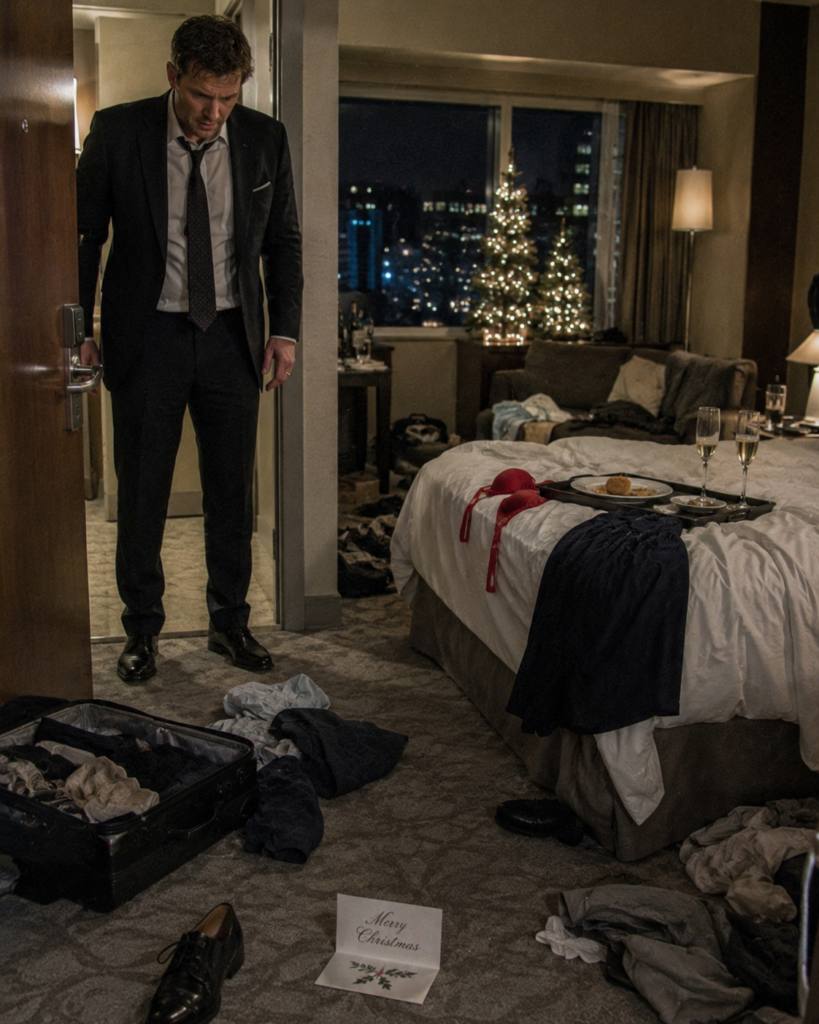
The same coat Marissa had bought Daniel last Christmas after saving in secret for three months.
For a second her mind refused to accept what her body already knew. Her breath stopped high in her chest. Liam lay asleep against her, warm and heavy and trusting, one cheek pressed to her sweater, his little hand curled around the corner of a Christmas picture book. The radiator hissed weakly. Somewhere down on the street a car slid through slush. On the television across the room a holiday movie played with the sound off, people laughing in a fake kitchen filled with garland and easy love. Marissa stared at the screen until Brooke turned and laughed at something off camera, and the silhouette stepped closer into the glow.
Daniel tilted his head in that familiar way he did when he was amused and pretending not to be.
Something inside her, something that had been stretched thin for months, finally tore.
She did not throw the phone. She did not wake Liam. She did not call Daniel and demand an explanation she already knew he would twist into a weapon. She just sat there in the half-heated room while snow moved past the window like ash, and felt the truth settle into her bones with a coldness deeper than weather. When she finally looked down at her son, her voice was so quiet it barely seemed to belong to her.
“I’m sorry,” she whispered, brushing his hair back from his forehead. “I’m sorry you had to have this mother before she figured it out.”
Liam didn’t wake. He only burrowed closer.
Marissa lifted him carefully and laid him on the couch under the fleece blanket with faded red reindeer. Then she stood in the middle of the apartment and looked around as if seeing it for the first time. The place was small, the walls slightly yellowed, the kitchen linoleum chipped near the sink. Daniel called it temporary. Daniel called it a sacrifice. Daniel had spent twelve years explaining why everything hard belonged to Marissa and everything glamorous belonged to the version of his life that did not include her.
She walked to the window and pressed two fingers against the cold glass. Across the courtyard another family had strung soft white lights around their balcony. Someone was laughing inside. Someone opened a window just enough for the smell of roasted garlic and butter to drift into the night before closing it again.
Her own apartment smelled faintly of laundry detergent, candle wax, and the tomato soup Liam had spilled at lunch.
She had built a life out of maintenance. That was the ugliest part. Not the affair. Not even the lies. It was the daily work of adjusting, absorbing, excusing, shrinking. Daniel came home late. Daniel missed the school meeting. Daniel forgot the prescription pickup. Daniel snapped at her in the kitchen and later blamed stress. Daniel let weeks pass without touching her except to brush by her in hallways with the absent entitlement of a man who believed her existence was permanent furniture. Marissa had named each wound something smaller than it was. Tiredness. Pressure. Miscommunication. A phase.
Tonight the mirror in that hotel suite had named it correctly.
By morning, the city looked softer than she felt. Snow had settled over parked cars and stoops and the black metal fire escapes like a clean sheet pulled over a body. Liam woke cheerful, asking whether Santa could still find them if the roads were icy. Marissa made pancakes from the last of the mix and smiled when she was supposed to. She found his missing mitten under the couch. She kissed his temple when he asked why her eyes looked pink.
“Didn’t sleep much,” she said.
That at least was true.
After breakfast, while Liam pushed toy cars along the living room rug making quiet engine noises to himself, Marissa stood in the kitchen holding Daniel’s travel mug. Stainless steel, black lid, one tiny scratch near the handle. He took it on every business trip. Every single one. She knew because she washed it when he got back, smelling stale airport coffee in the rubber seal.
But it had been sitting clean and dry in the cabinet all week.
She closed the cabinet and stared at the wood grain until her vision blurred. The betrayal was no longer dramatic. It was administrative. Itemized. It lived in overlooked objects and timestamps and deviations from routine. The kind of evidence you only noticed once hope stopped interfering.
Her phone buzzed on the counter. A message from the landlord: RENT OVERDUE. FINAL NOTICE BEFORE FORMAL ACTION.
Marissa set the travel mug down carefully. Her first emotion was shame. Her second was anger at herself for still being capable of shame on Daniel’s behalf. He had insisted on handling the finances because he was “better with strategy.” He called her anxious whenever she asked for clearer access. He called her disrespectful when she questioned why the joint account seemed lower each month. Once, after she asked too many questions, he had leaned against the doorway of their bedroom with his tie half undone and said, “You know what your problem is, Marissa? You make everything ugly by examining it too closely.”
The phrase had stayed with her for months. Not because it was clever, but because some part of her had believed him.
At noon she walked Liam to the community center for his holiday rehearsal. The sidewalks were packed with dirty snow and holiday shoppers moving with determined cheer. Men carried ribboned boxes. Teenagers took photos in front of decorated storefronts. A Salvation Army bell rang on the corner with mechanical brightness. Liam hopped over slush puddles in his little boots, holding her hand in mittened fingers. She kept pace and watched steam rise from subway grates in white bursts.
Halfway there, a voice called her name.
Talia from work was hurrying toward them, scarf flying behind her. She worked reception at the clinic where Marissa handled patient scheduling and insurance disputes, and she had the sort of face that never quite hid what it felt. Concern reached it before words did.
“Hey,” Talia said, a little breathless. “I thought that was you.”
Marissa smiled automatically. “Hi.”
Talia bent to say hello to Liam, who shyly hid against Marissa’s leg, then looked back up. “Listen, I almost didn’t say anything, because maybe I’m mistaken, but I thought I saw Daniel yesterday near Fifth.”
Marissa felt the cold air go thin around her.
“He said he was in Chicago,” she heard herself reply.
Talia’s eyes flickered. “Then maybe it wasn’t him. I just… it looked like him. He was with someone.”
Maybe a client. Maybe a colleague. Maybe nothing. Talia didn’t say any of those things. She didn’t insult Marissa with fake cushioning. For that, Marissa loved her a little.
“Oh,” Marissa said. The word came out flat and small. “Maybe he had a meeting.”
Talia looked at her for a beat too long. “You okay?”
The question was so gentle it nearly undid her. Marissa could have told her everything right there on the sidewalk. About the livestream. About the travel mug. About lying awake most nights with her stomach knotted, trying to calculate whether a marriage could die from one large betrayal or only from thousands of quiet ones. Instead she adjusted Liam’s hat and gave the answer women like her had perfected.
“I’m just tired.”
After rehearsal drop-off, she walked home alone. The sky had gone the color of wet wool. Plows scraped the street with a sound like metal teeth. She climbed the apartment stairs slowly, each step making her more certain of something she could not yet fully name. By the time she unlocked the front door, the certainty had hardened into a kind of cold clarity.
Inside, she hung her coat in the hall closet. Something slipped from the top shelf and landed against her shoulder before dropping to the floor. A silver gift bag, elegant and expensive, stamped in discreet gray lettering: PARK HYATT NEW YORK.
Marissa crouched and picked it up with fingers that had gone numb.
Inside were two champagne flutes wrapped in gold tissue paper. They were delicate, long-stemmed, with a pattern of tiny etched stars near the rim. Not hers. Daniel had never bought her anything that fragile. He said she was practical, as if that were an unromantic flaw rather than a reality he had assigned to her. Marissa sat down right there on the hallway floor, the bag in her lap, the closet door still half open, and let the silence confirm what her mind had been trying not to know.
Daniel had not drifted away from his marriage.
He had stepped out of it and left her standing in the doorway, still holding it open.
That evening the weather worsened. Wind shook the windows in their frames, and Liam fell asleep early after asking whether Daddy would be back for Christmas morning. Marissa told him she didn’t know. Then she went into the bathroom, turned on the sink so he wouldn’t hear if he woke, and stood gripping the edge of the vanity until the wave passed.
At 6:42 her phone rang from an unknown number. She let it go to voicemail.
A minute later it buzzed again with the message. Daniel’s voice came through flat, impatient, and already exhausted by a problem he thought he should not have to manage.
“Marissa, I’m boarding my flight. Stop calling. I told you this trip is important. Don’t make this dramatic.”
She replayed it twice. She had not called him once.
The deception was so lazy it almost clarified him more than the affair. He was not even bothering to build careful lies anymore. He was throwing scraps at her, trusting that habit and self-doubt would make them enough. The man in the Park Hyatt suite. The man claiming he was boarding a plane. The man who once told her she needed therapy because she was “too suspicious to be easy to love.” They were all the same man. She had just kept waiting for one of them to be temporary.
She called him then, not because she wanted him back but because she wanted to hear what contempt sounded like when it knew it was safe. He declined the call. She tried again. Voicemail.
On the third attempt, he picked up for three seconds only to say, “I’m busy. Don’t call unless it’s about Liam.”
Then he hung up.
Marissa stood in the dark kitchen with the phone still to her ear while the cheerful static of a Christmas station played softly from the small radio on the counter. A choir sang about peace on earth. She laughed once under her breath. It did not sound sane. It sounded tired.
At nine, the power cut out.
The apartment went black except for the pale rectangle of her phone screen and the candle she lit from the emergency drawer with shaking hands. The heater died with a groan. The sudden silence was enormous. Marissa brought the candle into the living room and sat on the floor beside Liam’s couch. Outside, the storm lashed the block. Somewhere a child cried in another apartment, then was hushed. Pipes knocked behind the walls. The building smelled faintly of cold metal and damp wool.
She wrapped her arms around her knees and understood, with a steadiness that frightened her, that she could not raise Liam inside this pattern any longer. Not around the lies. Not around the way she flinched before checking the bank balance. Not around the way she edited herself before every disagreement, trying to sound calm enough to deserve basic respect. Children learned love from atmosphere. Liam was learning that a woman’s silence was the price of peace.
By dawn, the storm had eased, but something in Marissa had shifted into motion.
The next day brought more proof, as if once a lie began to collapse it could not stop shedding pieces. At the community center, Grace Hollands from the clinic saw her in the lobby and hesitated before speaking. Grace was older than Marissa by nearly twenty years, sharp-eyed, disciplined, the sort of woman who ironed her own collars and never confused bluntness with cruelty.
“I may be overstepping,” she said, warming her hands around a coffee cup, “but I thought I saw your husband yesterday too.”
Marissa didn’t bother pretending surprise this time. “With a woman?”
Grace’s mouth tightened. “Yes.”
The truth moved between them with almost embarrassing simplicity.
Back home, the apartment smelled faintly of Daniel’s cologne. It clung to the air near the kitchen as though he had been there recently, passing through like a thief in his own life. On the counter sat a receipt from a jeweler on Fifth Avenue. The paper had curled slightly at one edge. Marissa picked it up and saw the amount first, then the item description.
Diamond tennis bracelet.
Twelve years with Daniel and he had never bought her jewelry that required insurance.
For a moment she had to grip the edge of the counter because the room tilted. Not from grief now. From insult. There was something almost obscene about the ease of it. Late rent notices in Queens. A frozen look from the landlord. Marissa stretching pasta into two meals. Daniel in Manhattan buying diamonds for a woman who made an occupation out of being seen.
She folded the receipt once and slid it into her cardigan pocket.
Then she did something Daniel would later think had happened all at once, as if one dramatic hurt had propelled her into action. In truth, she moved with the precision of someone whose decision had been preparing itself for years. She started with Liam’s room. Warm clothes first. The dinosaur pajamas. The green sweater his grandmother had mailed before she got sick. Two pairs of jeans, thick socks, his favorite stuffed bear with one ear leaning sideways. She packed them into the small rolling suitcase and zipped it shut.
Only after she finished Liam’s things did she walk into the bedroom she shared with Daniel.
The room smelled stale, expensive in the wrong way. Men’s cologne, dry-cleaning chemicals, the faint dustiness of space emotionally abandoned but still furnished. She opened the bedside drawer where she kept important documents. Liam’s birth certificate. Insurance cards. School forms. Her passport. Then she reached beneath a stack of old utility statements and pulled out the envelope she had hidden three weeks ago.
Inside were printed screenshots and phone photos of spreadsheets Daniel had left open on his laptop one night when he fell asleep on the sofa. Marissa had not understood all of it at first. But she knew enough from years of scheduling, billing, and chasing corrected codes at the clinic to recognize patterns that should not have existed. Duplicate vendor names. Transfers to accounts that did not match payroll structures. Internal reimbursements routed through entities with nearly identical titles. She had photographed everything quietly while he slept with the television glowing blue over his face.
At the time she told herself it was self-protection in case the money situation got worse.
Now it looked like evidence.
She opened the banking app on instinct, perhaps still hoping to be wrong about one last thing, and found the joint account restricted. Unauthorized activity detected. Please contact support.
A strange sound escaped her throat. Not quite a laugh. Daniel had frozen the account. Whether to control her, test her, or protect himself, she didn’t even know. The motive no longer mattered. What mattered was the shape of the truth: he had already begun making unilateral moves. He had always believed she would be the last to act.
She packed her own things next. Not much. Jeans, sweaters, work shoes, Liam’s medications, toiletries, the old silver locket from her mother, the folder of papers. Everything fit into two bags because women who spend years minimizing their needs tend not to accumulate much.
Near sunset she sat at the kitchen table with a small notepad and wrote five words.
Don’t look for us.
She stared at the sentence for a long time. Then she added nothing more. No accusation. No explanation. No plea. Daniel had lived too long on access to her inner life. He would get none of it now.
Liam fell asleep during a cartoon. She lifted him into her arms, feeling the familiar weight of his trust settle across her shoulder, and wheeled the suitcase into the hallway. Before closing the apartment door, she looked back once. The dish towel hanging crookedly by the stove. Liam’s crayons in the cup by the window. The candle burned down to a pool of wax in the sink from the power outage. It did not feel like abandoning a home. It felt like leaving a stage after the audience had finally gone.
The ride-share driver who took them to the train station did not ask questions. Marissa was grateful. The train north smelled of wet coats, burnt coffee, and overheated air. Liam slept with his head in her lap while darkness gathered outside and station lights came and went like brief interrogations. She kept one hand on the folder in her tote the whole way.
Green Hollow Cabin Rentals had seemed almost absurd when she found the confirmation email weeks earlier while searching for a school tax document Daniel had carelessly left in a shared folder. She had almost dismissed it. A reservation in Vermont, booked under a variation of his initials, paid from a card she did not recognize. At the time she assumed it was for the affair. Later, after seeing the date had changed and the booking remained open, she had called from a blocked number and learned there was a vacancy due to weather cancellations.
It was the first strategic thing she had done in years.
The cabin was small, warm, and deeply quiet in the way only places surrounded by snow and trees can be. Pine walls. A cast-iron stove. A couch with an old quilt folded over one arm. The woman at the office had given her the key with professional discretion and a look Marissa chose not to interpret. By the time she settled Liam under a blanket and set water to boil, the silence felt so complete it made her shoulders drop an inch on their own.
She should have slept. Instead she sat at the little wooden table and spread out the papers.
Numbers that had once seemed abstract now glowed with consequence. Names of shell vendors. Reimbursements routed to personal accounts. The company Daniel worked for, Cole Marketing Group, had always seemed too polished for scandal, the kind of place that sponsored galas and sold expertise in branding, visibility, image control. Daniel loved all of it. He loved being associated with glass conference rooms and rooftop receptions and the hum of people trying to look expensive. He had once told Marissa, after she declined a plus-one invite because Liam was sick, “Some rooms matter more than people realize.”
She wondered now how many people had been funding those rooms without realizing it.
A knock at the cabin door made her jolt so hard the papers slid.
For one wild second she thought Daniel had somehow found her immediately. She moved to the window and lifted the curtain.
Dr. Adrien Hayes stood on the porch with snow in his hair and worry carved across his face.
Adrien worked part-time with the clinic on mental health referrals and trauma evaluations. He was not flashy. Mid-forties, dark coat, serious mouth, the kind of man who listened with his whole attention and never used softness as performance. Marissa had always liked him in the restrained way tired people like anyone who doesn’t make more work for them.
She opened the door two inches. “How did you find me?”
He let out a breath that looked almost angry. “You didn’t show up for work. Your phone was off. Talia said you’d been falling apart for weeks and pretending you weren’t. I went by your apartment. The landlord said you’d left. I made some calls.”
“That’s a lot of calls.”
“Yes,” he said. “It was.”
The directness of that answer undid something in her.
Adrien glanced past her and saw Liam sleeping on the couch, the papers on the table, the tightness in her face. His own expression changed. Not to shock. To understanding.
“You left for a reason,” he said quietly.
Marissa tried to answer and instead covered her mouth with her hand. He did not reach for her. He did not fill the silence. He simply stepped inside when she moved aside and closed the door gently against the cold.
For several minutes she said nothing coherent. Just fragments. The livestream. The lies. The rent. The bracelet. The account restriction. The papers. Adrien listened without interruption, hands around the mug she finally placed in front of him, eyes steady on her face rather than the floor or the child or the documents, as if she were the primary fact in the room and not the complication attached to them.
When she finished, humiliation swept in behind the words. “I sound stupid.”
“No,” he said. “You sound like someone who spent years being trained to doubt her own pattern recognition.”
She looked at him sharply.
Adrien leaned back a little. “People call women emotional when they want them to stop making connections.”
The sentence landed so cleanly that Marissa had to blink away tears. She had not realized how starved she was for a language that made sense of what had happened.
“I don’t know what to do next,” she admitted.
“You don’t have to know tonight.”
“He’ll come after the papers.”
Adrien’s gaze flicked to the folder. “Then tonight we make sure you and Liam are safe. Tomorrow we think.”
The first time Daniel returned to the apartment in Queens, two days after Marissa left, he expected inconvenience.
He pictured coldness, perhaps a fight, perhaps Marissa crying in a way he could manage by becoming stern and exhausted until she apologized for the intensity of her pain. What he found instead was emptiness so complete it unsettled him before he could call it fear. No television hum. No little sneakers by the door. No Liam laughing from the other room. Just the refrigerator motor and the unfamiliar lightness of space cleared of daily life.
He saw the phone first on the dining table. Then the note.
Don’t look for us.
Five words. No explanation. No demand. No window through which he could negotiate.
His first response was anger. It came fast, hot, and practiced. “This is ridiculous,” he muttered, dialing her number. Voicemail. Again. Voicemail. He searched the apartment with escalating force, opening drawers, checking closets, standing in Liam’s room and registering the absence of favorite toys. Then he went into the bedroom and discovered the fireproof box had been opened.
That was when anger became fear with a financial spine.
He rifled through folders and saw what was missing almost instantly. The copied statements. The printouts. The loose sheet from his private records. In the trash he found part of an old shipping label from Green Hollow Cabin Rentals. He smoothed it flat against his thigh with trembling fingers. By the time he was in the car, the note in his coat pocket and the label on the passenger seat, he was telling himself she had become dramatic. Unstable. Vindictive.
But beneath the script of contempt, another truth kept pressing upward.
Marissa had acted without asking him for permission.
At the cabin, the next day passed in a strange quiet rhythm. Liam woke cheerful and asked whether they were on vacation. Marissa said, “Something like that.” Adrien drove into town for groceries, batteries, and a charger that fit her phone. He also brought back a legal pad and a card for a family law attorney in Burlington whom he trusted through a colleague. There was no performance in his help. He did not hover. He did not behave as if rescue earned intimacy. He only made useful things appear in the spaces where panic might otherwise have lived.
That afternoon, while Liam napped with his stuffed bear tucked beneath his chin, Marissa turned her phone back on.
The device vibrated so violently it startled her. Missed calls. Voicemails. Notifications. Work messages. News alerts. Three texts from Daniel that moved from offended to commanding to falsely conciliatory.
Where are you?
You had no right to do this.
We need to discuss Liam like adults.
Then, fifteen minutes later:
Please answer. This is getting out of hand.
Beneath them were articles already spreading online. Brooke Langford had posted a statement. Not a confession exactly, but a strategic evacuation. She claimed emotional manipulation. Claimed ignorance of internal financial misconduct at Daniel’s company. Claimed to have turned over information when she realized the extent of what she had been drawn into. There was a clipped audio recording embedded in one report. Daniel’s voice, unmistakable, laughing low as he told someone no one checked the off-book accounts because they trusted him too much.
Marissa felt sick.
Adrien stood at the sink rinsing mugs, reading her expression in the reflection of the dark window. “What is it?”
She handed him the phone.
He listened to the audio once, jaw tightening, then set the phone down carefully. “He’s in trouble.”
“I didn’t send anything.”
“I know.”
She stared at the table. “But I have more.”
Adrien nodded. “Yes.”
The simplicity of his answer steadied her and frightened her at the same time.
“What if they come looking for me? The company. The police. Reporters.”
“Then you don’t speak to anyone alone,” he said. “You speak through counsel. You decide the order of your own truth.”
Her eyes burned. “I don’t feel like someone who gets to decide things.”
“You left,” Adrien said. “You already started.”
For Daniel, trouble arrived the way public humiliation always does now: in waves of screens. By the time he reached his office on Fifth Avenue, the lobby television was running Brooke’s statement on mute while closed captions crawled below. His assistant Morgan met him near the elevator with a face too pale to be reassuring.
“Compliance wants you upstairs,” she said. “Now.”
In the glass conference room, three people from legal and internal audit were waiting. The city spread cold and glittering behind them. Daniel tried irritation first. It was his preferred defense, especially with professionals trained to remain neutral. He asked what this was about in a tone meant to imply offense at the inconvenience.
The director of compliance turned a laptop toward him. Rows of transactions glowed in highlighted clusters. Manual uploads. Duplicates. A reimbursement pattern he had once admired for its elegance and now suddenly hated for its visibility.
“There are discrepancies tied to your credentials,” the director said.
“A systems issue,” Daniel replied too quickly.
Then Morgan entered again, this time with her phone in her hand, and said, “There’s audio online.”
The room changed.
By the time Daniel heard his own voice come through the speaker, joking about off-book accounts over the sound of crystal and low music, his mouth had gone dry. He tried the obvious denials. Out of context. Edited. Personal conversation. But the problem with truth, once it begins lining itself up, is that it recruits evidence greedily. The director asked where the missing internal documents were. Legal asked whether his wife had them. Someone used the phrase fiduciary exposure. Another used the phrase immediate administrative leave.
When Daniel walked out of the building forty minutes later, two reporters were already outside.
He did not answer questions. He did not need to. His silence and his face answered enough.
That night he drove to Vermont in a blizzard because in his mind Marissa was not a person in flight. She was a loose end with access to material. He told himself he needed to protect his family’s privacy. He told himself he needed to keep Liam out of public scandal. He told himself she had been manipulated by someone and was not thinking clearly. Underneath all of it was a harder, simpler fear. If Marissa stopped being afraid of him, then the story he had built his life around would fail. The story in which he determined outcomes. The story in which her silence could be counted on like weather.
At Green Hollow, his headlights cut through snow and found the cabin in a wash of yellow light. He got out and slammed the car door so hard the sound startled birds from a pine farther off. By the time he reached the porch he was breathing hard, more from rage than exertion.
He pounded on the door.
“Marissa!”
Inside, Liam stirred on the couch. Marissa stood from the table so quickly her chair scraped. Adrien was already moving, not toward the door exactly, but into a position that acknowledged danger without performing masculinity for it.
“Did you tell anyone?” he asked quietly.
“No.”
Daniel pounded again. “I know you’re in there. Open the door.”
Adrien went to the window first and drew the curtain aside just enough to be seen. Daniel’s face changed when he recognized him. Surprise. Then something uglier. Possessive outrage with a streak of humiliation.
“Of course,” Daniel said, his voice carrying through the wood. “Of course there’s another man.”
Adrien did not react. “Leave.”
“The hell I will. That’s my wife.”
From behind Adrien, Marissa heard the phrase as if from a very far distance. Not because it was false legally, but because it suddenly sounded like category rather than relationship. Ownership language. Storage language.
Daniel hit the door again with the flat of his hand. “Marissa, open it. We need to talk.”
Marissa stepped forward then, against the tremor in her legs. She looked through the narrow pane and saw him fully. Snow melting in his hair. Coat half-buttoned. Eyes bright with that familiar mix of entitlement and panic. He looked disordered for the first time since she had known him. Not broken. Not repentant. Just stripped of polish.
“Talk from there,” she said.
He blinked, as if the words themselves were insolent.
“Come outside.”
“No.”
His face hardened. “You took my son.”
“Our son,” she replied. “And I took him somewhere safe.”
A pause. Then, “You stole documents.”
The sentence hung there naked and revealing. Not Are you okay. Not Liam must be scared. Not I was wrong.
Adrien turned slightly, enough for Daniel to see his profile. “You should go.”
Daniel ignored him. His eyes stayed on Marissa. “You are making this much worse than it needs to be.”
There it was. The real prayer. Not for her return. For manageable consequences.
Marissa felt something inside herself settle, heavy and calm. “No,” she said. “I’m ending what you made worse.”
He stared at her through the pane, and for one split second she saw him understand that some mechanism he had relied on for years was no longer available. No crying appeal. No negotiation through guilt. No collapse he could call instability. She was frightened, yes. But she was no longer organized around his reactions.
“Please,” he said then, softer. It was a strange word in his mouth. “Don’t do this.”
Her voice did not shake. “I already did.”
That sentence seemed to strike him physically. He stepped back once, snow creaking under his shoes. Rage flared again almost immediately to cover the wound.
“You think he’s going to save you?” He jerked his chin toward Adrien. “You think running off to a cabin changes anything?”
Marissa looked at him with a clarity that felt almost merciful because it required nothing. “Yes,” she said. “It changes everything.”
Daniel stood there another full minute as the wind drove snow across the porch railings. Then he said, lower and more dangerous, “You don’t get to decide this alone.”
Marissa took one step closer to the door, close enough that he could see every trace of exhaustion and resolve in her face.
“I just did,” she said.
When he finally left, his boots slipping on the porch steps, he looked less like a husband losing a family than a man discovering a locked room in a house he assumed he owned.
The next morning, after Daniel’s failed confrontation, the cabin felt brighter. Not because the danger was gone. Because something essential had been confirmed. He had come with all the force of habit behind him and had still left without entry.
Liam ate oatmeal at the table and asked whether they could build a snow fort later. Adrien, who had slept on the armchair without complaint rather than leave them alone, made coffee in the small kitchenette. Marissa sat with both hands around the mug, feeling tired in a deeper but cleaner way.
“You didn’t sleep,” Adrien said.
She gave a small smile. “You didn’t either.”
“No.”
Outside, the sky had cleared to a thin winter blue. Pine branches glittered with frost. The kind of morning that would have once made her ache for a life of matching scarves and family photos. Now it just looked honest. Cold. Beautiful. Unsentimental.
Her phone buzzed with fresh alerts. Daniel had been suspended. Federal regulators were reviewing company records. Brooke had turned over more material to protect herself. Cole Marketing Group was issuing statements about full cooperation and ethical transparency in the tone of organizations that only discover ethics when cornered.
Marissa scrolled in silence.
Adrien sat across from her. “You did not cause this.”
She met his eyes. “I know. I just have the missing pieces.”
“Then the question becomes what you want your role to be.”
That frightened her more than Daniel pounding on the door had. Her whole marriage had trained her out of wanting, out of agency, out of trusting her own sequence of decisions. Choice had always come packaged as conflict. Doing what she needed had always felt like a debt she would later pay in atmosphere.
Liam climbed into her lap with his spoon and leaned his whole little body against her. Instinctively she held him closer.
“I’m choosing him,” she said quietly.
Adrien nodded once. “Good.”
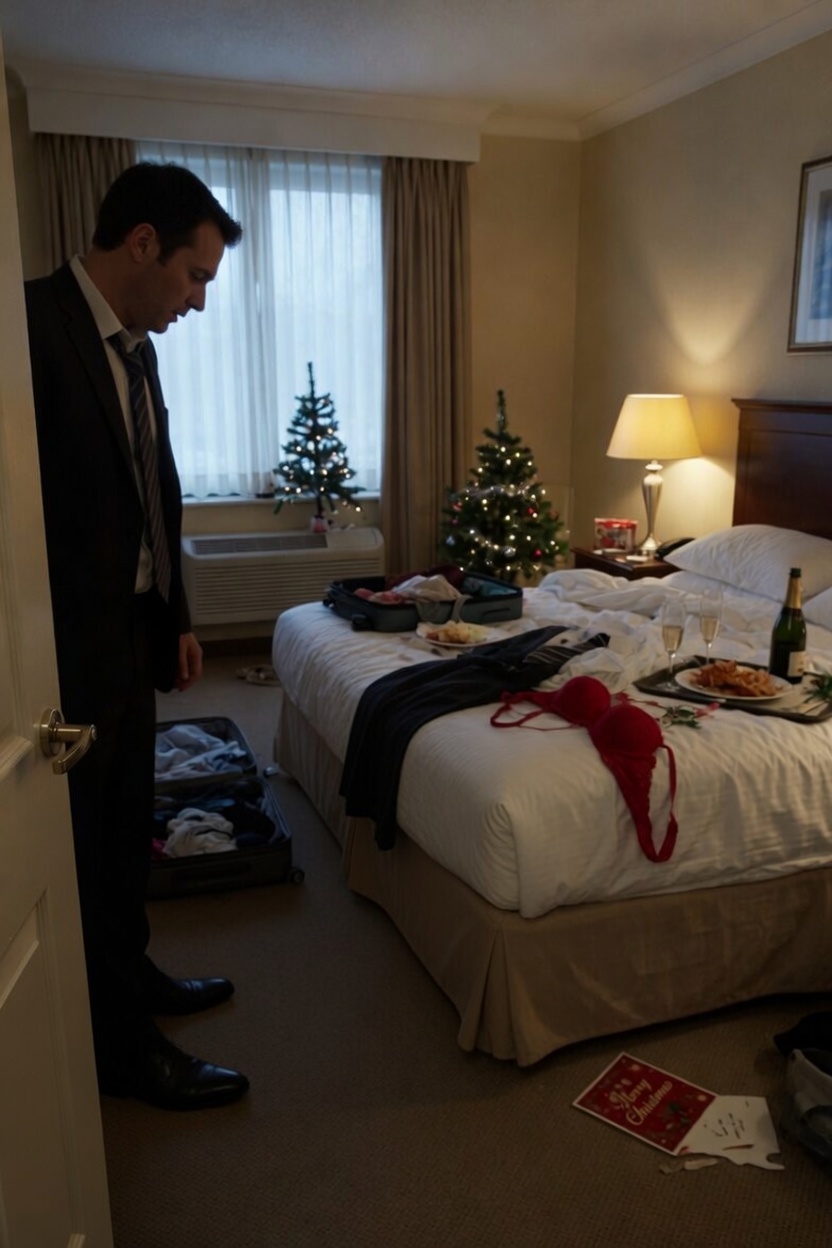
That afternoon he helped her contact the attorney from Burlington. The woman’s name was Evelyn Shore, and she had a voice like sharpened paper. No wasted syllables. No false warmth. She asked for dates, locations, whether Liam had witnessed volatility, whether Daniel had access to firearms, whether Marissa had independent copies of all financial materials. By the end of the call Marissa had been instructed to scan the documents, preserve originals, keep communication in writing where possible, and prepare for both custody and whistleblower questions.
Evelyn also said something that lodged in Marissa’s mind long after the call ended.
“Men like your husband mistake composure for consent,” she said. “The law doesn’t.”
It snowed again that evening. Adrien and Liam built a lopsided fort outside while Marissa watched from the porch steps wrapped in a blanket. Their laughter carried across the clearing in little bursts. Liam slipped, and Adrien caught him with easy reflex, setting him back upright without making the stumble into drama. The simplicity of the gesture hurt her unexpectedly. Not because it was grand. Because it wasn’t. Because safety in small moments had become exotic to her.
“Dadian, help me with the roof,” Liam called.
Both adults froze.
Liam, cheeks red with cold, pointed proudly at the fort. “Dadian.”
He had fused Daddy and Adrien into one accidental word.
Adrien looked at Marissa instantly, as if to apologize for a thing he had not done. There was something almost vulnerable in his face then, which made him seem younger and more real than his steady competence usually allowed. Marissa touched her own chest as if checking where the ache had landed. It was not jealousy. Not grief. Something gentler and more dangerous. The realization that her child recognized safety before language could fully name it.
“I didn’t teach him that,” Adrien said quietly.
“I know,” Marissa replied.
Liam was already back to packing snow, unconcerned with the emotional territory he had opened.
Adrien stepped closer but not too close. “If that makes things harder, I can correct him.”
Marissa looked out at the trees, the long shadows on the snow, her son bent in concentration over his fort. “No,” she said after a moment. “It doesn’t make things harder.”
It made them realer.
In Manhattan, Daniel’s world kept collapsing in increasingly public ways. He had moved into temporary corporate housing after the building in Queens became unusable as a site of denial. Reporters lingered near his office. His badge had been deactivated. Brooke’s legal team had framed her as an emotionally manipulated witness rather than a participant. The company had decided speed of sacrifice mattered more than personal loyalty. He discovered, perhaps for the first time, that institutions adore a man’s confidence until it becomes expensive.
He called Marissa constantly. Sometimes angry. Sometimes pleading. Sometimes trying on responsibility like a borrowed coat. Once he left a voicemail saying, “Think about Liam.” She listened to it in the cabin kitchen and nearly laughed from the absurdity. Men often invoke children only after they stop being able to use wives.
At Evelyn Shore’s instruction, Marissa preserved every message.
A week later, she turned over copies of the financial materials through counsel.
The decision did not arrive in a burst of vengeance. It came after three nights of not sleeping, after imagining Liam at sixteen learning his father had been protected by his mother’s silence, after remembering all the women at the clinic who whispered disclosures only when doors were closed and forms were out of sight. She had spent years thinking morality meant absorbing damage quietly. Now she understood that secrecy protects the wrong person by default.
When the transfer was done, she stood outside the cabin under a washed gray sky and waited for triumph.
It never came.
What came instead was relief so quiet it almost felt like grief. Not for Daniel. For the life she had exhausted herself trying to keep alive. For the woman who had mistaken endurance for wisdom. For the Christmases spent smoothing tension so Liam would not feel it. For every time she had apologized first because she was more afraid of disconnection than disrespect.
Adrien found her on the porch with her hands buried in her coat pockets.
“It’s done?” he asked.
She nodded.
“How do you feel?”
Marissa thought for a moment. “Like I set down something I didn’t realize I was carrying with my teeth.”
He smiled once, briefly, with sadness in it. “That sounds right.”
As the investigation widened, the press began using Daniel’s name in headlines with phrases like financial misconduct, off-book transfers, personal enrichment, compliance failure. But Marissa’s role remained private for a while. Evelyn had insisted on it. Safety first. Narrative later if necessary.
That privacy gave Marissa room to begin becoming someone more solid.
She found remote work through the clinic temporarily, then later through an affiliated administrative network. She enrolled Liam in a small preschool program near the town. She learned the road between the cabin and the grocery store by heart. She slept in fragments at first, then in longer stretches. Sometimes she still woke at 3 a.m. convinced she had forgotten something crucial, some document, some threat, some consequence waiting in ambush. But fewer and fewer mornings began with panic. More began with simple tasks. Toast. Boots by the door. Liam asking impossible questions about snowplows.
Adrien did not push himself into their days. He appeared in them steadily. He drove when Marissa’s hands shook too much on icy roads. He fixed the sticking bathroom latch. He left books on the kitchen table, not self-help manifestos but things with spine and thought in them. Essays. Poetry. Marcus Aurelius with certain passages underlined lightly in pencil. Once, when she returned from a legal meeting looking emptied out, he handed her a bowl of soup without asking whether she wanted to talk.
That, more than anything, taught her the shape of decent care. Not intrusion. Not management. Presence.
Spring did not come quickly to Vermont. It edged in through thawing mud, dripping roofs, and patches of dirty snow collapsing into grass. By then Daniel had been formally charged. Not with everything the internet fantasized, but with enough. Fraud. Falsification. Misappropriation. Brooke had struck a cooperation agreement. The company was settling matters it had publicly called shocking and privately suspected for longer than anyone would admit.
When Marissa finally saw a photograph of Daniel leaving federal court in a dark coat, jaw clenched, eyes exposed without their usual confidence, she felt something complicated and surprisingly mild.
Not revenge.
Recognition.
He looked like a man who had discovered consequences were real only after they reached his own door.
Evelyn finalized temporary custody arrangements in Marissa’s favor. Daniel’s visitation was structured, supervised pending further review, shaped by the financial case and the evidence of coercive control that had become visible once someone competent named it properly. Marissa expected to feel vindicated when the paperwork came through. Instead she sat at the table, pen in hand, and felt an enormous tiredness.
Adrien, reading across from her, glanced up. “Bad news?”
“No,” she said. “Good news that I’m too worn out to celebrate correctly.”
He closed his book. “That’s still good news.”
She looked at him for a long second. “You’re very patient.”
A faint smile touched his mouth. “I had to become that way. I wasn’t born like this.”
The answer invited questions, but not urgently. One of the things Marissa was learning was that healthy people can have histories without weaponizing them into intimacy.
Weeks later, on a damp afternoon washed with thin sunlight, Liam ran across the clearing chasing his own shadow while Marissa sat on the porch steps with a blanket over her knees. The trees were beginning to green. Water dripped from the eaves in a slow patient rhythm. Adrien came out carrying two mugs of hot chocolate because Liam had declared it was still hot chocolate weather until the last snow melted.
“You look lighter,” he said, handing her one.
She let the warmth sink into her palms. “I feel… less braced.”
He sat beside her with careful space between them. “That’s a big change.”
She watched Liam crouch beside a muddy patch, fascinated by some ordinary miracle. “I kept thinking healing would feel dramatic. Like a speech. Or a moment where everything made sense.”
“And?”
“And mostly it feels like not apologizing for existing in my own day.”
Adrien looked out at the yard. “That sounds like healing to me.”
They sat in silence for a while. Not empty silence. Lived-in silence. The kind that doesn’t demand performance. Marissa could hear birds now where winter had offered only wind. Somewhere farther down the road a truck passed and kept going. She thought of Queens, of the radiator, of the livestream, of the woman she had been that night staring into her phone while her son slept against her. She loved that woman fiercely now. Not because she had been strong yet. Because she had still been capable of breaking in the right direction.
“Adrien,” she said quietly.
He turned toward her.
“I don’t know what this becomes.” She looked down at the mug, then back up. “I’m not ready to name anything I don’t understand yet.”
His expression softened in a way that carried no impatience. “You don’t have to.”
She nodded. “But I know this. When Liam laughs with you, I don’t tense. When you show up, I don’t start rehearsing. When you’re quiet, it doesn’t feel like punishment.”
He took that in without rushing to fill it. “Marissa,” he said after a moment, “I care about you deeply. But your healing comes first. Whatever shape the rest takes should come after you trust your own life again.”
Her throat tightened. Not because the words were dramatic. Because they weren’t. Because for the first time, affection arrived without demand attached to it.
By summer, the cabin no longer felt like hiding. It felt transitional, chosen, almost tender in memory before they had even left it. Marissa rented a modest house in a nearby town with blue shutters, a small backyard, and enough room for Liam to have a proper bedroom and a table by the window where she could work. She kept the life simple on purpose. Not as punishment. As respect for stability.
The first night there, after Liam fell asleep among boxes and excitement, she stood barefoot in the kitchen and listened.
No shouting from another room. No waiting for a key in the lock. No low-grade dread tinting the ordinary sounds of a home. Just the refrigerator hum, a distant cricket, and the open window lifting the curtain in soft intervals. She did not know then whether she was lonely or peaceful. Sometimes freedom resembles both until your nervous system learns the difference.
Daniel eventually requested to see Liam. The meeting happened in a supervised setting in Burlington. Marissa had dreaded it for days. Liam wore his red sneakers and asked whether Daddy still lived in the city. Daniel arrived in a suit too formal for the room, as if image could outvote context. He looked older. Not transformed. Just stripped.
He tried charm first, then wounded paternal softness. Liam sat politely, answered small questions, and looked more often at the toy shelf than at his father’s face. Children are unsentimental in ways adults fear. They go where safety has been consistent. Daniel, who had once imagined fatherhood as a role that came with natural authority, now had to watch his own son respond to him with the distant caution reserved for semi-familiar adults.
After the visit, in the parking lot, Daniel asked if he could speak to Marissa alone.
Evelyn’s associate stood twenty feet away. Marissa agreed.
Daniel put his hands in his coat pockets and looked at her as if trying to locate some version of her that would make the conversation easier. “You look different.”
“I am different.”
A muscle moved in his jaw. “You didn’t have to destroy everything.”
The sentence was so expected it almost bored her. “I didn’t.”
He laughed once under his breath. “That’s what you tell yourself?”
Marissa studied him. The old reflex to defend herself did not come. Neither did the urge to wound him back. She felt only distance and a strange clarity.
“I told the truth,” she said. “And I left. What happened after that belonged to what you built.”
For a second his face showed something unguarded. Not remorse exactly. More like the terror of a man who can no longer revise the record inside the only witness who mattered. Then the mask returned.
“He used you,” Daniel said, meaning Adrien.
Marissa almost smiled. “You still think care is a form of leverage.”
He said nothing to that.
She turned toward her car. Behind her, Daniel called her name once. She stopped but did not look back.
“I did love you,” he said.
The words floated in the warm air between them. Years earlier they might have shattered her. Now they only made her sad. Not because they were entirely false. Because they were too small for the damage done in their name.
“I believe you loved what I made easy for you,” she said, then got in the car.
By autumn, her life had developed shape. Work. School drop-offs. Grocery lists. Legal paperwork still, sometimes, because disentangling from a man like Daniel is never one moment but a bureaucracy of endings. Liam learned to ride a small bike in the driveway. The maples in town turned gold. Adrien came for dinner often enough that his preferred tea started appearing in her pantry without ceremony.
One evening, after Liam had fallen asleep on the couch halfway through a movie, Marissa and Adrien stood in the kitchen washing dishes together. The window was open just enough to let in cool air and the smell of leaves. He handed her a plate. She dried it. Their movements found each other without friction.
“This is my favorite part,” she said before she could stop herself.
Adrien glanced over. “Doing dishes?”
She laughed softly. “No. Maybe. This part where nothing bad is about to happen and I know it.”
The towel paused in her hand. She had not planned to say something so naked.
Adrien set the glass he was holding into the drying rack. “I’m glad you know that here.”
Here.
Not with me, though that was inside it. Not because of me, though some of that was true. Here. In this kitchen. In this hour. In this version of your life.
It was such a careful gift of language that she wanted suddenly, fiercely, to cry.
Instead she stepped closer and kissed him.
Not dramatically. Not like rescue. Like recognition.
He answered with equal care, one hand warm against the side of her neck, the other staying respectful at her waist until she moved nearer of her own accord. When they parted, both of them were breathing differently.
“We can go slowly,” he said.
Marissa rested her forehead briefly against his shoulder and let herself smile. “I think slowly might be the first luxury I’ve ever had.”
Years later, if anyone had asked Marissa what saved her, she would not have named revenge. She would not have named the scandal, or Daniel’s arrest, or the articles that eventually moved on to newer ruins. Public collapse had its place, but it was not salvation. It was only consequence rendered visible.
What saved her was smaller and more durable.
A child sleeping peacefully in a room without tension in the walls. Papers copied before fear could talk her out of it. A lawyer who named coercion without blinking. A man who knocked on a cabin door and did not ask for anything in return for staying. The first grocery list written for a life she controlled. The first month rent was paid from money she could see herself. The first argument with Adrien that ended not in silence as punishment, but in conversation as repair. The first morning she woke and realized she had not dreamed of Daniel in weeks.
Freedom, she learned, was rarely cinematic while you were inside it. It looked like systems. Boundaries. Small ordinary choices repeated until they became environment.
Sometimes, in early winter, when the sky over town turned the same pale gray it had on that Christmas in Queens, she still thought of the woman on the couch with a sleeping child in her arms and a mirror full of betrayal in her hand. She no longer pitied her. She honored her. That woman had not yet known how much of herself survived. She had only known that the old life had become unlivable.
Often that is enough for a beginning.
On a December afternoon, almost two years after she left, snow began falling just before dusk. Liam, taller now, called from the yard that the first real storm was coming. Adrien was outside with him, pretending not to lose a snowball fight he was very clearly losing. Marissa stood at the kitchen window with a mug of tea and watched them through the soft thickening white.
The house glowed behind her. Soup simmered on the stove. There were mittens drying over a chair by the heater. School artwork on the fridge. A stack of work files on the table beside wrapping paper and tape. No wealth on display. No glittering suite. No dramatic soundtrack. Just a real home made of trust, labor, and time.
Adrien looked up from the yard and saw her watching. Even from the window she could read the question in his face. You okay?
Marissa opened the door and stepped onto the porch, cold air lifting her hair.
“I’m more than okay,” she said.
Liam ran up breathless and rosy. “Mom, come help us. He says our snow fort needs engineering.”
Adrien raised both hands in surrender. “I said structural reinforcement.”
She laughed and came down the steps toward them, boots crunching over fresh snow.
The evening gathered around the house in blue folds. The trees stood dark and still beyond the yard. Somewhere far off a dog barked, then quieted. Liam tugged her toward the half-built fort, talking too fast about tunnels and walls and where the lantern should go. Adrien fell into step beside her, close enough that their sleeves brushed.
This, Marissa thought, was what dignity felt like after you had earned it back from fear. Not hardness. Not winning. Not making someone else pay forever. It felt like warmth you no longer had to beg for. It felt like being believed in your own life. It felt like walking toward the people who made home feel safer, not smaller.
Behind her, the past remained what it was. A closed door. A lesson with teeth. A life she survived.
Ahead of her, under the falling snow, was something gentler and far stronger.
Not escape.
A beginning she had built herself.