My sister-in-law brought my estranged mother to my bachelorette party.
There is this thing that happens when you finally think your life is calming down, and then somebody drags your old wounds back into the room like they are bringing dessert to a party. That is basically what happened to me. I really believed I had built this quiet, grown-up life far away from my mother’s drama.
And somehow I still ended up sobbing in a parking lot in front of a party hall because my future sister-in-law decided she knew better than me about my own family. My name is Bel, by the way. If you were on my couch right now with a giant mug of coffee or wine or whatever your comfort drink is, this is exactly how I would tell it, because there is no cute or polished way to explain that my relationship with my mother exploded twice with a decade in between.
And both times, there was a woman insisting she was just trying to help. The first one gave birth to me. The second one was about to become my sister-in-law. Neither of them listened when I said no.
When I first met my future husband, I barely noticed him. We went to the same university, lived in the same tiny college town, and probably crossed paths a hundred times. But at that point, he was just the guy from the back row in statistics to me. We graduated in the same semester, walked across the same stage, and I shook so many hands that day that when his sister came up to a group of us afterward and made some loud joke about his graduation cap being crooked, I did not even connect that this random woman would one day be the center of my family drama. I remember her voice, her laugh, and that is it.
She was just his sister who talks a lot.
Fast forward a few years, most of our college friends had scattered back to their hometowns or moved to big coastal cities. But I stayed. I ended up working the front desk in a medical office near campus, the kind of place where half the patients still wore university hoodies, and the other half were retired professors who complained about parking.
He stayed too, working for a local company that did something with data and numbers that I still pretend to understand. We were both kind of stuck in that weird post-college limbo, the town shrinking around us when the students left in the summer. And that is when we ran into each other at this random house party. It was one of those nights where I almost did not go. I had shoes off, sweatpants on, face washed, and then a friend texted saying she really did not want to be the only single person there.
I rolled my eyes, pulled my jeans back on, and went. Ten minutes in, I saw him leaning against a kitchen counter, laughing with a group of people who all looked vaguely familiar. When somebody said his name out loud, it clicked. I remembered the graduation day, the crooked cap, the loud sister. We started talking, and you know how sometimes conversation feels like heavy lifting and sometimes it just flows like you both have known each other forever. It was the second kind. We compared notes on all the people who left town, joked about the terrible cafeteria food we secretly missed, complained about rent, and somewhere between the second and third drink, I realized my cheeks hurt from smiling.
He walked me to my car at the end of the night, and there was that awkward pause where you both decide if this was just a nostalgic chat or something else. He asked for my number.
I pretended to think about it for a bit longer than necessary, then typed it into his phone. Three months later, we were signing a lease together. I know, fast. Believe me, I have heard the speeches. I gave them to myself, but it made sense at the time. We were both paying ridiculous rent for small apartments ten minutes apart. We were together almost every night anyway, hauling overnight bags back and forth, cooking in one kitchen, and then sprinting to the other place because I forgot my work shoes.
One night, sitting on my couch with takeout containers spread out on the coffee table, he just said, “What if we stop pretending this is two separate lives?” We talked about it like adults. We did the annoying spreadsheet with our incomes, bills, and how much we would save if we split one rent instead of two. I had grown up with constant financial guilt and commentary from my mother. So, being able to treat money like a problem two people could actually solve together felt weirdly healing.
Yes, I know that sounds dramatic for a spreadsheet. Welcome to my brain.
Around the same time, we started trading horror stories about our families. When he talked about his parents and his sister, his jaw tightened in this way I recognized. It is the look of someone who loves their family and also feels like they are constantly walking through a minefield. He told me he had always been the calm one and that his sister had a big personality, which is a polite way of saying she was used to getting her way. He admitted that he usually just gave in to keep the peace, especially with her. That little detail will matter later. At the time, it sounded like a normal sibling dynamic to me. I had my own mess with my mother, so who was I to judge?
We moved in together in a small apartment on the quieter side of town. The kind of place where you can hear your neighbors shower, but the rent does not make you cry every month. We built routines. Mornings with rushed coffee, evenings with cheap dinners and streaming shows, weekends splitting chores and arguing about how to stack the dishwasher. It felt like real life in the best possible way.
After about six months, he asked if I wanted to go to dinner with his family because they wanted to properly meet me. I tried not to spiral. Meeting somebody’s family when you come from your own brand of chaos is not exactly fun. My mother and I had not spoken in years by that point. The last real conversation we had was more like a controlled explosion in the middle of a restaurant. And I walked away from it with shaking hands and a permanent understanding that I did not have to keep picking up the phone just because she called.
So the idea of sitting at a dinner table with another family, pretending I did not flinch every time someone raised their voice slightly, was a lot. But I went.
The dinner itself was surprisingly fine. His parents were polite and a little stiff at first, but they warmed up quickly. His mother asked the usual questions about my job, my hobbies, my family. I gave the light version of my history, which is basically, I am not close to my mother. She lived a few states away. We do not really talk. She nodded in that way people do when they want to ask why but also do not want to seem nosy.
His sister was there too, of course. She swept into the restaurant like she owned it, hugged her brother loudly, and then hugged me like we had been best friends since childhood. She talked a lot about her job, about her co-workers, about the city she had been living in. She was funny. I will give her that.
At that first dinner, I actually liked her. I left thinking, Wow, maybe I get a normal in-law situation. Maybe I get a sister-in-law who is just a little loud and dramatic, but ultimately kind. If this were a short story, that would be the punch line right there.
Over the next few months, everything kept moving forward. We got better at living together without stepping on each other’s routines. We started talking about long-term plans, not in the fairy-tale sense, but in the do-we-see-ourselves-still-doing-this-in-five-years sense. We both had complicated families, but we had each other. This small apartment, these shared jokes, these stupid habits that intertwined in a way that felt stable.
A few months after I met his family, his sister called one night while we were making dinner. I could hear her voice through the speaker even before he turned it on, high and excited. She had gotten a job offer in our city, not just in our city, but in an office maybe twenty minutes from our place. She went on and on about how this was the sign she had been waiting for. How she always hated being so far away from her brother. How now they could finally be close again like before.
He glanced at me while she talked, and I could see the conflict on his face. I stirred the pasta and pretended not to listen. But of course, I was listening.
When he hung up, he said, “So, she wants to move here.”
“Yeah, I caught that,” I said, trying to keep my voice neutral.
“She is really serious about living close by,” he added, rubbing the back of his neck. “She was already looking at apartments near our neighborhood.”
There is a very specific instinct you develop when you grow up with a mother like mine. It is this tight feeling under your ribs when you sense someone circling your boundaries like they are shopping for a new couch. I got that feeling immediately.
“Is there any reason she needs to be in this exact area?” I asked carefully. “The bus lines are better closer to downtown. It might be easier for her commute.”
That was my polite way of saying I do not want your sister popping in every other night while I am in pajamas trying to decompress from work.
He hesitated. “She kept saying she wants to be near family, but you are right about the commute, and rent is higher here than some of the other areas she was talking about.”
“So maybe suggest a place closer to the center,” I said. “She will have more to do, and we can still see her, just not, you know, every night.”
I saw the flicker of relief in his eyes. He did not want to argue with her. He also did not want to say out loud that he liked our space the way it was. So I became the reasonable excuse. This is a pattern, by the way. I did not see it clearly then, but looking back, it is obvious.
He talked to her. He told me she was a little disappointed but agreed it made sense. She ended up renting a small apartment closer to downtown in a building with nicer amenities than ours. At first, it seemed like everything was fine. She sent us pictures of her place, her building’s gym, the cute coffee shop on the corner. She posted on a social media app every other day about her fresh start. She sounded busy and happy.
Then she got a spare key to our apartment.
We did not give it to her. That is important. His parents did. They came by once while we were at work to drop something off, and we stupidly left them our spare key for that afternoon. Later, we found out they made a copy without asking and handed it to her like it was a normal family-emergency thing.
When his sister showed up waving it like it was a cute joke, my stomach dropped.
“I have a key now,” she said, laughing as she let herself in one evening while we were in the middle of arguing quietly about our budget. “So, I can just pop by. Mom and dad gave it to me. They said I should have one in case of emergencies. Now we are all set. I picked up takeout. You two sounded stressed when I called earlier, so I figured you needed a night off from cooking.”
The takeout smelled great. The timing could not have been worse. She walked straight past us, chattering about her day while the spreadsheet with our overdue bills glowed on the laptop screen. I wanted to slam the computer shut. I wanted to scream. Instead, I smiled awkwardly and started unloading cartons from the bag.
That was the beginning.
After that, she started coming over constantly. It was rarely planned. She would text him ten minutes before showing up or, worse, just tap the key in the lock and announce herself. Always after work, always just when I had taken my bra off and was melting into the couch, she would show up with snacks, with wine, with stories about her co-workers, about her job, about how lonely she felt in a new city.
At first, I felt guilty for being annoyed. She was new here. She did not know many people yet. I tried to be welcoming. But that story did not hold for long because she made friends fast. I know that because I saw her posts, pictures of her at bars, at trivia nights, at brunch with people I had never seen before. Group selfies with captions like, Already found my work besties. She had a social life. She was not relying on us out of desperation. She was choosing to cancel plans with those people sometimes, mid-evening, to come sit on our couch and wedge herself between us.
She also had more money than we did. Her job paid well, and she had no kids, no partner, no one sharing her bills. She started showing up with expensive gifts we had never asked for. New throw pillows, kitchen gadgets, decorative pieces that did not match our style. At first, I thought she was being generous. Then I realized the gifts always appeared after she had overheard us talking about something we could not afford.
One night, she walked in carrying a big box.
“I brought you a new coffee machine,” she announced. “The one you have is so old and sad.”
I opened my mouth, then closed it. We had literally just been talking that morning about how we needed to wait until our tax refund to buy one. The timing was too perfect to be a coincidence. She had heard us. She had decided to swoop in and fix the problem in a way that made us both grateful and slightly humiliated at the same time.
She also created a group chat with her parents and us so we can coordinate family dinners and stuff. At first, it was harmless. Pictures of meals, random memes, scheduling questions. But then she started dropping comments like, Some people forget how lucky they are to have family nearby. Or, If anyone needs help, they should just say it. No shame in struggling.
Every time she said something like that, it was right after she had overheard a conversation in our apartment about money or about my job being short-staffed or about me being too tired. She would come over, settle on the couch, and somehow always steer the conversation toward our finances.
“You both work so hard,” she would say in this syrupy voice. “You should not be stressing like this. Maybe you are just not planning well. Do you track every dollar? I do.”
I grew up with a mother who commented on every penny I spent. I recognized the tone immediately. Under the fake concern was judgment.
I wanted to set boundaries. I really did. But every time I even thought about it, my brain replayed the last time I had tried to set a boundary with my mother. That had ended with her calling me ungrateful in a restaurant, telling me I was throwing my life away because I refused to apply to medical school, and then loudly comparing me to some cousin who had done it right. I had walked out shaking, blocked her number, and built my life without her.
The idea of going through even a smaller version of that with his sister while still trying to have a relationship with his family made my chest tighten.
We tried little things at first, saying we were busy, pretending to have plans, locking the door from the inside so she could not just walk in and would have to knock. That one did not work. She tried the key, found the door locked, and then called him from the hallway, half laughing, half offended.
“Why is your door locked? It is me.”
He made something up about the lock sticking. She did not buy it.
After about a month of this, we were both exhausted. One night, after she finally left and we heard her footsteps going down the stairs, he slumped onto the couch.
“This is too much,” he said quietly.
“Yeah,” I agreed, staring at the empty takeout containers she had insisted on ordering even though we had already cooked.
“It is a lot.” He pressed his fingers into his temples. “I know how she is. If we say something, she will act like we are attacking her. She will cry. She will call my parents. They will call me. It is a whole thing.”
“Or,” I said, feeling my heart pounding but forcing the words out anyway, “we say something anyway because this is our home, and right now it feels like a waiting room for your family.”
I saw the guilt flash across his face. He nodded slowly. “Okay,” he said. “You are right. I will talk to her. Just go easy on her if she gets dramatic, all right? She has always been sensitive.”
That little plea, go easy on her, she is sensitive, got lodged in my brain like a splinter. It was hard not to hear, Her feelings matter more than yours. But I knew he did not mean it that way. He was trying to navigate a pattern he had been stuck in his whole life. He was scared of rocking the boat.
We sat his sister down a few days later. She had come over again unannounced with another bag of food. We did not even open it. He cleared his throat, and I could feel my palms sweating.
“Hey,” he said. “There is something we need to talk about.”
Her eyes narrowed slightly. She smiled, but it was tighter than usual. “Okay.”
He explained it gently. That we loved seeing her, but we needed more notice. That we were tired after work and needed time alone like any couple. That we wanted to set a regular dinner night once a week and keep the other nights for ourselves.
As soon as he said boundaries, her expression shifted like somebody had flipped a switch.
“So, this is about her,” she snapped, jerking her chin in my direction. “I knew it.”
I took a breath. “It is about both of us,” I said, trying to keep my voice even. “We are just asking for some space. That is all.”
She launched into a speech about how she moved to this city to be closer to her brother, about how she had always made family a priority, about how I never made an effort with her. She brought up that conversation about where she should live, insisting I had pushed her away from our neighborhood on purpose. She did not care that we had explained the commute, the rent, all the practical reasons. In her version, I had orchestrated her exile and was now trying to isolate her brother from his family.
I tried to explain myself, that I am naturally reserved, that I grew up with a mother who did not understand the concept of privacy, so I am very protective of mine, that I genuinely wanted a relationship with her, but not at the cost of losing my own home as a safe space. She did not hear any of it. She talked over me, tears in her eyes, but her tone sharp. She said I made her feel unwelcome, like she was intruding all the time. She said she had to walk on eggshells around me.
The irony of that almost made me laugh, but I did not. She framed our request for one planned dinner per week as if we were cutting her out of our lives entirely.
Eventually, I hit my limit. I could feel the pressure behind my eyes, the burn in my throat, the way my pulse was hammering. My instinct was to fight back, to throw every example at her, to show her how she had been crossing lines since the day she got that key. But I saw the way my boyfriend was looking between us, like a kid caught between two adults fighting, and something in me just shut down.
“I am sorry you feel that way,” I said. The most neutral sentence in the world. “This is what we need. It is not up for debate.”
She stared at me like she had never seen me before. Then she rounded on her brother.
“And you are okay with her talking to me like this?” she demanded.
He swallowed. “I am asking for the same thing,” he said softly. “I need space, too.”
She grabbed her bag, lips pressed tight, eyes shiny. “Fine,” she said. “If that is how it is, I will not bother you two anymore.”
She left in a storm of offended dignity. The door shut behind her. I exhaled so hard my shoulders shook.
For a couple of weeks, it worked. She did not come over unannounced. She texted a little less. The group chat went quiet. I started to relax just a tiny bit. Then the passive-aggressive routine kicked in. She began posting vague messages on a social media app. Things like, Some people forget who was there for them when they had nothing. And, Funny how family only matters when they need something. She never mentioned our names, of course, but we were the only family she had in this city. It was not hard to connect the dots.
At family dinners we did attend, she would make comments like, “Well, some people think boundaries are more important than being there for the ones who raised them,” while staring at her plate with fake innocence. In the group chat, she started messaging their parents things like, “I am really worried about him. He seems so distant lately. I hope he is okay.”
The implication being that I had somehow poisoned him against them. It was irritating. It was also subtle enough that calling it out would have made us look overly sensitive. So, we let it slide. For months, we focused on our life, on our routines, on trying to pretend that all of this was just background noise.
Then, he proposed.
It happened on a humid summer evening in our living room. There were no rose petals, no elaborate gestures, just us sitting on the couch after a long day, him fidgeting with something in his pocket. He suddenly got this terrified look and said, “I keep waiting for the perfect moment, and there is never going to be one, so I am just going to ask, do you want to marry me?”
There was a ring. Simple, beautiful, nothing flashy. I cried. I said yes. We ordered pizza and called a few close friends. For a little while, everything felt soft around the edges, like the world had tilted slightly toward the light.
His family reacted exactly how you would expect. His parents were thrilled on the phone, even if his mother immediately started asking a hundred logistical questions. His sister’s reaction was interesting. She congratulated us, posted a picture of my hand with the ring, and suddenly turned into the most supportive, cheerful, helpful person you could imagine. She sent me links to dress styles. She asked about color palettes. She offered to help with decorations, music, planning. She acted like we had never had that argument about boundaries at all.
Part of me wanted to relax into it. Maybe the confrontation had shaken something loose. Maybe she realized she had gone too far and was trying to do better, but could not bring herself to say the actual words, I am sorry. I come from a long line of women who know how to cook and how to hold grudges, but not how to apologize. So, I recognized the pattern.
Another part of me stayed cautious. I accepted help where it made sense and kept certain things close to my chest. As we got deeper into planning, she kept circling back to one topic. My family, or more specifically, my mother.
“So, your mother is really not going to come?” she asked one afternoon while we were looking at sample invitations at our kitchen table.
“No,” I said for what felt like the hundredth time. “We are not in contact. I do not want her there.”
“But she is your mother,” she insisted, drawing out the word like it was holy. “Do you not think you will regret it? This is a once-in-a-lifetime moment. Families should be together for this kind of thing.”
I had heard versions of that speech from other people. But hearing it from her made something inside me bristle.
“You do not know our history,” I said. “And I am telling you this is not happening. It is not about pride. It is about safety.”
She frowned. “Did something, like, serious happen? You never really say.”
“Something serious happened over and over again,” I replied. “Control, insults, screaming, all dressed up as concern. I am not doing that anymore.”
She gave me that look people give when they think they could fix your trauma if you just tried harder.
“Maybe she has changed,” she said softly. “Maybe she is waiting for a chance to apologize.”
I laughed, not because it was funny, but because I had to let the sound out somehow. “She is not,” I said. “And if she is, she can do it somewhere that is not my wedding.”
She let it go. Or at least she pretended to.
A few weeks before the wedding, she called with a bright idea.
“I want to throw you a bachelorette party,” she announced. “Nothing wild. Do not worry. Just a night with your favorite people, some food, some music. You deserve that.”
I am not a big party person. My idea of celebrating is usually more like a small dinner with a few close friends and then my couch. But I could tell this was important to her, or at least she wanted it to look important. She sounded genuinely excited, and I was tired of being the one who always said no.
“Okay,” I said slowly, “if we keep it low-key.”
“Of course,” she said. “Just give me a list of people you want there, and I will handle the rest.”
I sent her the names of my closest friends, including Maya, who I had known since my first week at the medical office and who had become my person for late-night rants and emergency wine runs, a couple of co-workers, and left it at that. She kept me updated on the basics, the venue, a small event room in a local place, the food, the decorations. She made it all sound sweet and simple.
There was one weird moment. About a week before the party, she texted me.
Hey, do you think there is anyone else who should be there? she asked. Like someone important from your past that maybe you did not think to include.
I stared at my phone for a long second.
No, I typed back. The list I sent is everyone I want.
She replied with a smiley and, Got it. Just checking.
Two days before the party, she called again.
“Okay, so the venue said they need the final headcount early,” she said. “Can you come an hour before everyone else so you can see everything before it starts? I really want you to love it.”
It sounded harmless. It even sounded thoughtful. I said yes.
On the day of the party, I finished my shift at the medical office, went home, and stood in front of my closet way too long. I ended up in a dress that made me feel a little more put together than usual, but not like I was trying too hard. On the drive over, my stomach fluttered, and I told myself it was just nerves about being the center of attention, not about anything else.
I walked into the event space, following the employee who led me down a hallway and pushed open a door with a flourish.
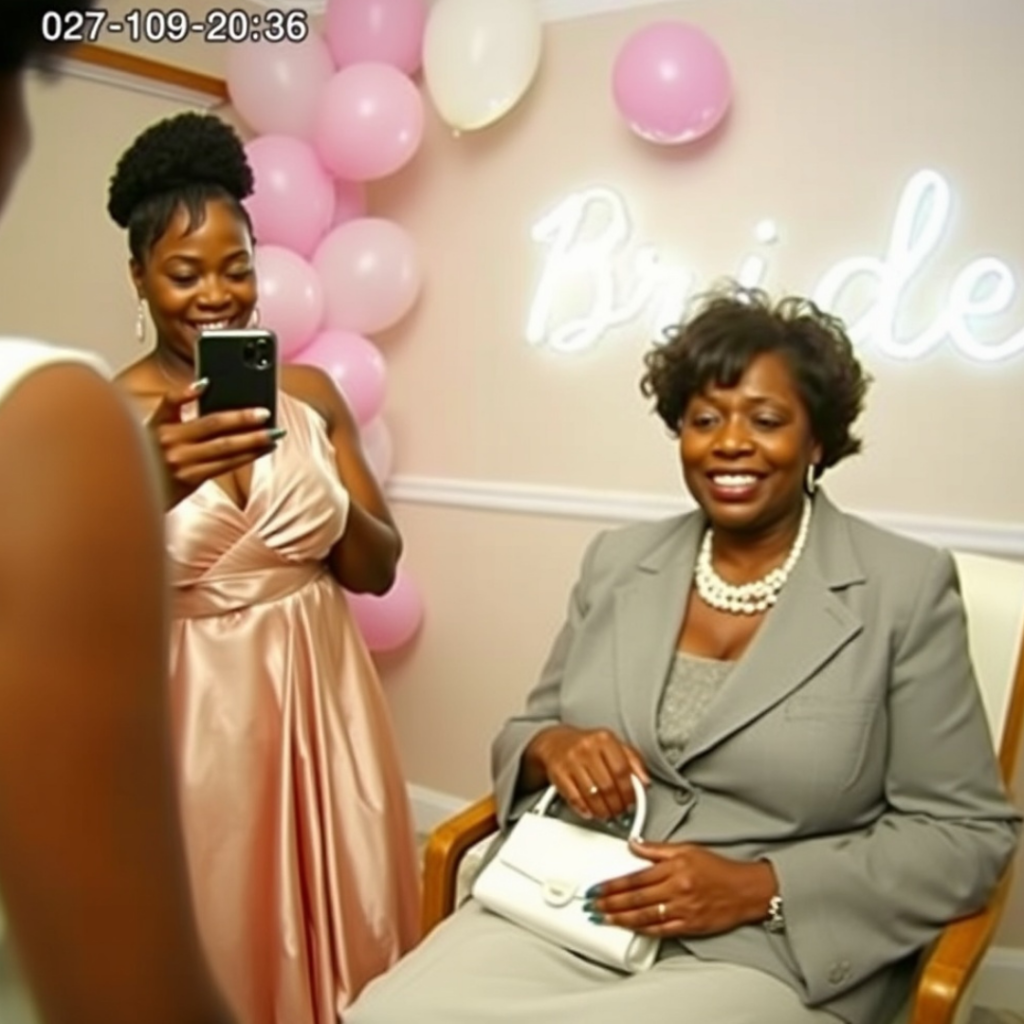
And there she was, my mother, sitting in a chair in the middle of the room, hands folded neatly over her bag, looking exactly the same as the last time I had seen her, and somehow also worse, like all the sharpness in her face had been polished into something tighter, more brittle.
She stood up when she saw me and forced a smile.
“There she is,” she said. “My daughter, the bride.”
It felt like the air left my body. I literally stopped walking.
Later, I found out she had flown in the night before.
“What are you doing here?” I heard myself ask. My voice sounded distant, like it belonged to someone else.
Before she could answer, my sister-in-law popped out from behind a column with her phone raised, recording.
“Surprise!” she shouted, grinning. “This is your real gift. I brought your mother. I know how hard it must have been for you to ask, so I did it for you.”
For a second, my brain just stalled. I looked from one of them to the other. My mother, eyes already shiny with the performative tears I knew so well, and my future sister-in-law, smiling like she had just reunited long-lost best friends on a talk show.
Then my body caught up to what was happening. My heart started pounding in my ears. My hands went numb.
“I did not ask for this,” I said, turning to my sister-in-law. “Why would you do this?”
She blinked like she truly did not understand why I was not hugging my mother and sobbing with gratitude already.
“Because you two are clearly still hurting,” she said. “And you were too stubborn to reach out. Your mother loves you. She deserves to be here for your big day. You will thank me later. Trust me.”
My mother stepped closer.
“I have wanted to talk to you for so long,” she said. “When this lovely girl reached out to me and told me how much you missed me, I knew I had to come.”
The words hit me like a physical blow.
“She told you what?” I asked slowly.
“That you missed me,” my mother repeated. “That you were too proud to pick up the phone, but deep down you wanted your family back. She said you had been crying about it. That you were heartbroken. That you begged her to help. She said you were embarrassed to admit it, so she was doing this for you.”
My sister-in-law nodded quickly like she was backing up a perfectly normal story.
“She was so happy when I messaged her,” she said. “She told me how much she has been praying for you. I know you did not have the courage to reach out yourself, so I just made it happen.”
Something in me snapped.
You know that calm, icy rage people talk about? That was not it. This was hot and messy and loud. It came from every year of swallowing my words. Every time I had walked away from my mother’s house, feeling like I had been scraped raw.
“You lied to her,” I said, pointing at my sister-in-law. My voice shook, but it was strong. “You told her I begged you to bring her here. You told her I missed her. You told her I wanted this.”
She flinched, then recovered. “I just said what I knew you really felt,” she said. “Sometimes people need a push.”
“You do not know what I feel,” I shouted. “You do not know anything about what she did to me. You do not get to decide what I need.”
My mother jumped in. “Of course. Is this how you talk to someone who is just trying to help?” she demanded. “This girl cares about you. She is trying to fix your mess. You should be thanking her.”
I laughed again. That ugly, humorless laugh that feels more like a reflex than a choice.
“You do not get to talk about my mess,” I said. “You made most of it.”
That set her off. She started in with the greatest hits. How ungrateful I was. How she had sacrificed so much. How I had broken her heart by not following the path she wanted. How I was throwing away the chance at being a real professional because I refused to go back to school for the career she had chosen for me. She said she came here because she heard I was getting married and realized this might be her last chance to save me from myself.
All of this was happening in an empty event room that was supposed to hold laughter and cheesy decorations and my friends. Instead, it held my worst nightmare, curated and delivered like a gift by the woman who had decided she knew what was best for me. After a handful of years of knowing me, my sister-in-law kept trying to insert herself into the argument, raising her voice over ours, insisting, “We are all family here. We can talk this out. This is the perfect time to heal.”
She had this smug, desperate look, like she needed us to follow her script more than she needed to actually hear anything we were saying.
I wish I could tell you I handled it with grace, that I calmly explained my boundaries and walked away. I did not.
I yelled. I told my sister-in-law that she had violated my trust in a way that was not fixable with a sorry and a pile of explanations about how she was just trying to help. I told my mother that the reason I had cut her off was sitting right there in the way she responded to being told no by recruiting strangers and lying about my feelings. I told them both that they were never, under any circumstances, invited to make decisions about my life again.
My mother called me dramatic. My sister-in-law called me cold. They both tried to guilt-trip me into staying, into talking it out, into accepting this warped version of a reunion so they could feel like heroes.
I walked out. I could hear my mother calling after me, still trying to justify herself, but I did not turn around. She left the venue shortly after, and for the next few days, my phone flooded with her messages, angry, pleading, accusatory, all of which I blocked without reading.
I did not wait for my friends. I texted my closest one and said, “Do not come. I [clears throat] am going home.”
My hands shook so hard that I dropped my keys twice in the parking lot. I got into my car, shut the door, and then just sat there with my forehead on the steering wheel while my whole body shook. I do not know how long I stayed there. Long enough for my phone to buzz nonstop. Calls, texts, messages in the group chat. My sister-in-law demanding to know where I went. My mother sending long paragraphs about how I had embarrassed her.
Eventually, I started the car and drove home on autopilot. My fiancé was already there when I walked in. One look at my face and he went pale.
“What happened?” he asked.
I told him everything, every detail, every word. I watched his face move through shock, anger, guilt, and then this strange blankness when I repeated the part where his sister told my mother that I had begged for help reconciling.
“She said that?” he asked quietly.
“She said you told her that I begged her to bring my mother,” I said. “That I missed her, that I was crying about it. None of that is true.”
He sat down hard on the edge of the couch. “I thought she was just planning a party,” he said. “She mentioned wanting to do something special, but she never said she was involving your mother. I swear I had no idea.”
“I believe you,” I said. And I did. He is many things, but he is not a liar. “But she had the nerve to stand there and tell me I would thank her later.”
He stayed quiet for a long time. Then he grabbed his phone.
“I do not think that is a good idea right now,” I said, wiping my face.
“I am not going to scream,” he said. “I am going to be very clear.”
He called his sister. I only heard his side of the conversation, but it was enough.
“Why did you contact her mother?” he asked, skipping any greeting.
Pause.
“That is not the point,” he said. “Did she ask you to do that?”
Another pause.
“No,” he said sharply. “You do not get to say you know what she really wants. She told you she did not want her mother there. You went behind her back, lied about her, and ambushed her. That is not love. That is control.”
There were a lot of pauses, a lot of interruptions on her end. I could hear her voice through the phone, even from across the room, rising in pitch, insisting she had only been trying to help, that I was overreacting, that I had issues I refused to deal with.
At one point, he rubbed his forehead and said, “Stop saying you meant well. You hurt her. That is what matters.”
She must have said something about money then because his next sentence was, “No, we are not paying you back for the party. You made a choice. We did not agree to it. That is on you.”
He went still, then looked at me with an expression I will never forget.
“She just said if we do not pay her back, she is going to tell our parents and the rest of the family that you had a meltdown and drove away,” he said slowly, like she is warning me, not threatening me.
I laughed, a bitter, exhausted sound. “She is going to tell them whatever makes her look good,” I said. “She already started with my mother. This is just the sequel.”
He ended the call eventually, not because the conversation had resolved, but because it went in circles. She would not admit she had done anything wrong. She kept repeating that she had only done what I was too scared to do. She kept painting herself as the caring sibling trying to fix a broken family.
After he hung up, we sat in silence for a while.
“I am so sorry,” he said finally. “I should have seen this coming. I should never have let her get this close to our planning.”
“This is not on you,” I said. Though part of me did feel like he was the one person who could have stopped it. “You are not responsible for her choices, but we are responsible for what we do next.”
The next step was obvious, even if it hurt. We told his sister that she was no longer involved in any wedding planning. We told her that if she tried anything like that again, she would not be at the wedding at all. We told her we needed space, real space this time, not the pretend version where she respected our boundaries publicly and undermined them privately.
She did not take it well. She cried. She accused me of turning him against his family. She accused him of abandoning the people who raised him. She said I was just like his ex, which was funny because I had never met the woman, but apparently she lived rent-free in a lot of arguments. Later, I realized she used his ex the same way my mother used that cousin who did it right, as a weapon to keep people obedient.
She also did exactly what she had threatened. She told their parents her version of the story. We never paid her back. She kept saying she would take it further, but what she really wanted was leverage, not receipts. The moment she realized we were not scared of her story, the money talk faded and the smear campaign just got louder.
The calls started that same night. His mother first, then his father. They both framed it as wanting to hear our side, but you could tell from their tone that they had already decided which side was more believable.
“Your sister says she went out of her way to plan a special surprise for your fiancée,” his mother said, “and that she was humiliated in front of a stranger for trying to help.”
“She invited my mother without my consent,” I said, voice shaking again. Even though I thought I had cried everything out already. “She lied about me to her. She told her I begged for help. None of that is true.”
His father cleared his throat. “Maybe her execution was poor,” he said. “But she was trying to repair a broken relationship. That is a good thing, is it not?”
“It is a good thing when the people in the relationship want it,” I said. “I have made it very clear that I do not want that. She did not respect that. She went behind my back.”
There was a long pause.
“Well,” his mother said tightly, “maybe this is just all a big misunderstanding. If you apologize to each other and move on, we can still have a nice wedding as a family.”
I looked at my fiancé. He took a deep breath.
“No,” he said. “We are not doing that. She does not get a free pass just because you hate conflict. She crossed a line.”
His parents did not like that. They shifted the conversation from what his sister had done to how we were handling it. They said we were being too harsh. They said, Family makes mistakes, and you do not cut them off for one thing, which was the kind of irony that would have been hilarious if it was not my wedding they were abandoning.
The calls went on like that for days. His sister sent long messages about feeling attacked. She said she had put deposits down on the venue, decorations, food, and that she expected us to reimburse her since the party did not happen because you chose to leave. She said she was going to tell everyone exactly how ungrateful I had been.
Meanwhile, I quietly gathered every piece of proof I could. Screenshots of her messages asking me to arrive early. Messages where she hinted that she was thinking about doing something big with my past. The posts she made about family and forgiveness. And the key piece, my mother’s words repeated in my mind, saying, She told me you begged me to come. That [clears throat] sentence alone showed she had lied about my feelings.
I did not plan to take anyone to court. I am not built for long legal battles, but I wanted to protect myself. Not for court, for the story. Because in families like this, whoever controls the story controls the blame. I wanted to be able to point to something concrete if his family tried to twist the story so far that I could not recognize it anymore.
Over the next weeks, the tension thickened. His parents called less, but with more edge each time. His sister started posting even more pointed comments on social media about women who manipulate men away from their own blood. Some relatives on their side reached out to him directly asking what had happened, saying they had heard rumors. It was exhausting.
At some point, his parents delivered an ultimatum without calling it that.
“We are uncomfortable with the way you are treating your sister,” his mother said during one fraught conversation. “If you cannot find it in your heart to forgive her and include her in the wedding, we will have to think about whether we can be there. It would be too painful for us to watch our family be divided on that day.”
They said it like they had no choice, like they were powerless bystanders instead of active participants.
“Then think about it,” he said quietly, “because I am not going to ask Bel to let someone who hurt her like that stand next to her on her wedding day and pretend everything is fine.”
That was pretty much the end of any real conversations with them before the wedding. There were a few logistical texts, some stiff exchanges about hotel rooms, but the warmth was gone. They did not outright say they would not come, but we could read between the lines.
His parents never confirmed whether they were coming. The morning of the wedding, his mother sent a short, cold text saying they could not make it and that they hoped we would understand. We did not respond.
The wedding day itself was beautiful, and I refused to let them ruin that in my memory. My friends showed up in full force. My chosen family. My co-workers who had heard the cleaned-up version of the story and responded with profanity on my behalf. The friends who had stuck with me through my estrangement from my mother. They danced, they laughed, they hugged me so hard my ribs ached.
We left two chairs empty at the front where his parents were supposed to sit. We did not decorate them or anything dramatic. They were just there, visible, a quiet reminder that someone made a choice. My fiancé kept it together. He smiled in the photos. He held my hands as we said our vows. But I saw his eyes flicker to those empty seats during the ceremony. I saw the way his jaw clenched when somebody asked, “Where are your folks?” and he had to answer.
After the wedding, life did not magically become easier, but it became ours again. We went back to our routines. We stopped checking the group chat that had gone silent. We focused on work, on saving, on figuring out what it meant to be married when your support system looked different than you imagined as a kid.
Maya was the one who picked up the pieces that night after I got home. She did not demand the full story or try to fix it. She just showed up with food, a ride, and the kind of quiet loyalty my mother never learned how to give.
A few months later, I found out I was pregnant. The test turned positive on a random weekday morning. I sat on the edge of the bathtub staring at those lines, feeling my brain melt. I had always thought this moment would be accompanied by some sweeping soundtrack, but it was just me in an old T-shirt with my hair a mess, whispering, “Oh, wow!”
When I told him, his face crumpled and then lit up. He pulled me into this long, tight hug that smelled like coffee and shaving cream, and we both laughed and cried at the same time. For a little while, everything shrank to the size of our small apartment and the tiny heartbeat that did not even exist yet on an ultrasound. Just a possibility.
Of course, news like that does not stay contained for long. We told a few trusted friends, then a couple of relatives on my father’s side who spread it to others on my behalf in that chaotic but loving way. Eventually, someone mentioned it to his extended family. They told his parents. They told his sister.
The floodgates opened.
His mother called first, this time with a tone that was almost too bright.
“We heard you have news,” she said. “We are so happy for you.”
I thanked her. I waited. I listened for the words that were not coming. There was no, We are sorry. No, We should have been there. No acknowledgement of the wedding they had skipped, of the months of silence, just an eager jump over the messy parts to get to the baby.
“We would really like to be involved,” she said. “Doctor’s appointments, baby showers, all of that. A child should know their grandparents.”
I took a breath. “We are figuring things out,” I said. “Right now, we are focusing on keeping stress low. That means keeping our circle small.”
She did not like that answer. She started in on how children need all their family, how we should let go of grudges, how becoming parents would show us how hard they had worked and make us more understanding. She talked about the baby like it was a free pass back into our lives.
Not long after that, a package appeared at our door. No return label, but the handwriting on the card was familiar.
Inside was an expensive baby item we had absolutely not asked for. The card read, “Aunties love their nieces and nephews unconditionally. I cannot wait to meet my little one.”
I stared at it for a while, then set it aside.
My sister-in-law also texted directly.
“We should talk,” she wrote. “This baby deserves a united family. Whatever happened before does not matter now.”
I almost dropped my phone because, of course. Of course, she thought the baby was a reset button. Of course, she thought she could just declare the past irrelevant and skip to the part where she got to post pictures of herself holding my child.
I showed the message to my husband.
“We need to decide what we are doing here,” he said slowly. “Because they are not going to stop.”
We agreed to meet her in a public place, neutral ground, just us and her. No parents, no extended family. We wanted to give her one last chance to actually own what she had done, to see if there was anything salvageable.
She showed up ten minutes late, hugging us like we were old friends. She immediately put her hand on my stomach, even though I was not showing yet, and said, “There is my baby.”
I stepped back slightly. She did not seem to notice.
We sat down, ordered drinks, and my husband started.
“We are here because we want to be clear about what needs to happen for there to be any relationship going forward,” he said, “especially with the baby.”
She rolled her eyes lightly. “You are still on that,” she said. “I thought we were past it.”
“We are not,” I said. “You contacted my mother behind my back. You lied about my feelings. You ambushed me on a night that was supposed to be about joy. And you made it about your idea of what my life should look like. You have never apologized. Not once.”
She huffed. “I have told you so many times that I did what I thought was right,” she said. “I am not going to keep saying I am sorry for trying to help. I will not grovel.”
“That is not an apology,” I said. “That is a justification.”
She leaned forward. “You are going to let your pride keep your child away from their family?” she demanded. “From their grandparents, from their aunt? Do you know how selfish that sounds?”
Something in me clicked into place. The fear, the guilt, the residual hope that maybe she would suddenly get it, all dissolved into a clear, steady anger.
“I am not keeping our child away from family,” I said. “I am keeping them away from people who think manipulating and lying are acceptable ways to get what they want. If you cannot see a problem with what you did, then you do not get to be around my kid.”
She scoffed. “You will change your mind,” she said. “Once you are tired and need help, once you realize how hard it is, you will call. You always do.”
“No,” I said calmly. “I will not.”
She looked at my husband then like she expected him to step in, to overrule me, to choose her.
“Are you really okay with this?” she asked him. “With her cutting us all off, with your child growing up without us?”
He swallowed, eyes steady. “I am okay with protecting my wife and my child,” he said. “If you cannot respect our boundaries, there is nothing else to talk about.”
Her face hardened, all pretense of warmth gone.
“Fine,” she said. “Do what you want. Just remember that you are the ones who chose this. When your child asks why they do not have a big family around, you can tell them it is because their parents made everything about their feelings.”
She left in a swirl of indignation. For a moment, I felt that familiar wobble, the temptation to chase her down, to explain more, to try to convince her to see us as human instead of obstacles. Then I felt the small, steady presence inside me and decided I was done.
His parents kept trying in their own way. They called. They left voicemails about missing their son, about wanting to be involved, about how life was too short. They never once said, We are sorry we were not at your wedding. They never once said, We should have listened to you. Instead of siding with her, they just tried to fast-forward to the grandparent role.
We told them the same thing we told her. When they were ready to acknowledge what had happened, when they were ready to respect that no is a full sentence, we would talk about rebuilding something. Until then, we were not available.
Some people hear this story and think we are extreme. That blood is blood and you should let things go. Maybe those people grew up in families where sorry was a word people knew how to say. I did not. My husband did not. In our families, you were supposed to accept whatever was done to you and then be the bigger person by moving on quietly.
I am done being the bigger person if it means being a smaller version of myself.
Our baby was born on a rainy afternoon in a hospital room that smelled like antiseptic and hope. There were no grandparents in the waiting room. No aunt pacing the hallway. Just us and the nurse who held my hand when the contractions made me swear, and the doctor who told me I was stronger than I believed.
When they laid that tiny, warm body on my chest, I felt something crack open. Not the instant perfect love people write poems about, but a fierce, trembling commitment.
“I will not let anyone make you feel like you are never enough,” I whispered. “Not even me. Especially not me.”
I know there will be days when I mess up. When I snap, when I repeat patterns I swore I would break. I am not pretending I am some enlightened parent who will never hurt my kid. But I am not going to invite people into their life who have already shown me exactly how they treat someone they claim to love when that person dares to say no.
We live in a small, messy apartment with a baby who cries at random intervals and a sink that is never empty. We are still figuring out how to pay bills on time and sleep in shifts and keep our relationship from disappearing under piles of laundry. We are tired and stretched thin and sometimes one harsh word away from a fight.
But our home is ours. No one has a key except us. No one walks in unannounced. No one gets to rewrite our story to make themselves the hero.
Some nights, when I am up rocking the baby and the room is dark except for the soft glow of a night-light, I think about my mother and my sister-in-law. I wonder if they tell their versions of this story to people, painting themselves as the wounded ones who were shut out by an ungrateful daughter and a cold wife. I am sure they do.
I used to feel this urge to defend myself to those invisible strangers, to explain, to justify, to convince. Now I just sway in the dark, listen to my child’s breathing, and let that urge pass. They can have whatever narrative helps them sleep at night. I have my own.
It is not pretty or perfect. It is loud and quiet and full of small, ordinary choices that add up to something bigger than the wedding they missed or the party they ruined. It is me finally believing that my boundaries are not cruelty. They are care for me, for my marriage, for the tiny person who did not ask to be born into anybody’s drama.
If that makes me the villain in someone else’s family story, I can live with that. I would rather be the villain in their version than the victim in mine ever again.